

Don't know what to do ?
Get Free Counseling
Belgium Job Market: Trends and Opportunities
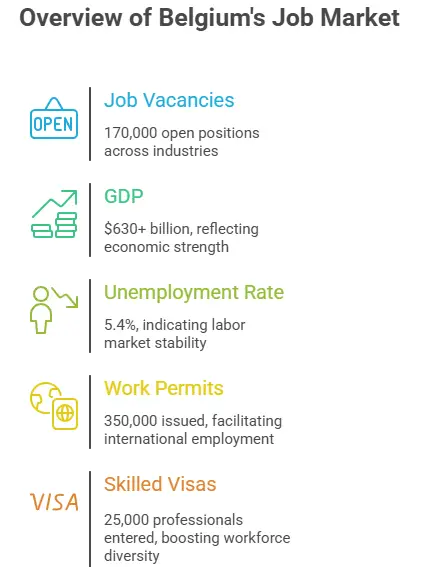
- Belgium records 170,000 job vacancies across major industries
- The country’s GDP stands at around $630+ billion
- Belgium maintains an unemployment rate of approximately 5.4%
- Over 350,000 work permits issued in the last three years
- More than 25,000 foreign professionals entered Belgium on skilled visas from January to September
Planning to migrate overseas? Y-Axis will guide you in the step-by-step process.
Job Outlook in Belgium
Belgium offers a well-developed, innovation-centric job market with strong opportunities for skilled foreign workers. The country attracts global investments in IT, engineering, pharmaceuticals, logistics, and renewable energy. Known for its excellent work-life balance, strong economy, transparent labor laws, multilingual environment, and high living standards, Belgium is a preferred destination for international talent. Overall, Belgium provides competitive salaries and long-term career prospects across growing sectors.
Job Vacancy in Belgium
Belgium is seeing steady job growth due to strong industrial activity, digital transformation, and expansion in healthcare and logistics sectors. The country is an important business and trade hub in Europe, creating demand for skilled professionals in IT, engineering, healthcare, manufacturing, logistics, finance, and construction.
Government investments and EU-backed programs are supporting infrastructure upgrades, digital innovation, healthcare expansion, renewable energy projects, and logistics development around major hubs like Brussels, Antwerp, and Ghent. Projects linked to port expansion (Port of Antwerp-Bruges), smart mobility, green energy, and healthcare services are generating thousands of job opportunities.
The table below shows the estimated number of job openings in Belgium by 2030, highlighting sectors with strong demand.
|
Occupation / Sector |
Estimated Job Openings by 2030 |
|
IT & Software / Digital Technology |
100,000 |
|
Engineering & Manufacturing |
70,000 |
|
Healthcare & Nursing |
60,000 |
|
Logistics & Supply Chain / Operations |
40,000 |
|
Finance & Business Services |
45,000 |
|
Education & Research |
30,000 |
|
Construction & Infrastructure |
30,000 |
General Employment Trends for the Year
Belgium’s job market is evolving with strong demand across IT, engineering, healthcare, logistics, finance, and green energy. Digital transformation is driving roles in:
- Automation
- Artificial Intelligence
- Data analytics
- Cloud computing
- Cybersecurity
Flexible work models, hybrid roles, and remote positions are growing, encouraging continuous upskilling and multilingual competency.
Factors Influencing Job Creation or Reduction in Belgium
- Economic growth & industrial expansion
- Increased digitalization and automation
- Immigration reforms & work permit policies
- EU policies & market regulations
- Global supply chain trends
- Green energy initiatives and climate laws
These elements collectively shape Belgium’s workforce trends.
In-Demand Industries and Occupations in Belgium
Most in-demand jobs in Belgium with average annual salaries are listed below:
|
Occupations |
Salary (annually) |
|
Engineering |
€58,000 |
|
IT & Software |
€65,000 |
|
Marketing & Sales |
€55,000 |
|
Human Resource Management |
€50,000 |
|
Healthcare |
€72,000 |
|
Teaching |
€46,000 |
|
Accounting & Finance |
€60,000 |
|
Logistics & Supply Chain |
€48,000 |
|
Nursing |
€44,000 |
*Want to work in Belgium? Contact Y-Axis for complete guidance.
Opportunities for Foreign Professionals in Belgium
Belgium offers good job opportunities for skilled workers from other countries. People with experience in IT, engineering, logistics, scientific research, and healthcare are especially needed because Belgian companies often struggle to find enough local talent in these fields.
Most foreign professionals move to Belgiumz through two main permits: the EU Blue Card, which is for highly skilled workers, and the Work Permit B, which employers apply for when they want to hire a non-EU worker. Knowing Dutch or French is not always required, but it makes it much easier to get a job, communicate at work, and settle in the country.
Impact of Manufacturing and Industry in Belgium
Manufacturing and industry are important to Belgium’s economy. In 2024, the country produced about €195 billion in industrial goods, and manufacturing made up about 10–11% of the total GDP. The sector also provides many jobs, with around 19% of workers employed in industry. Belgium exports a lot of what it makes, especially chemicals, plastics, and medicines, which together form about one-third of all exports.
Although industry’s share of the economy has decreased over the years as services grew, manufacturing is still a key pillar. A few large companies produce most industrial output, which means global market changes can affect Belgium quickly. Overall, manufacturing remains vital for jobs, exports, and economic strength.
Growth Opportunities & Challenges for Professionals in Belgium
Belgium’s job market is growing steadily, especially in technology, engineering, and sustainability sectors. Recent studies show that more than 50% of Belgian companies plan to hire skilled workers, and STEM-related roles are among the fastest-growing. The country also ranks high in work–life balance and average salaries compared to many EU nations. At the same time, Belgium faces skills shortages, with about 70% of employers saying they struggle to find qualified candidates, especially those with digital and multilingual abilities. This creates strong opportunities but also brings certain challenges for professionals.
Opportunities:
- Expansion in tech-focused roles
- Strong demand for STEM profiles
- Attractive salaries and work-life balance
- Growth in green energy and sustainability jobs
Challenges:
- High competition in skilled occupations
- Requirement of multilingual skills (Dutch/French/English)
- Need for continuous upskilling
Skills In-Demand in Belgium
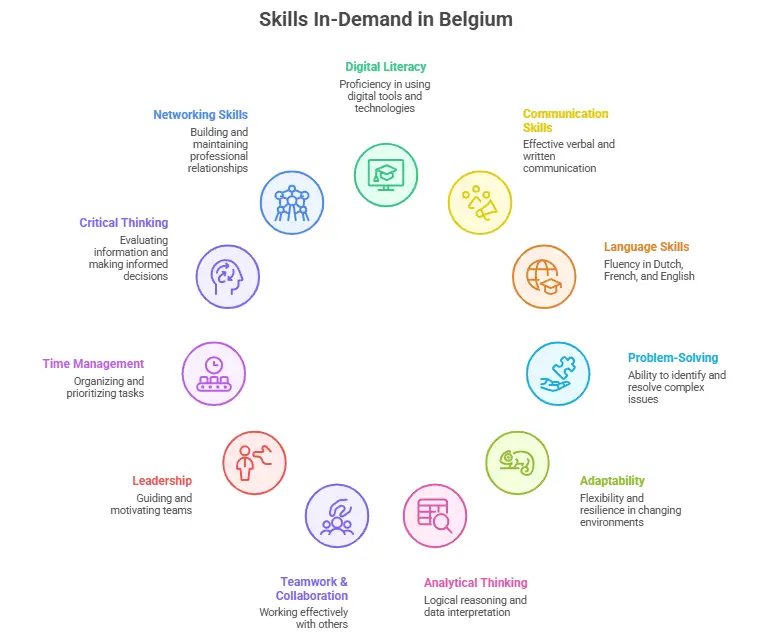
Belgium is facing a shortage of skilled workers, and many companies say they cannot find the right talent. Recent reports show that about 70% of employers struggle to fill jobs, mainly because they need people with strong digital, communication, and language skills. Also, candidates who know more than one language (Dutch, French, or English) have a much higher chance of getting hired in Belgium. Because of this, employers look for professionals who can learn quickly, work well with others, and adapt to different situations. The most in-demand skills include:
- Digital literacy
- Communication skills
- Dutch/French/English language skills
- Problem-solving
- Adaptability
- Analytical thinking
- Teamwork & collaboration
- Leadership
- Time management
- Critical thinking
- Networking skills
Importance of Upskilling or Reskilling
Belgium’s rapidly evolving job market requires workers to stay updated through continuous learning. Upskilling leads to better job security, faster career advancement, and adaptability in changing industries.
Flexible Work Options and Remote Job Opportunities in Belgium
Remote and hybrid work models have become standard in Belgium. Companies increasingly offer:
- Flexible work hours
- Hybrid work arrangements
- Remote-first roles in IT, finance, and consulting
These options improve work-life balance and allow foreign professionals to access Belgian jobs from abroad.
Tips and Strategies to Get a Job in Belgium
- Prepare a professional resume and cover letter
- Improve language proficiency (Dutch/French/English)
- Gain industry-relevant certifications
- Build a strong LinkedIn profile
- Network through events and professional groups
- Research roles and employers carefully
- Stay updated with Belgium’s job trends
- Prepare well for interviews
Summary of Belgium Job Outlook
Belgium offers a stable, high-quality job market with excellent opportunities for global talent. With strong economic growth, low unemployment, high living standards, and increasing demand across multiple sectors, Belgium remains a top destination for skilled professionals. Foreign workers with in-demand skills and multilingual ability can expect strong career prospects, competitive salaries, and long-term growth opportunities.
*Planning to move to Belgium? Contact Y-Axis, world’s number one immigration consultancy for end-to-end support.
Don't know what to do ?
Get Free Counseling
Looking for Inspiration
Explore what Global Indians have to say about Y-Axis in shaping their future
Frequently Asked Questions