


Don't know what to do ?
Get Free Counseling
Austria Job Market: Trends and Opportunities
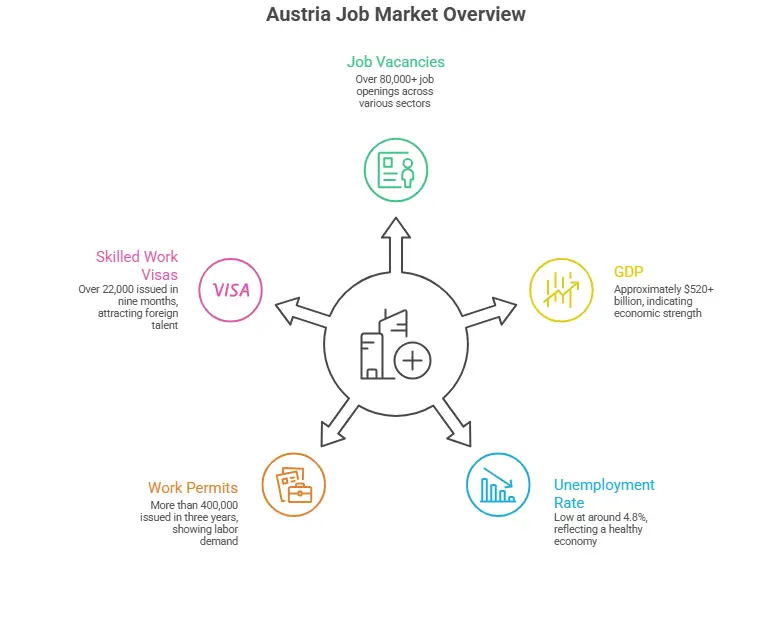
- Austria offers over 80,000+ job vacancies across multiple sectors
- The country’s GDP stands at approximately $520+ billion
- Austria maintains a low unemployment rate of around 4.8%
- More than 400,000 work permits were issued over the past three years
Over 22,000 foreign nationals entered Austria on skilled work visas between January and September
*Planning to migrate overseas? Y-Axis will guide you in the step-by-step process.
Job Vacancy in Austria
Austria is seeing steady job growth due to an ageing population, digital transformation, and expansion in key industries. Many sectors such as healthcare, engineering, IT, manufacturing, construction, logistics, and tourism are facing skill shortages and are actively hiring professionals from abroad. The Austrian government is investing in healthcare system upgrades, green energy projects, smart manufacturing, public infrastructure, and digital services. Growth in renewable energy, rail and road infrastructure, industrial automation, and healthcare services is creating long-term job opportunities. These developments are increasing demand for skilled workers across both technical and service sectors.
The table below shows the estimated number of job openings in Austria by 2030, highlighting sectors with strong employment demand.
|
Occupation |
Estimated Job Openings by 2030 |
|
IT & Software |
65,000 |
|
Engineering |
60,000 |
|
Healthcare |
55,000 |
|
Construction & Technical |
50,000 |
|
Teaching & Education |
45,000 |
|
Hospitality & Tourism |
40,000 |
|
Marketing & Sales |
35,000 |
|
Nursing |
30,000 |
|
Accounting & Finance |
28,000 |
|
Human Resources & Management |
20,000 |
Understanding the job outlook for job seekers and employers
Austria has a strong, stable, and innovation-driven job market that offers excellent opportunities for skilled foreign professionals. The country attracts global investments in technology, engineering, healthcare, manufacturing, and tourism. It is known for its high standard of living, robust economy, advanced infrastructure, and strong labour protections.
Overall, Austria presents a wealth of opportunities for highly skilled workers across several industries with competitive salaries.
General Employment Trends for the Year
Austria's job market continues to evolve with growing demand in IT, engineering, healthcare, hospitality, finance, and green technologies. The country has seen an increase in digital transformation, creating more roles in automation, AI, data science, and cloud technology.
Flexible work models, hybrid jobs, and remote-working options are becoming increasingly popular, helping job seekers maintain work-life balance and stay competitive through upskilling.
Factors Influencing Job Creation or Reduction in Austria
Several factors impact Austria’s employment trends, including:
- Economic growth and industrial expansion
- Increasing digitalization and automation
- Labour market reforms and immigration policies
- Global market demands and trade relations
- European Union regulations
- Environmental and sustainability initiatives
These factors collectively influence job creation, industry demand, and workforce transformation.
In-Demand Industries and Occupations in Austria
Most in-demand jobs in Austria with average annual salaries are listed below:
|
Occupations |
Salary (annually) |
|
Engineering |
€55,000 |
|
IT & Software |
€65,000 |
|
Marketing & Sales |
€60,000 |
|
Human Resource Management |
€50,000 |
|
Healthcare |
€70,000 |
|
Teaching |
€48,000 |
|
Accounting & Finance |
€58,000 |
|
Hospitality |
€45,000 |
|
Nursing |
€42,000 |
Want to work in Austria? Contact Y-axis for complete guidance
Workforce Demand in Austria
Examination of Austria's Job Market
Austria has a diversified and thriving job market. Major cities like Vienna, Graz, Linz, Salzburg, and Innsbruck serve as hubs for business services, finance, technology, research, manufacturing, tourism, and logistics. These cities attract domestic and international talent, offering numerous opportunities for skilled professionals. Cities such as Vienna, Salzburg, Graz, Linz, and Innsbruck offer abundant job opportunities.
High-demand sectors include:
- IT and Software
- Engineering
- Healthcare & Nursing
- Finance
- HR & Management
- Marketing & Sales
- Hospitality
- Education
Austria attracts global talent due to its multicultural environment, innovation-driven economy, and strong focus on sustainability and quality of life.
Impact of Technology and Automation in Austria
Austria is quickly adopting new technologies, which is changing how companies work and creating more demand for skilled professionals. Automation, AI, robotics, and digital tools are now widely used in manufacturing, healthcare, banking, and IT. These technologies help businesses work faster, reduce errors, and improve overall productivity.
Digital transformation is also opening new job opportunities in fields like software development, data analysis, cybersecurity, and engineering. Austria’s strong focus on innovation and research encourages companies to invest in modern systems and advanced solutions.
While technology creates many new jobs, it also requires professionals to learn new skills and stay updated. People who upgrade their digital and technical skills will have better chances of finding high-paying jobs in Austria’s growing tech-driven economy.
Growth Opportunities & Challenges for professionals in Austria
Opportunities:
- Growth in tech-driven jobs
- Attractive salaries for STEM roles
- Remote and hybrid job models
- Increased demand for digital skills
Challenges:
- Continuous upskilling
- Competition in high-demand sectors
- Adapting to automation-driven changes
Skills In-Demand in Austria
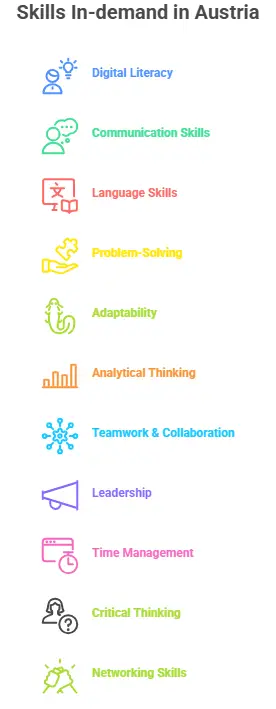
Employers in Austria highly value candidates who can adapt to modern technologies, work effectively in diverse teams, and communicate clearly. As industries continue to grow and adopt digital tools, both technical and soft skills have become essential for professional success. Job seekers with strong problem-solving abilities, language skills, and the willingness to learn new things are more likely to secure high-paying roles in Austria’s competitive job market.
- Digital Literacy
- Communication Skills
- German & English language skills
- Problem-Solving
- Adaptability
- Analytical Thinking
- Teamwork & Collaboration
- Leadership
- Time Management
- Critical Thinking
- Networking Skills
Importance of Upskilling or Reskilling
Upskilling is essential to succeed in Austria’s evolving job landscape. As automation and digitalization intensify, workers must update their technical and soft skills to stay competitive. Continuous learning boosts job prospects, helps transition into new roles, and supports long-term career growth.
Flexible Work Options and Remote Job Opportunities in Austria
Remote work has become more common in Austria, giving employees the freedom to work from home or choose flexible hours. This helps people balance their job and personal life more easily. Many companies now offer hybrid work models, where employees can work partly from the office and partly from home.
These flexible work arrangements make it easier for employers to hire skilled workers from different countries and keep their employees satisfied. Remote work also allows people to save time on travel, reduce stress, and enjoy a better work-life balance while still staying productive.
Government Policies and Initiatives in Austria
Programs Influencing Employment
Austria actively promotes skilled migration to fill labour shortages.
The government supports integration through:
- The Red-White-Red (RWR) Card for skilled professionals
- Simplified work permit processes
- Language support programs
- Training and reskilling incentives
- Investments in innovation and digitalization
Over the past three years, Austria issued 400,000+ work permits, and thousands of skilled workers continue to migrate to meet growing labour deamands. Policy changes regarding labour laws, taxation, minimum wage, education, and EU regulations greatly influence employment trends. Skilled immigration policies help address labour shortages, especially in healthcare, engineering, hospitality, and IT.
Tips and Strategies to get Job in Austria
- Prepare professional, updated resumes and cover letters
- Learn German or improve proficiency
- Stay updated with industry trends
- Gain certifications and new skills
- Build a strong online presence on LinkedIn
- Network through events, groups, and professional platforms
- Research job roles carefully
- Prepare thoroughly for interviews
Summary of Austria Job Outlook
Austria offers a strong, stable, and opportunity-rich job market for skilled professionals.
With high living standards, a strong economy, low unemployment, excellent public services, and diversified industries, Austria remains a top destination for global job seekers. Individuals with in-demand skills can expect excellent career prospects, competitive salaries, and long-term opportunities in Austria’s dynamic employment landscape.
*Planning to move to Austria? Contact Y-axis, world’s number one immigration consultancy for end-to-end support
Don't know what to do ?
Get Free Counseling
Looking for Inspiration
Explore what Global Indians have to say about Y-Axis in shaping their future
Frequently Asked Questions