

Posted on September 18 2026
What Are the Different Types of Canada Visas to Immigrate?

By , Editor & Director
Updated September 18 2026
Canada is one of the major destinations for skilled professionals, students, entrepreneurs and families looking to build a future abroad. Depending on your purpose of moving, you may need a Canadian visa, work permit, study permit, or permanent residence (PR). For Indian citizens planning to move to Canada for employment, education or family reunification, the appropriate immigration pathway depends on factors such as employment, education, work experience, family relationships and eligibility under the relevant Canadian immigration program. Canada offers several pathways for permanent immigration, including Express Entry, Provincial Nominee Programs (PNPs), family sponsorship and regional immigration programs. Temporary pathways include work permits, study permits and visitor visas.
*Willing to migrate to Canada on a PR visa? Get in touch with our experts to get FREE counselling.
Different Types of Canada Visas
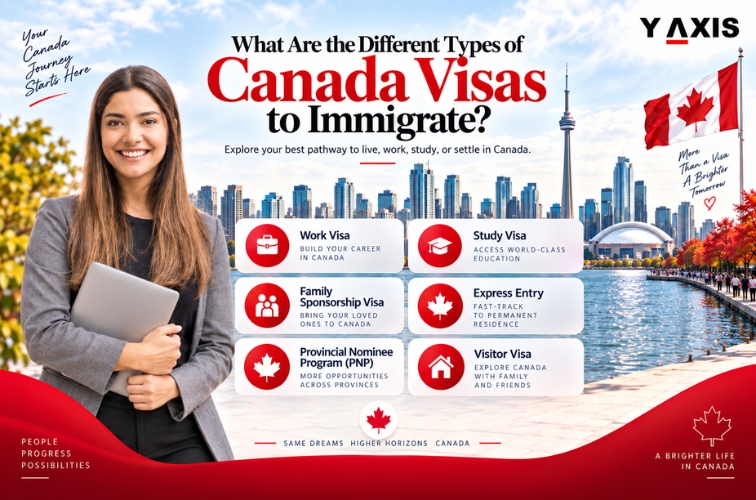
Canada offers different visas, permits and immigration programs based on the purpose of your stay. The most suitable option depends on whether you plan to work, study, visit, join family or immigrate permanently.
|
Canada Visa/Permit Type |
Who Is It For? |
Main Purpose |
|
Skilled professionals and foreign workers |
To work temporarily in Canada |
|
|
International students |
To study at an eligible Canadian institution |
|
|
Eligible skilled workers, professionals and other applicants |
To live and work permanently in Canada |
|
|
Skilled workers and eligible candidates |
Permanent immigration through federal economic programs |
|
|
Workers and other eligible applicants nominated by a province or territory |
To immigrate to a specific Canadian province or territory |
|
|
Eligible spouses, partners, children and certain relatives |
To reunite with eligible family members in Canada |
|
|
Tourists, business visitors and family visitors |
Temporary visits to Canada |
|
|
Canada Super Visa |
Parents and grandparents of Canadian citizens or permanent residents |
Extended family visits to Canada |
Canada's permanent-residence system includes economic programs such as Express Entry and PNPs, regional programs such as the Atlantic Immigration Program, family sponsorship and other specific immigration pathways.
What Are the Canada Visa Requirements for Indian Citizens?
The exact requirements depend on the visa, permit or immigration program you select. Common documents and requirements may include:
- Valid passport with sufficient validity
- Completed application forms and supporting documents
- Recent photographs, where required
- Biometrics, where required
- Proof of funds to demonstrate that you can support yourself and eligible accompanying family members, where applicable
- Educational certificates and professional qualifications
- Language test results, where required for immigration programs
- Proof of employment or a Canadian job offer, where applicable
- Employment reference letters and work-experience documents, where required
- Letter of acceptance from a Designated Learning Institution (DLI) for study permit applications
- Proof of tuition and living funds for students
- Marriage, birth or other civil-status documents for family applications
- Proof of relationship for family sponsorship
- Police certificates, where required
- Medical examination, where required
- Other documents specific to the selected immigration category
For study permits, applicants generally need to be enrolled at a Designated Learning Institution, demonstrate sufficient funds for tuition and living expenses, and satisfy other eligibility requirements. For work permits, requirements vary according to the specific work-permit category. Applicants may need to demonstrate sufficient funds and satisfy additional requirements associated with their particular program.
*Check your eligibility to Canada through the Y-Axis Canada CRS Score Calculator.
Canada Visa Application Process
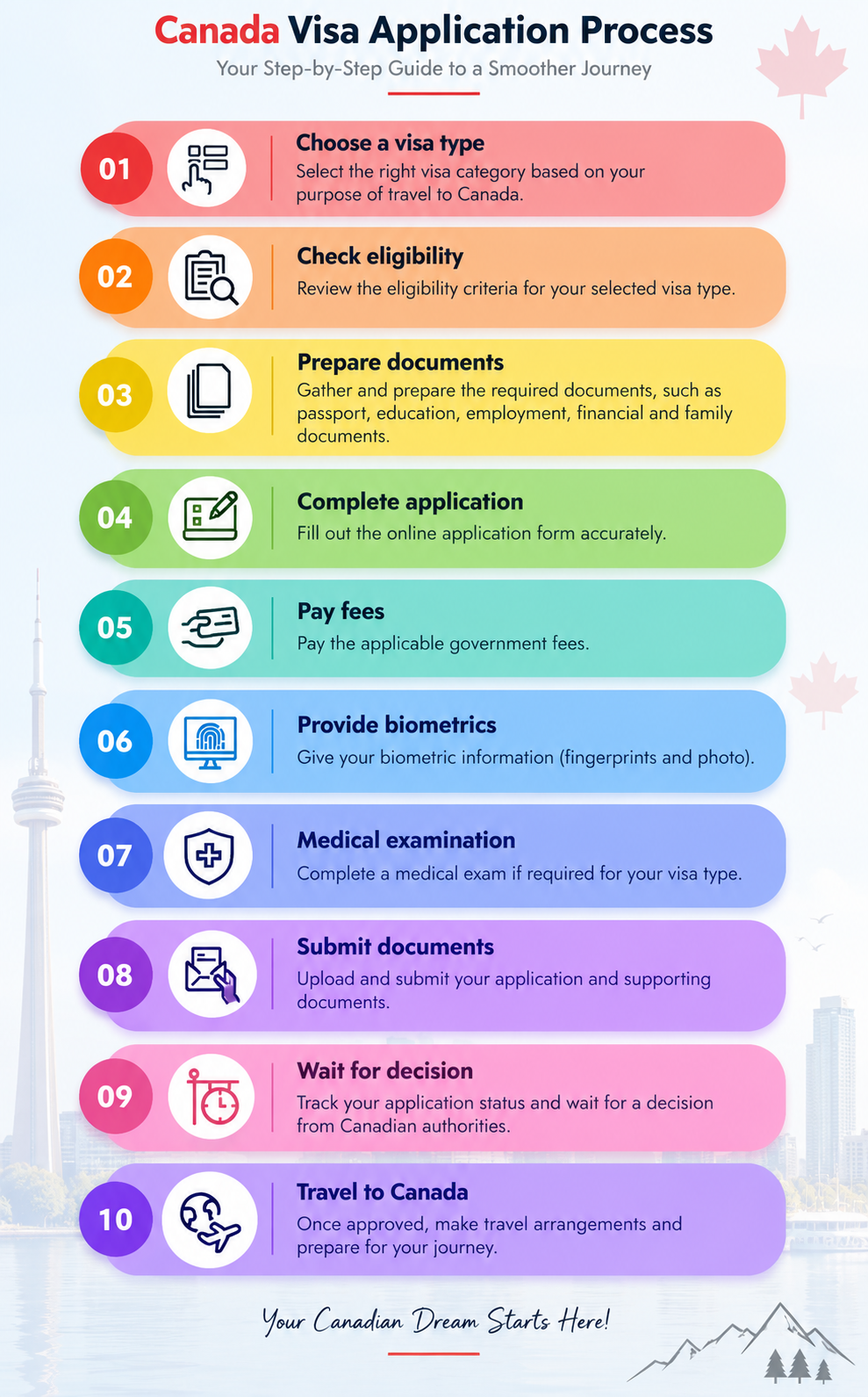
The general application process depends on the immigration category, but commonly involves:
Step 1: Choose the appropriate Canada visa, permit or immigration program.
Step 2: Check your eligibility for the selected pathway.
Step 3: Prepare the required documents, such as passport, education, employment, financial and family documents.
Step 4: Complete the online application through the appropriate IRCC system.
Step 5: Pay the applicable government fees.
Step 6: Provide biometrics, if required.
Step 7: Complete a medical examination or provide a police certificate, if requested or required.
Step 8: Submit additional documents if IRCC requests them.
Step 9: Wait for the application decision and monitor your application status.
Step 10: Travel to Canada or complete the permanent-residence landing process, depending on the type of application.
*Want to work in Canada? Let Y-Axis assist you with the steps.
Canada Visa Fees for Indians
Canadian immigration fees vary depending on the application type and can change over time. Some current examples are:
|
Application Type |
Government Fee (CAD) |
|
Visitor visa |
$100 |
|
Study permit |
$150 |
|
Work permit |
$155 |
|
Open work permit additional fee |
$100 |
|
Biometrics – individual |
$85 |
|
Permanent Residence – Right of Permanent Residence Fee |
$600 |
The Canadian government increased several permanent-residence fees on April 30, 2026. For example, the Right of Permanent Residence Fee increased from CAD $575 to CAD $600, while the principal-applicant fee under the Provincial Nominee Program increased to CAD $990.
Canada Visa Processing Time
Canada visa and immigration processing times vary depending on the type of application, country of application, completeness of the application and other factors. IRCC publishes processing-time information for different application categories. Visitor-visa processing times, for example, vary by country.
Estimated Canada Visa Processing Time for Indians
|
Canada Visa / Immigration Type |
Estimated Processing Time |
|
Canada Visitor Visa |
4–8 weeks |
|
Canada Study Permit |
4–8 weeks |
|
Canada Work Permit |
6–10 weeks |
|
Canada Express Entry – FSW/CEC |
Around 5–7 months after ITA and complete PR application |
|
Express Entry PNP |
Around 7–10 months after PR application |
*Looking for help with overseas immigration? Contact Y-Axis, worlds’s number one immigration consultancy for guidance and visa assistance.
FAQs
What are the main types of Canada visas for Indians?
Indians can apply for different Canada visas and immigration programs depending on their purpose of travel. Common options include visitor visas, study permits, work permits, Express Entry, Provincial Nominee Programs, family sponsorship, and the Super Visa. Applicants planning to settle permanently in Canada generally need to qualify for a permanent residence program rather than applying for a temporary visa.
How long does it take to get a Canada visa from India?
Canada visa processing times vary depending on the application type and individual circumstances. Visitor visas may take several weeks, while study and work permits can take longer. Permanent residence applications through Express Entry, PNPs, or family sponsorship generally require several months or more. Processing times can change, so applicants should check the latest IRCC estimate before submitting their application.
What are the requirements for a Canada work permit?
Requirements depend on the type of work permit. Applicants may need a valid passport, employment documents, proof of qualifications, work experience, and other supporting documents. Some applicants need a Canadian job offer and may also require a Labour Market Impact Assessment (LMIA). Applicants must meet IRCC eligibility requirements and provide biometrics or complete a medical examination when required.
What is Express Entry for Canada?
Express Entry is an online system used by Canada to manage applications for certain economic immigration programs. Eligible candidates create an online profile and receive a Comprehensive Ranking System (CRS) score based on factors such as age, education, language ability, work experience, and other criteria. Candidates who receive an Invitation to Apply can submit a permanent residence application to IRCC.
Can I move to Canada without a job offer?
Yes, some Canadian immigration programs allow eligible applicants to apply without a job offer. Express Entry programs such as the Federal Skilled Worker Program may not require a job offer. However, having a valid Canadian job offer can provide benefits under certain immigration pathways. Eligibility depends on the program, qualifications, work experience, language skills, and other requirements.
What is a Canada study permit?
A Canada study permit allows eligible foreign nationals to study at an approved Canadian educational institution. Applicants generally need a letter of acceptance from a Designated Learning Institution, proof of financial support, a valid passport, and other required documents. Depending on the circumstances, students may also need to provide biometrics, undergo a medical examination, or meet additional requirements before receiving their study permit.
Can my family accompany me to Canada?
In many situations, eligible family members may accompany someone moving to Canada, but their eligibility depends on the main applicant's visa or immigration program. A spouse or common-law partner and dependent children may qualify for related permits or permanent residence. Applicants should check the specific rules for their immigration category because eligibility and application requirements can differ between programs.
What is a Provincial Nominee Program in Canada?
Provincial Nominee Programs allow Canadian provinces and territories to nominate eligible individuals for permanent residence based on their local economic and labour-market needs. Each province and territory has its own streams and eligibility requirements. Applicants may be selected based on factors such as occupation, work experience, education, language ability, or connections to the province. Some PNP streams are connected to Express Entry.
How much does a Canada visa cost for Indians?
Canada visa and immigration fees depend on the type of application. For example, government fees apply to visitor visas, study permits, work permits, permanent residence applications, and biometrics. Additional costs may include medical examinations, language tests, educational assessments, document translation, and police certificates. Fees can change, so applicants should verify the current charges on the official IRCC website before applying.
How can Indians apply for a Canada visa?
Indian applicants can generally apply online through the Immigration, Refugees and Citizenship Canada (IRCC) website. The process involves selecting the correct visa or immigration program, checking eligibility, preparing documents, completing the application, paying the applicable fees, and providing biometrics when required. Depending on the application, IRCC may request additional documents, medical examinations, police certificates, or other information before making a decision.
Tags:
Canada Visa
Canada Visa for Indians
Canada Immigration
Canada Work Visa
Canada Study Visa
Canada Family Visa
Canada Permanent Residence
Canada Visa Requirements
Canada Visa Fees
Canada Visa Processing Time
Canada Visa Application Process
Share
Options for you by Y-Axis

Get it on your mobile

Get News alerts

Contact Y-Axis
Latest Article
Popular Post
Trending Article
Posted On September 18 2026
What Are the Different Types of Canada Visas to Immigrate?