

Posted on December 16 2025
Top In-Demand Jobs in Norway for the Next 10 Years

By , Editor
Updated December 27 2025
Norway’s job market is expected to remain strong over the next decade due to digital transformation, green energy expansion, an aging population, and continued investment in infrastructure and technology. While economic growth is moderate, Norway maintains one of the lowest unemployment rates in Europe (around 3–4%), with steady job creation across key sectors.
Norway also faces labour shortages as many professionals retire, leading to thousands of job vacancies every year, especially in skilled and technical occupations. Government initiatives and private investments are driving demand in IT, renewable energy, healthcare, engineering, logistics, and maritime industries.
Skilled foreign professionals are needed in IT, engineering, healthcare, construction, and business services. Norway offers high living standards, strong employee protections, work-life balance, and long-term residence opportunities. Fast-growing roles include software developers, data engineers, mechanical engineers, nurses, renewable energy specialists, logistics managers, and finance professionals.
Planning to work in Norway? Y-Axis can guide you with job search and work visa support.
List of Top Job Opportunities in Norway for the Next 10 Years
Norway is investing heavily in digitalization, green energy transition, healthcare services, smart infrastructure, and maritime industries. Skilled professionals can find excellent career opportunities across the following sectors:
|
Sector |
Job Roles |
|
Information Technology (IT) |
Software Developers, Data Engineers, Cybersecurity Specialists, Cloud Architects |
|
Engineering & Manufacturing |
Mechanical Engineers, Electrical Engineers, Automation Engineers, Process Engineers |
|
Healthcare |
Doctors, Nurses, Care Workers, Medical Technicians |
|
Renewable Energy & Sustainability |
Wind Energy Engineers, Energy Analysts, Environmental Specialists |
|
Oil, Gas & Offshore |
Petroleum Engineers, Safety Officers, Offshore Technicians |
|
Logistics & Supply Chain |
Logistics Managers, Supply Chain Planners, Warehouse Supervisors |
|
Finance & Business Services |
Accountants, Financial Analysts, Risk Managers |
|
Maritime & Shipping |
Marine Engineers, Naval Architects, Port Operations Managers |
|
Construction & Infrastructure |
Civil Engineers, Project Managers, Quantity Surveyors |
|
Education & Research |
University Lecturers, Researchers, Vocational Trainers |
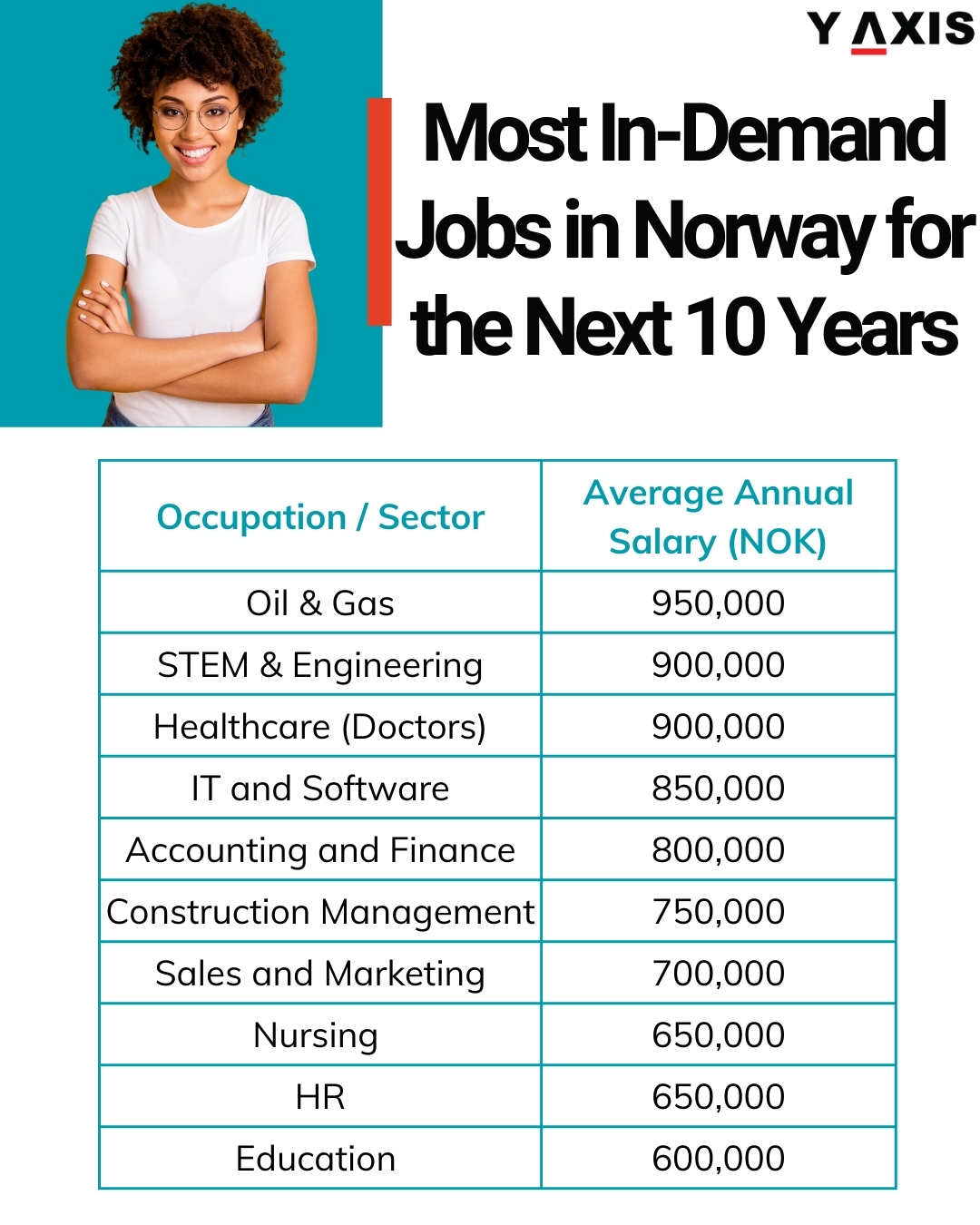
Highest Paying Jobs in Norway
Below are some of the highest-paying job sectors in Norway:
|
Occupation |
Average Annual Salary |
|
STEM & Engineering |
NOK 900,000 |
|
IT & Software |
NOK 850,000 |
|
Oil & Gas |
NOK 950,000 |
|
Healthcare (Doctors) |
NOK 900,000 |
|
Finance & Accounting |
NOK 800,000 |
|
Nursing |
NOK 650,000 |
|
Sales & Marketing |
NOK 700,000 |
|
Human Resource Management |
NOK 650,000 |
|
Construction Management |
NOK 750,000 |
|
Education |
NOK 600,000 |
Top In-Demand Skills in Norway
Norway prefers professionals with strong technical skills, safety awareness, and adaptability. The most in-demand skills include:
|
Category |
Skills |
|
IT & Digital Skills |
Software Development, Data Engineering, Cybersecurity, Cloud Computing |
|
Engineering & Technical Skills |
Automation, Industrial Maintenance, Offshore Safety, Quality Control |
|
Business & Management Skills |
Project Management, Financial Planning, Operations Management |
|
Language & Communication |
English proficiency, Norwegian language basics, Workplace Communication |
|
Soft Skills |
Problem-solving, Teamwork, Adaptability, Safety Compliance |
Norway’s Job Outlook for the Next 10 Years
Norway’s employment outlook remains positive, supported by green transition projects, offshore energy, digital innovation, and healthcare expansion. Demand will continue to grow in technology, renewable energy, engineering, healthcare, logistics, and maritime sectors.
The country actively welcomes skilled foreign professionals to fill labour shortages, especially in engineering and healthcare roles. Professionals with certifications, industry experience, and language skills will have strong long-term prospects.
Salary Trends in Norway Over the Next Decade
Salaries in Norway are expected to grow steadily between 2025–2035, especially in IT, energy, engineering, healthcare, and finance. Cities with major industrial and energy activities offer higher pay.
Employers typically provide benefits such as paid leave, healthcare coverage, pension contributions, work-life balance policies, and relocation support, as per Norwegian labour laws.
Companies That Actively Hire Foreign Professionals in Norway
Norway hosts many global and national companies that regularly hire skilled international workers.
|
Sector |
Companies Hiring Foreign Workers |
|
Energy & Oil |
Equinor, Aker BP, Vår Energi |
|
IT & Technology |
TietoEVRY, Accenture Norway, Sopra Steria |
|
Maritime & Shipping |
DNV, Wilhelmsen Group, Kongsberg Maritime |
|
Construction & Engineering |
Skanska Norway, AF Gruppen |
|
Finance & Consulting |
DNB, PwC Norway, Deloitte Norway |
|
Logistics & Transport |
Posten Norge, DHL Norway |
|
Healthcare |
Oslo University Hospital, Helse Norge |
Cities in Norway with the Fastest Job Growth
- Oslo: Main business hub with strong demand in IT, finance, healthcare, and consulting.
- Bergen: Key city for energy, maritime industries, and logistics.
- Stavanger: Oil, gas, and offshore engineering hub.
- Trondheim: Technology, research, and innovation centre.
- Tromsø: Growing demand in healthcare, research, and tourism.
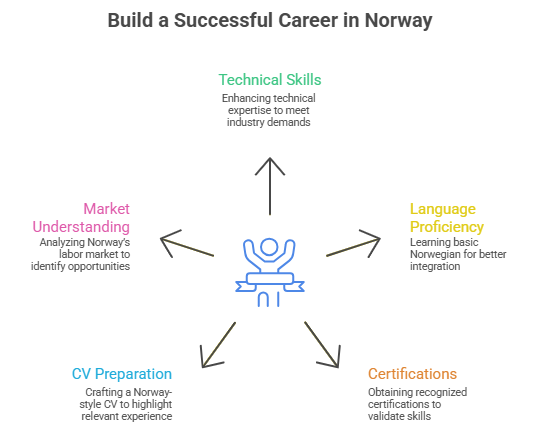
Building a Successful Career in Norway
Norway offers excellent long-term career opportunities for skilled professionals seeking high salaries, stability, and quality of life. To succeed, focus on upgrading technical skills, learning basic Norwegian, obtaining recognized certifications, and preparing a Norway-style CV.
Understanding Norway’s labour market needs and aligning your profile with in-demand sectors will greatly improve your chances of success. With expert guidance and proper planning, building a successful career in Norway is highly achievable.
*Planning to settle in Norway? Contact Y-Axis, the world’s number one immigration consultancy, for job search support, resume preparation, and visa guidance.
FAQs
Which jobs will be most in demand in Norway over the next 10 years?
Over the next 10 years, Norway will see strong demand for jobs in IT, engineering, healthcare, renewable energy, oil and gas, logistics, and maritime industries. Roles such as software developers, data engineers, automation engineers, nurses, doctors, renewable energy specialists, and offshore engineers will grow steadily. This demand is driven by digital transformation, green transition projects, healthcare expansion, and large infrastructure and energy investments across the country.
Why will Norway continue to face skilled worker shortages over the next decade?
Norway will continue to face skilled worker shortages mainly because of an aging population and high retirement rates. Many experienced professionals are expected to retire in the next 10 years, while fewer young workers are entering the workforce. At the same time, industries such as healthcare, energy, IT, and engineering are expanding. This gap between demand and supply will create long-term opportunities for skilled foreign professionals.
Which industries are expected to create the most jobs in Norway in the next 10 years?
The industries expected to create the most jobs in Norway over the next decade include information technology, renewable energy, healthcare, engineering, oil and gas, logistics, maritime, and construction. Green energy projects, offshore developments, digital services, and public healthcare expansion will drive employment growth. These sectors will require both highly skilled professionals and technical workers to support Norway’s economic and environmental goals.
How will demand for IT professionals in Norway change over the next decade?
Demand for IT professionals in Norway is expected to increase strongly over the next 10 years. Digitalization across government services, energy companies, finance, healthcare, and private businesses will require software developers, data engineers, cybersecurity experts, and cloud specialists. Many companies already use English as a working language, making it easier for foreign IT professionals to find jobs while learning Norwegian over time.
Which healthcare roles will see the highest demand in Norway over the next 10 years?
Healthcare roles will see very high demand in Norway over the next decade due to an aging population and rising healthcare needs. The most needed roles include doctors, nurses, care workers, medical technicians, and specialists. Hospitals, elderly care facilities, and public healthcare services will continue to recruit foreign professionals. Some roles may require Norwegian language skills and authorization, but long-term job stability is strong.
Will engineering careers remain strong in Norway in the coming decade?
Yes, engineering careers will remain very strong in Norway over the next 10 years. There will be steady demand for mechanical, electrical, civil, automation, offshore, and renewable energy engineers. Engineering jobs will be available in energy projects, construction, manufacturing, maritime industries, and infrastructure development. Engineers benefit from high salaries, excellent work-life balance, and long-term career growth supported by Norway’s stable economy.
How are salaries for skilled professionals expected to grow in Norway over the next 10 years?
Salaries for skilled professionals in Norway are expected to grow steadily over the next decade, especially in IT, engineering, healthcare, energy, and finance. As labour shortages increase and competition for talent rises, employers will offer higher pay and better benefits. In addition to salaries, professionals will continue to receive strong benefits such as paid leave, healthcare, pensions, and work-life balance protections.
Will Norwegian language skills become more important for foreign workers in the next decade?
Norwegian language skills are expected to become more important over the next 10 years, especially for long-term career growth. While many jobs in IT, engineering, and multinational companies use English, learning Norwegian improves job options, promotions, and workplace integration. For healthcare, education, and customer-facing roles, Norwegian language skills will remain essential. Language training support is widely available for foreign workers.
What work visa options will be most relevant for professionals moving to Norway in the next 10 years?
The most relevant work visa for professionals moving to Norway over the next decade will be the Skilled Worker Residence Permit. This visa requires a valid job offer and relevant qualifications. Other options may include researcher permits and sector-specific work permits. Skilled workers who remain employed can later apply for permanent residence, making Norway attractive for long-term career and settlement plans.
How easy will it be for foreign workers to get permanent residence in Norway over the next decade?
Foreign workers are expected to continue having a clear pathway to permanent residence in Norway over the next 10 years. Skilled professionals can usually apply after three years of legal work and residence. Meeting income requirements, following Norwegian laws, and completing basic language and social studies courses are important. Norway’s need for skilled workers makes long-term settlement realistic for qualified professionals.
Which cities in Norway are expected to offer the most job opportunities in the next 10 years?
The cities expected to offer the most job opportunities in Norway over the next decade include Oslo, Bergen, Stavanger, Trondheim, and Tromsø. Oslo will lead in IT, finance, healthcare, and consulting. Stavanger will remain strong in oil and gas, Bergen in maritime and energy, Trondheim in technology and research, and Tromsø in healthcare, education, and tourism.
How will renewable energy jobs grow in Norway over the next decade?
Renewable energy jobs are expected to grow rapidly in Norway over the next 10 years as the country focuses on sustainability and green transition goals. Wind energy, hydropower upgrades, energy storage, and environmental projects will create demand for engineers, analysts, and sustainability experts. Norway’s long-term investment in clean energy ensures stable and future-proof job opportunities for skilled professionals.
What qualifications will employers in Norway value most in the next 10 years?
Over the next decade, Norwegian employers will value relevant degrees, practical experience, industry certifications, and strong technical skills. Qualifications in IT, engineering, healthcare, energy, and project management will be especially important. Employers will also value English communication skills, safety awareness, adaptability, and teamwork. Learning Norwegian and holding EU or internationally recognized certifications will further improve employability.
Will Norway remain a good destination for Indian professionals in the coming decade?
Yes, Norway is expected to remain a strong destination for Indian professionals over the next 10 years. High demand in IT, engineering, healthcare, and energy sectors creates good job opportunities. Norway offers high salaries, safe living conditions, excellent work-life balance, and long-term residence options. Indian professionals with strong technical skills and international experience can build stable and rewarding careers in Norway.
What long-term benefits can professionals expect from working in Norway over the next 10 years?
Professionals working in Norway over the next decade can expect long-term benefits such as stable employment, high income, strong labour rights, and excellent work-life balance. Benefits include paid leave, healthcare access, pensions, family support, and a safe environment. Norway also offers permanent residence and citizenship pathways, making it an attractive country for professionals planning long-term settlement.
How strong is Norway’s overall job outlook for the next decade?
Norway’s overall job outlook for the next 10 years is very strong and stable. Continued investment in green energy, digital innovation, healthcare, infrastructure, and offshore industries will support job growth. Labour shortages due to retirements will further increase demand for skilled professionals. Norway’s strong economy, low unemployment, and supportive labour laws make it one of the best job markets in Europe.
How will logistics and supply chain jobs evolve in Norway over the next 10 years?
Logistics and supply chain jobs in Norway will grow steadily over the next decade due to increased trade, e-commerce, and maritime activity. Ports, shipping companies, warehouses, and distribution centers will need logistics managers, planners, and supervisors. Norway’s strong export economy and global shipping industry ensure long-term demand for professionals with supply chain and operations management skills.
Which Norwegian companies are expected to hire foreign professionals over the next decade?
Over the next 10 years, many Norwegian companies are expected to continue hiring foreign professionals. These include Equinor, Aker BP, TietoEVRY, Accenture Norway, DNV, Skanska Norway, DNB, Deloitte Norway, DHL Norway, and major hospitals. These companies recruit international talent across energy, IT, engineering, finance, logistics, healthcare, and maritime sectors to meet skill shortages.
What future skills will be most important for jobs in Norway in the next 10 years?
Future skills that will be most important in Norway include software development, data engineering, automation, renewable energy expertise, offshore safety, project management, and healthcare skills. Employers will also value problem-solving, teamwork, adaptability, and compliance with safety standards. English communication will remain essential, while Norwegian language skills will provide a strong advantage for long-term career growth.
Tags:
Norway jobs
Jobs in Norway
careers in Norway
Work in Norway
Norway job market
Norway skills in-demand
Career in Norway
Companies in Norway
Norway work opportunities
High demand jobs Norway
Share
Options for you by Y-Axis

Get it on your mobile

Get News alerts

Contact Y-Axis
Latest Article
Popular Post
Trending Article

Posted On April 01 2026
Study vs Work Abroad – Which is Better for Indians in 2026?