

Posted on December 30 2025
Is a blocked account mandatory for German visas?

By , Editor
Updated December 31 2025
No, a blocked account is not mandatory for all German visas. However, it is generally required for long-term visa applications, such as job seeker visas, Au Pair visas, training visas, and language course visas, as well as for non-EU students applying for a German student visa. A Sperrkonto acts as proof that the applicant has enough funds to support their stay in Germany. The blocked account allows access to €992 per month or €11,904 per year to cover living expenses such as accommodation, insurance, food, etc., during your stay in Germany.
EU, EEA, or Swiss nationals are exempt from the blocked account requirement, as they have the freedom of movement. Non-EU nationals may also be exempt from the blocked account requirement, provided they demonstrate proof of alternate financial stability through a verified scholarship or a formal obligation letter. You must secure a valid official scholarship or a formal sponsorship declaration (Verpflichtungserklärung) in the absence of a blocked account when applying for a German visa.
*Want to apply for a German visa? Let the Y-axis guide you with the process.
Who needs a blocked account for a German visa application?
Most non-EU students and job seekers need to maintain a blocked account, also known as a Sperrkonto, as valid financial proof during German visa applications. It serves as proof that applicants can financially support themselves during their stay in Germany. According to the rules, a blocked account should ideally maintain a balance of €992 per month and €11,904 per year, unless you have other financial documents to cover living costs in Germany. Applicants, such as students with a valid scholarship from the institute or job seekers with official sponsorship, may be exempt from having a blocked account for their German visa application.
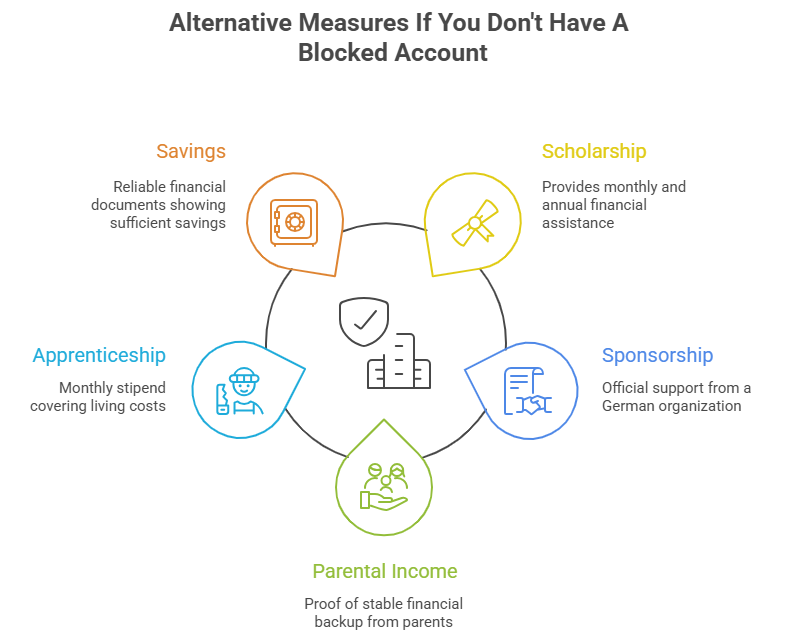
You may be exempt from having a blocked account if you can provide the following alternatives:
- A recognized scholarship that covers at least €992 per month and €11,904 annually.
- An official obligation letter (Verpflichtungserklärung) granted by a sponsor living in Germany.
- An Ausbildung/Apprenticeship with a monthly stipend that is enough to cover your living costs.
- Sufficient savings through reliable financial documents (fixed deposits/investments).
*Want to migrate to Germany? Sign up with Y-Axis for complete support with the process.
Benefits of having a blocked account for a German visa
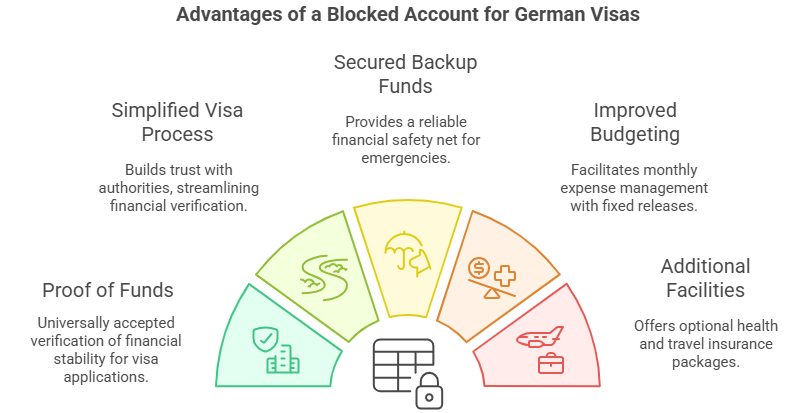
A blocked account serves as official and universally accepted proof of funds, which is mandatory for many long-term German visas.
Some of the benefits of having a blocked account when applying for a German visa are as follows:
- Widely accepted means of proof of funds: A blocked account is a verified and trusted way of demonstrating sufficient funds while applying for a visa in Germany.
- Simplified visa process: Maintaining a blocked account helps build trust with the German embassy or consulate, streamlining the financial verification process during the visa application.
- Secured backup funds: By ensuring a definite amount (€992/month) in a blocked account, you can create a reliable backup for sudden expenditures or emergencies.
- Improved budgeting: A fixed amount of €992 is released monthly from the blocked account, which facilitates budget management for everyday expenses, including rent, food, and health check-ups.
- Additional facilities: Most German providers offer packages that include optional health and travel insurance. This may, however, vary based on the provider.
*Are you looking for step-by-step assistance with German immigration? Contact Y-Axis, the world’s No. 1 overseas immigration consultancy, for end-to-end assistance!
FAQs
Is a blocked account mandatory for all German visa types?
No, a blocked account is not mandatory for all German visa types. It is mainly required for certain long-term visas where applicants must prove they can financially support themselves in Germany. These typically include student visas, job seeker visas, language course visas, au pair visas, and some vocational training visas. However, many work visas, such as the EU Blue Card or employment visas with sufficient salary, do not require a blocked account. The requirement depends on the visa category, the applicant’s nationality, and whether alternative proof of financial means is accepted by German authorities.
Which German visas require a blocked account?
A blocked account is commonly required for non-EU nationals applying for visas that do not include immediate employment income in Germany. These include the German Student Visa, Job Seeker Visa, Language Course Visa, Au Pair Visa, and certain vocational training or preparatory study visas. In these cases, applicants must show they can cover living expenses without relying on public funds. The blocked account acts as financial security and is reviewed during the visa application process to ensure applicants can support themselves throughout their stay.
Who is exempt from opening a blocked account for a German visa?
EU, EEA, and Swiss citizens are fully exempt from opening a blocked account because they do not need a German visa and benefit from freedom of movement rights. Non-EU applicants may also be exempt if they can provide approved alternative financial proof. This may include a recognised scholarship, a formal obligation letter (Verpflichtungserklärung) from a sponsor residing in Germany, or an Ausbildung contract with sufficient monthly stipend. Exemptions are assessed on a case-by-case basis by German embassies.
What is a blocked account (Sperrkonto) and why is it required?
A blocked account, known as a Sperrkonto, is a special German bank account used to prove financial self-sufficiency. Applicants deposit a fixed amount before arriving in Germany, which is then released in monthly instalments. The account ensures that visa holders have guaranteed access to funds for living expenses such as rent, food, and insurance. German authorities require it for certain visa types to prevent financial hardship and reliance on public assistance during the applicant’s stay in Germany.
How much money is required in a blocked account for a German visa?
As per current regulations, applicants must deposit €11,904 per year, which equals €992 per month, into a blocked account. Once in Germany, this amount is released monthly to cover living expenses. The required amount may be adjusted periodically by German authorities based on cost-of-living changes. Applicants should always check the latest figures before opening a blocked account to ensure compliance with embassy requirements.
Can I apply for a German visa without a blocked account?
Yes, it is possible to apply for certain German visas without a blocked account if you qualify for an exemption. Non-EU applicants may avoid opening a blocked account by providing alternative financial proof, such as a recognised scholarship, a formal obligation letter from a sponsor in Germany, or a valid employment contract with sufficient salary. However, if none of these alternatives apply, a blocked account is usually mandatory for visas like student or job seeker visas.
What are the alternatives to a blocked account for German visa applications?
Alternatives to a blocked account include a government-recognised scholarship that covers living expenses, a formal obligation letter (Verpflichtungserklärung) issued by a sponsor legally residing in Germany, or an Ausbildung or apprenticeship contract with a stipend sufficient to cover costs. In limited cases, other financial proof may be assessed individually by the embassy. The acceptance of alternatives depends on the visa type and the discretion of German immigration authorities.
Do EU, EEA, or Swiss citizens need a blocked account for Germany?
No, citizens of the EU, EEA, and Switzerland do not need a blocked account to live, work, or study in Germany. They benefit from EU freedom of movement rights and are not required to apply for a German visa or provide financial proof such as a blocked account. This exemption applies automatically and does not depend on income level, sponsorship, or scholarships.
Is a blocked account required for German work visas or the EU Blue Card?
In most cases, a blocked account is not required for German work visas or the EU Blue Card. Applicants with a valid employment contract that meets minimum salary thresholds usually do not need to prove funds through a blocked account. The employment income itself serves as financial proof. However, requirements may vary slightly depending on individual circumstances or embassy discretion, so applicants should confirm with the relevant German mission.
When and how can I withdraw money from a German blocked account?
After arriving in Germany and completing local registration, applicants can access their blocked account. The funds are released in monthly instalments of up to €992, transferred to a regular German bank account. This system ensures steady financial support throughout the year and prevents early withdrawal of the full amount. Any unused funds remain in the account until the end of the permitted period or until the account is closed.
Tags:
Blocked account for German visas
Blocked account in Germany
German visas
Migrate to German
German immigration
German job seeker visa
German student visa
Germany Opportunity Card
German PR
PR in Germany
Blocked account for Germany student visa
G
Share
Options for you by Y-Axis

Get it on your mobile

Get News alerts

Contact Y-Axis
Latest Article
Popular Post
Trending Article

Posted On April 01 2026
Study vs Work Abroad – Which is Better for Indians in 2026?