


Posted on April 28 2026
Is Free Education in Germany Really Free? What Indian Students Need to Budget For 2026

By , Editor & Director
Updated May 02 2026
Is Education in Germany Really Free for Indian Students?
Yes, education in Germany is mostly free at public universities. Indian students usually do not have to pay tuition fees for most Bachelor’s and Master’s courses. This is one of the main reasons why many students choose Germany for higher studies. However, “free education” does not mean you can study without spending money. You still need to pay for your daily living expenses. This includes rent, food, transport, health insurance, and other personal costs. You also need to pay a small semester fee to the university. So, even though tuition fees are very low or free, you still need to plan your budget properly before going to Germany.
*Are you looking to study in Germany? Y-Axis is here to guide you through the entire process!
What do Indian Students Need to Spend in Germany?
Even though tuition fees are free in most public universities in Germany, students still need to spend money on many other things. It is important to understand all these costs before planning your studies, so you can manage your budget properly.
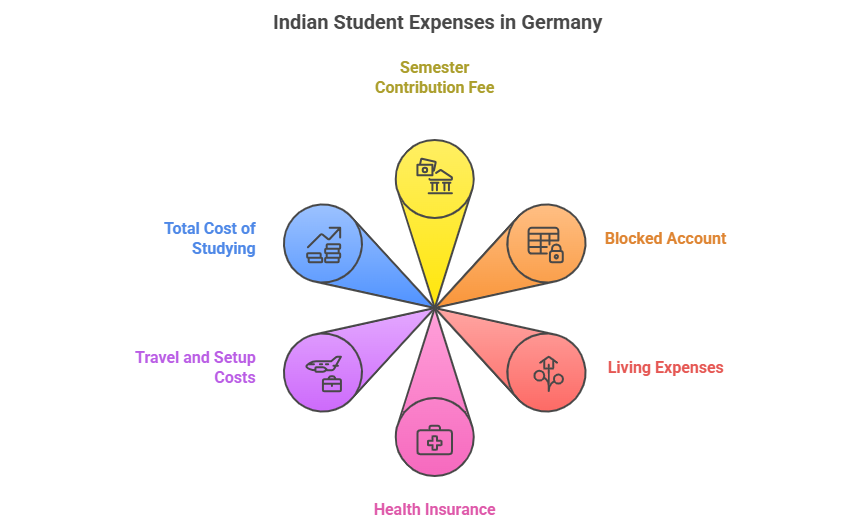
Semester Contribution Fee
Public universities in Germany charge a small fee every semester. This is usually between €150 and €350. This fee is not tuition—it covers administrative costs and student services. In many universities, it also includes a public transport pass, which allows you to travel within the city at no extra cost.
Blocked Account
Indian students must show proof of funds to get a German student visa. This is done through a blocked account. For 2026, the required amount is around €11,200 per year. This money is kept in a special account, and you can withdraw a fixed amount every month for your expenses. It shows that you have enough money to support yourself while studying in Germany.
Living Expenses
Living costs in Germany usually range from €850 to €1,200 per month. This includes rent, food, transport, internet, and other daily expenses. Rent is usually the biggest cost, especially in big cities like Munich and Frankfurt, which are more expensive. Smaller cities are more affordable. Managing your monthly expenses carefully can help you stay within your budget.
Health Insurance
Health insurance is compulsory for all students in Germany. Without it, you cannot enroll in a university or stay in the country. The cost is usually around €110 to €120 per month. This insurance covers medical expenses and helps you access healthcare services when needed.
Travel and Setup Costs
Before you move to Germany, you will have some one-time expenses. These include flight tickets, visa fees, and the cost of setting up your accommodation. You may also need to buy basic items like bedding, kitchen utensils, and other daily-use items when you arrive.
Total Cost of Studying in Germany
Even though tuition fees are free, the total cost of studying in Germany is mainly based on your living expenses. On average, Indian students spend around €10,000 to €13,000 per year. This includes all essential costs like rent, food, transport, insurance, and other daily needs. Proper financial planning can help you manage these expenses comfortably.
*Read more...
Study in Germany for Free
Are There Any Exceptions to Free Education in Germany?
Yes, not all education in Germany is completely free. While most public universities do not charge tuition fees, there are some exceptions that students should know before applying.
- Private universities charge full tuition fees. These can range from €10,000 to €20,000 per year or even more, depending on the course and university.
- Some federal states may have fees for international students. For example, in certain states, non-EU students may need to pay tuition fees at public universities.
- MBA and specialized programs often have higher tuition fees. These courses are considered premium programs and are usually not free, even in public universities.
- English-taught programs in some universities may have additional fees, especially if they are designed for international students.
- Second degree programs, if you already have a degree and apply for another one) may also require tuition fees in some cases.
- Longer study duration can increase your costs. If you take more time than the standard course duration, you may need to pay extra semester fees or charges.
- Administrative or service fees are still applicable even in public universities, though they are much lower than tuition fees.
So, while Germany offers very affordable education, it is important to check your course, university, and location carefully to understand the exact costs.
Tips to Manage Your Budget as an Indian Student in Germany
- Apply early for student housing
Student dorms are cheaper than private rooms, but they fill up quickly. Apply early to get a lower-cost option. - Eat at the university cafeteria (Mensa)
You can get a full meal for just €2 to €3, which is much cheaper than eating outside every day. - Shop at budget supermarkets
Stores like Aldi, Lidl, and Penny offer groceries at low prices. You can save a lot by cooking at home. - Use your semester travel pass
Most universities provide a travel pass (Semesterticket). Use it for buses and trains instead of spending extra money. - Open a free bank account
Choose banks like N26 or DKB. They are easy to use and usually have no extra charges. - Apply for scholarships early
Look for scholarships like DAAD or Deutschlandstipendium. Apply as early as possible to increase your chances. - Look for part-time jobs on campus
Search for student jobs (Hiwi jobs) at your university. These are flexible and easy to manage with your studies.
*Looking for assistance with study abroad? Talk to Y-Axis, the world’s No. 1 overseas immigration consultancy for end-to-end support.
FAQs
Is education in Germany really free for Indian students?
Yes, most public universities in Germany do not charge tuition fees, including for Indian students. However, free education does not mean zero expenses. You still need to pay for your living costs, health insurance, a semester contribution fee, and other daily needs. On average, Indian students spend around €10,000 to €13,000 per year on total expenses. So while tuition is free, you must plan your budget carefully before moving to Germany for your studies.
What is the semester contribution fee in Germany?
The semester contribution fee is a small amount that all students pay to their university every semester. It is not a tuition fee. It usually costs between €150 and €350 per semester, depending on the university. This fee covers administrative services, student union costs, and other campus facilities. In many universities, it also includes a public transport pass called the Semesterticket, which lets you travel by bus and train within your city for free during the semester.
What is a blocked account and why do Indian students need it?
A blocked account, also called a Sperrkonto, is a special bank account that Indian students must open before applying for a German student visa. It proves to the German authorities that you have enough money to support yourself while studying. For 2026, you need to deposit around €11,200 per year. After you arrive in Germany, you can withdraw a fixed amount every month. This account is a mandatory requirement and cannot be skipped during the visa application process.
How much does health insurance cost for students in Germany?
Health insurance is compulsory for all students in Germany. You cannot enrol at a university or stay in the country without it. The cost is usually between €110 and €120 per month. This public health insurance covers doctor visits, hospital treatment, and other basic medical needs. Students under 30 years of age who are enrolled full-time in a recognised German university can access this affordable student rate through public insurers like TK, AOK, or Barmer.
How much does it cost to live in Germany as an Indian student?
Living costs in Germany generally range from €850 to €1,200 per month. This includes rent, food, transport, internet, and daily personal expenses. Rent is usually the highest cost. Big cities like Munich and Frankfurt are more expensive, while smaller cities like Leipzig and Dresden are more affordable. On average, Indian students spend around €10,000 to €13,000 per year in total, covering all essential living costs along with health insurance and semester fees.
Do private universities in Germany charge tuition fees?
Yes, private universities in Germany do charge full tuition fees. These fees can range from €10,000 to €20,000 per year or even higher, depending on the course and institution. Unlike public universities, private universities are not funded by the government, so they charge students directly. If you are planning to study in Germany without paying tuition, you should focus on applying to public (state-funded) universities, where education is free or very low cost for most programmes.
Can Indian students work part-time while studying in Germany?
Yes, Indian students studying in Germany on a student visa can work part-time. You are allowed to work up to 120 full days or 240 half days per year. During semester breaks, you can work full-time. Germany's minimum wage is €12.41 per hour. Working part-time, especially in student assistant (Hiwi) jobs on campus, can help cover food and transport expenses. However, part-time income alone is not enough to replace the blocked account or fully cover your rent and living costs.
Which cities in Germany are most affordable for Indian students?
Smaller cities in Germany are generally more affordable for students than large metro cities. Cities like Leipzig, Dresden, and Essen have lower rents and overall living costs. Munich and Frankfurt are the most expensive cities, with rent easily reaching €700 to €1,200 per month. If you want to study in Germany on a tight budget, choosing a university in a smaller or mid-sized city can help you save a significant amount on accommodation and daily expenses throughout your studies.
What are the one-time costs Indian students face before moving to Germany?
Before you travel to Germany, there are several one-time costs to plan for. These include your flight ticket, which can cost between ₹35,000 and ₹70,000 from major Indian cities, a student visa fee of €75, and the cost of setting up your accommodation after arrival. You may also need to buy basic household items like bedding and kitchen utensils. These setup costs are usually between €100 and €300 and can be reduced by buying second-hand items from platforms like eBay Kleinanzeigen.
Are English-taught programmes free at German universities?
Not always. While many English-taught Master's programmes at public German universities are free from tuition fees, some universities charge additional fees for courses that are specifically designed for international students. These fees vary depending on the university and the programme. Before applying, it is important to check the exact fee structure of your chosen course on the university's official website. Do not assume that every English-taught programme is automatically free, even if it is offered at a public university.
What scholarships are available for Indian students in Germany?
Several scholarships are available for Indian students planning to study in Germany. The DAAD (German Academic Exchange Service) offers multiple scholarship programmes for different study levels. The Deutschlandstipendium provides €300 per month and is awarded through individual universities based on academic merit. The Heinrich Böll Foundation and Friedrich Ebert Foundation also offer funding to international students. It is important to apply for these scholarships early, as application deadlines are often several months before the start of the academic semester.
Does getting a scholarship remove the blocked account requirement?
No, receiving a scholarship does not remove the requirement for a blocked account when applying for your German student visa. You still need to show proof of funds through a blocked account at the time of your visa application. However, once your scholarship payments begin after arrival, you can use that money to replenish your blocked account each month. Always check with the German consulate in India about the exact documentation required, as requirements can vary slightly depending on your situation.
Tags:
Free education in Germany
Study in Germany cost for Indian students
Germany tuition fees 2026
Living cost in Germany for students
Germany blocked account amount
Study abroad Germany budget
Public universities Germany fees
Share
Options for you by Y-Axis

Get it on your mobile

Get News alerts

Contact Y-Axis
Latest Article
Popular Post
Trending Article

Posted On September 10 2026
How to Apply for a Greece Work Visa From India