


Posted on April 23 2026
Japan opens the LOTUS Program 2026 with ₹25.6 lakh funding for 1,000 Indian scholars. Apply now!

By , Editor
Updated April 26 2026
Highlights: Japan introduces the LOTUS 2026 program with long-term research opportunities for Indian scholars
- Japan has officially launched its LOTUS Program 2026, offering long-term research opportunities to Indian scholars.
- The LOTUS Program 2026 has vacancies for 1,000 research positions for Indian Master’s, PhD, and postdoctoral scholars and researchers.
- This scholarship program in Japan offers fully funded research stays at Japanese institutions with advanced research infrastructure and international exposure.
- The program is divided into two tracks, LOTUS Basics and LOTUS Aspire, which support both short- and long-term research opportunities.
- Eligible candidates will receive a monthly stipend of about 240,000 yen to cover living expenses and additional funding for research materials and travel within Japan.
*Want to apply for a Japan student visa? Let Y-Axis guide you with the process.
Japan invites Indian researchers for the fully funded LOTUS 2026 program in 2026
Japan has officially opened the application process for the LOTUS Program 2026, which offers a fully funded research program for Indian scholars. The program invites 1,000 Indian Master’s, PhD, and research scholars for funded research opportunities at Japanese institutions.
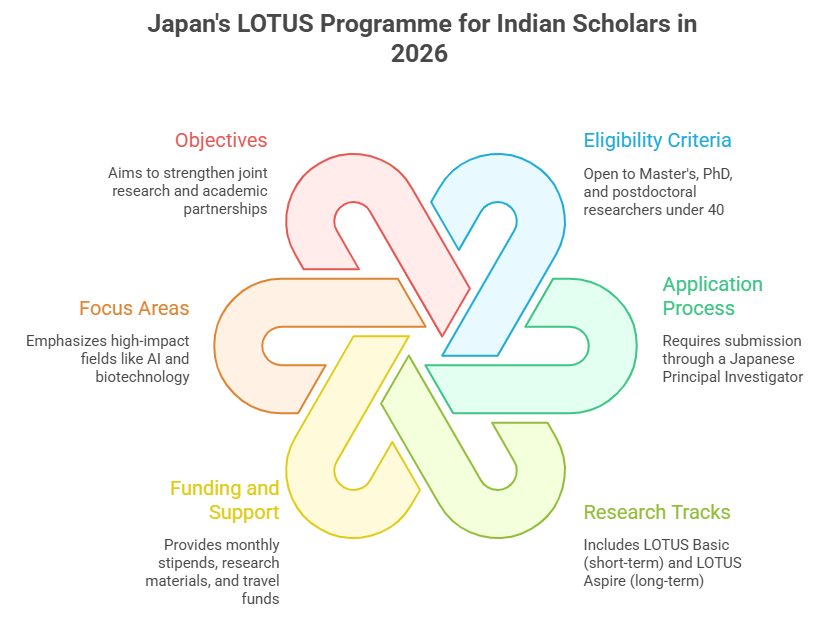
The academic collaboration between India and Japan aims to strengthen joint research projects for international development.
The LOTUS Program, organized by the Japan Science and Technology Agency, focuses on building long-term academic partnerships and strengthening research networks between the two countries.
The application window is open for eligible candidates and shall remain operative until June 9, 2026.
The following are the highlights of Japan’s LOTUS Program for Indian scholars:
- The program is open to Master’s students, PhD scholars, and postdoctoral researchers affiliated with Indian institutions.
- Applicants must be under 40 years of age.
- Applications must be submitted through a Principal Investigator at a Japanese university or research institution.
- The program is divided into two tracks that support both long- and short-term research.
- LOTUS Basic supports short-term research stays of up to 12 months.
- LOTUS Aspire offers long-term research opportunities of up to 36 months.
- Both tracks involve joint supervision by Indian and Japanese institutions.
- Eligible candidates will receive a monthly stipend of about 240,000 yen to cover living expenses.
- Additional funds will be provided for research materials, travel within Japan, and collaboration support
- Candidates enrolled in the LOTUS Aspire track can secure up to ₹25.6 lakh in annual funding.
- The program focuses on high-impact fields such as artificial intelligence, biotechnology, energy, materials science, and quantum technologies.
Also, read...
Japan May Increase Visa and Residency Fees Tenfold Amid Rising Foreign Population – Apply Now!
How to Apply for Japan’s LOTUS Program from India?
Indian scholars cannot apply directly to Japan’s LOTUS program in 2026. Interested applicants need assistance from a Principal Investigator at a Japanese university or research institution.
The steps to apply for Japan’s LOTUS program from India are as follows:
Step 1: Secure an institutional affiliation in India as a Master’s student, PhD scholar, or postdoctoral researcher.
Step 2: Connect with the Principal Investigator (PI) at a Japanese university or research institution whose work aligns with your research interests.
Step 3: Upon selection, build a joint research proposal with your mentor in Japan across priority fields such as AI, biotechnology, energy, materials, or semiconductors
Step 4: Submit the application through the Japanese Principal Investigator (PI) via the JST portal
Step 5: Select the LOTUS Program Track (Basic/Aspire) and submit your application before the deadline (June 9, 2026).
Step 6: Await approval to work in Japan as a research scholar.
Also, read...
Japan plans to introduce new migration programme for foreign nationals. Check your eligibility!
Why Indian Aspirants Should Apply for the LOTUS Program 2026 in Japan?
The LOTUS Program 2026 provides Indian researchers with an opportunity to work on joint projects in Japan while focusing on global academic networks and a strong research portfolio.
The benefits of applying for the LOTUS Program 2026 are as follows:
- Access to a fully-funded global research opportunity.
- Opportunity to work with top Japanese universities (University of Tokyo and Kyoto University )and researchers.
- Collaborate on international projects to build a global research network.
- Flexible program duration option (12-month short-term and 36-month long-term projects).
Are you looking for step-by-step assistance with overseas immigration? Contact Y-Axis, the world’s No. 1 overseas immigration consultancy!
For recent immigration updates, check out Y-Axis News Page!
FAQs
What is the LOTUS Programme 2026 in Japan?
The LOTUS Programme 2026 is a fully funded international research initiative launched by Japan to support Indian Master’s, PhD, and postdoctoral scholars. It enables selected candidates to work on advanced research projects at top Japanese universities and institutions with access to world class infrastructure. The programme focuses on strengthening India Japan academic collaboration while offering global exposure and career growth. With structured mentorship and funding support, it helps researchers build a strong international profile. If you are planning to apply but need clarity on the process or requirements, connect with our experts today for complete guidance.
Who can apply for the LOTUS Programme 2026?
Indian students and researchers currently enrolled in a Master’s, PhD, or postdoctoral programme at a recognized institution are eligible to apply. Applicants must have a strong academic background and be actively involved in research aligned with priority fields such as AI, biotechnology, energy, or materials science. Candidates are generally required to be under 40 years of age and must secure support from a Japanese host researcher. Meeting eligibility criteria is only the first step, and building a strong profile is equally important. If you want to assess your chances and eligibility accurately, get expert guidance now.
How much funding is offered under the LOTUS Programme 2026?
The LOTUS Programme 2026 offers generous financial support to selected candidates, making it a highly attractive opportunity for Indian researchers. Participants can receive up to ₹25.6 lakh annually depending on the track selected. In addition, a monthly stipend of around 240000 yen is provided to cover living expenses in Japan. The programme also includes funding for travel, research materials, and collaboration activities. This comprehensive financial support allows scholars to focus entirely on their research without financial stress. If you want to understand funding breakdowns and improve your chances of selection, connect with our experts today.
Can Indian students apply directly for the LOTUS Programme 2026?
Indian students cannot apply directly for the LOTUS Programme 2026 as the application must be submitted through a Japanese Principal Investigator at a host institution. This means candidates need to first identify a suitable professor or research mentor in Japan and secure their agreement to support the application. The process involves building a research proposal collaboratively with the host researcher. Since this step is crucial and often challenging, many applicants struggle to navigate it effectively. If you need help connecting with the right mentors and preparing your application, get step by step assistance from our experts today.
What is the deadline to apply for the LOTUS Programme 2026?
The application deadline for the LOTUS Programme 2026 is June 9 2026, making it essential for candidates to begin preparations well in advance. Since the process involves securing a Japanese mentor, developing a research proposal, and completing documentation, last minute applications can significantly reduce your chances of success. Early preparation allows you to refine your research focus and build a strong application. Missing the deadline means waiting for the next cycle, which can delay your academic plans. If you want to stay on track and apply successfully before the deadline, seek expert guidance now.
What research fields are covered under the LOTUS Programme 2026?
The LOTUS Programme 2026 focuses on high impact and future oriented research areas that align with global innovation trends. These include artificial intelligence, biotechnology, energy, materials science, semiconductors, and quantum technologies. Candidates are expected to propose research topics that contribute to scientific advancement and international collaboration. Choosing the right field and aligning your research proposal with programme priorities can significantly improve your chances of selection. It is important to demonstrate both academic depth and real world relevance. If you need help selecting the right research domain and building a strong proposal, connect with our experts today.
What are the duration options under the LOTUS Programme 2026?
The programme offers two flexible tracks to suit different research needs and career stages. LOTUS Basic supports short term research stays of up to 12 months, making it ideal for students seeking international exposure. LOTUS Aspire provides long term opportunities of up to 36 months for deeper research engagement and impactful outcomes. Both tracks involve collaboration between Indian and Japanese institutions and offer full funding support. Choosing the right track depends on your academic goals and research scope. If you are unsure which option is best for you, get personalized guidance from our experts today.
Is Japanese language required for the LOTUS Programme 2026?
The LOTUS Programme 2026 primarily operates in English, especially within academic and research environments, so Japanese language proficiency is not mandatory for most applicants. However, having basic knowledge of Japanese can be beneficial for daily communication and cultural integration during your stay. It can also enhance your overall experience while working in Japan. While language is not a strict requirement, strong communication skills and clarity in your research proposal are essential. If you want to strengthen your profile and prepare effectively for the programme, connect with our experts for complete support.
What are the key benefits of the LOTUS Programme 2026 for Indian students?
The LOTUS Programme 2026 offers multiple benefits including fully funded research opportunities, global exposure, and access to advanced research facilities in Japan. It allows Indian students to collaborate with leading researchers, build international networks, and enhance their academic and professional profiles. The experience gained through this programme can open doors to global career opportunities in academia and industry. It also strengthens India Japan research collaboration, adding long term value to your career. If you want to make the most of this opportunity and improve your chances of selection, get expert assistance today.
How can I improve my chances of selection for the LOTUS Programme 2026?
Improving your chances of selection requires a combination of academic excellence, a well defined research proposal, and securing the right Japanese mentor. Candidates should focus on aligning their research with priority fields and demonstrating strong subject knowledge. Building a clear and impactful proposal that highlights innovation and collaboration is crucial. Early preparation and professional guidance can make a significant difference in your application quality. Since competition is high, a strategic approach is essential. If you want to build a strong application and maximize your chances of success, apply with expert support today.
Tags:
Study in Japan
work in Japan
Japan student visa
Japan work visa
Japan immigration news
migrate to Japan
LOTUS Porgramme 2026
fully funded research in Japan
Indian Master’s student in Japan
Indian researchers in Japan
Share
Options for you by Y-Axis

Get it on your mobile

Get News alerts

Contact Y-Axis
Latest Article
Related Post
Trending Article

Posted On October 15 2026
India-Switzerland Mobility Pact Opens New Work, Study and Travel Opportunities for Indians. Check Your Eligibility!