

Posted on April 29 2026
Germany Opens New Study and Research Pathways for Indians in 2026

By , Editor & Director
Updated May 02 2026
Highlights: Germany to Create New Immigration Pathways for Indian Students and Researchers
- Germany's academic exchange agency, DAAD, will be focusing on Indian students and researchers to build long-term partnerships.
- The country is set to prioritize long-term institutional partnerships and research collaboration over simple student mobility earlier.
- Germany currently has more than 60,000 Indian students and aims to acquire more to join academic initiatives.
- DAAD has expressed its intention to send German students to study in India as a part of its Indo-German Comprehensive Roadmap on Higher Education
- Programs like SPARC-GIANT will promote collaboration between Indian and German universities on joint research projects across priority areas such as sustainability, healthcare, Industry 4.0, and semiconductors.
*Want to apply for a Germany student visa? Let Y-Axis guide you with the process.
Germany To Strengthen Study and Research Opportunities for Indians Aspirants in 2026
Germany is all set to expand its engagement with India beyond traditional student mobility strategies in 2026. Germany's academic exchange agency, DAAD, aims to focus on research partnerships, innovation, and institutional collaboration across the two countries.
Currently, Germany has more than 60,000 Indian students studying in German institutions, making it one of the top destinations for higher education among Indian aspirants.
The latest academic development between Germany and India will support broader research initiatives, academic exchanges, and university collaborations.
Programs like SPARC-GIANT in Germany are shifting focus towards high-growth sectors such as sustainability, technology, healthcare, and innovation.
For Indian students planning to study abroad, this year can provide access to more research-driven opportunities, stronger industry-academia links, and improved pathways to global careers.
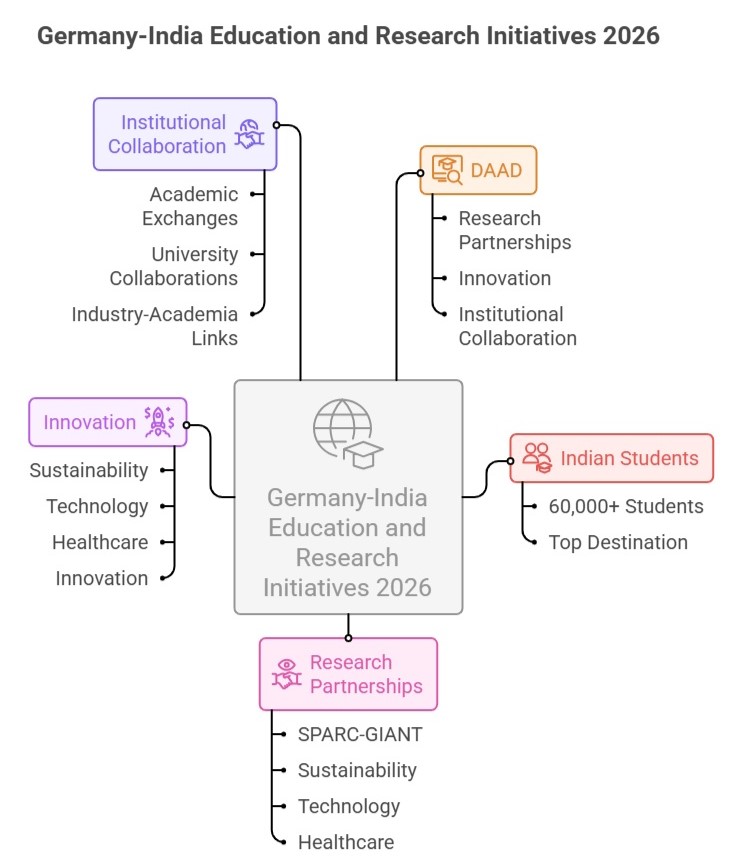
The table below highlights major Germany–India education and research initiatives in 2026:
| Latest Development | What It Means for Indian Aspirants |
|---|---|
| 60,000+ Indians Studying in Germany | Germany continues to be one of the top study destinations for Indian students. |
| Focus Shifts Beyond Student Mobility | Opportunities expanding into research collaboration, innovation programs, and academic partnerships. |
| Stronger India–Germany Research Partnerships | Increased scope for joint research projects, funding initiatives, and institutional tie-ups. |
| Two-Way Academic Exchange Model | Enhanced collaboration between Indian and German universities, researchers, and faculty exchange programs. |
| No German Campuses Planned in India Yet | Focus remains on partnerships, exchange programs, and joint degrees rather than physical campuses. |
| Long-Term Talent and Innovation Strategy | Germany aims to integrate Indian students into its future skilled workforce and innovation ecosystem. |
Also, read...
Germany faces major labour shortage and turns to Indian talent to fill skill gaps. Check your eligibility now!
What Germany’s New Research Collaboration Means for Indians?
The joint academic initiative between India and Germany focuses mainly on research collaboration and institutional partnerships. Indian aspirants, including students and researchers, will benefit from wider opportunities beyond traditional study programs.
The benefits of India-Germany academic and research collaboration are as follows:
- Access to more research opportunities through joint innovation programs.
- Broader university collaborations supporting more exchange programs and partnerships.
- Better international career prospects through closer links between German universities and industry.
- Opportunities to work in high-demand sectors in Germany, such as engineering, healthcare, sustainability, and technology.
- Potential pathways to skilled migration through education-to-employment opportunities.
- Wider access to scholarships and funded research projects through bilateral initiatives.
- Long-term academic and professional growth in one of Europe’s leading education hubs.
*Are you looking for step-by-step assistance with Germany immigration? Contact Y-Axis, the world’s No. 1 overseas immigration consultancy!
For recent immigration updates, check out the Y-Axis Schengen News Page!
FAQs
What are Germany’s new study and research opportunities for Indian students in 2026?
Germany is expanding opportunities for Indian students beyond traditional degree programs by strengthening research collaboration, institutional partnerships, and academic exchange. This could create more options in research-led education, innovation projects, scholarships, and university partnerships. Students may benefit from stronger links between academics and industry, particularly in high-demand sectors such as engineering, healthcare, sustainability, and technology. For Indian aspirants planning to study abroad, this development may open additional pathways not only for education but also for internships, research careers, and long-term work opportunities in Germany after graduation.
How can Indian students benefit from Germany’s new research collaboration initiatives?
Indian students may benefit through access to collaborative research programs, stronger university tie-ups, and expanded academic opportunities. These initiatives can help students gain international research exposure, participate in innovation-driven projects, and build skills valued in global job markets. Many students may also find better prospects for funded research, doctoral studies, and industry-linked academic programs. With Germany emphasizing long-term partnerships, students could benefit from enhanced learning experiences, stronger employability, and possible pathways to skilled migration. For many Indian aspirants, this makes Germany attractive not just for study, but for career growth as well.
Can Indian students get scholarships under Germany’s new education collaboration plans?
Germany already offers many scholarship and funding opportunities, and stronger academic collaboration may increase access to research grants, funded programs, and exchange opportunities. Depending on the university, course, and research area, students may find support through tuition benefits, living stipends, or project funding. Students interested in master’s, PhD, or research-intensive programs could particularly benefit. As collaborations grow, more bilateral opportunities may emerge for Indian applicants. Exploring scholarship eligibility early can improve admission planning. For students looking to reduce study costs abroad, these developments may make Germany an even more attractive destination.
Will Germany’s new initiatives create more job opportunities for Indian students?
Germany’s focus on research, innovation, and skilled talent development may improve career prospects for international students. Closer university-industry collaboration can support internships, applied research opportunities, and smoother transitions from study to employment. Students in STEM, healthcare, and other in-demand sectors may especially benefit. Germany continues to need skilled professionals, and students who study there often gain an advantage in understanding the local labor market. For Indian students aiming for global careers, these initiatives may strengthen both educational and long-term employment opportunities, making Germany appealing for those seeking study plus career outcomes.
Is Germany still a good destination for Indian students in 2026?
Yes, Germany continues to be one of the top destinations for Indian students due to quality education, strong research infrastructure, and growing career opportunities. With the latest focus on deeper collaboration with India, Germany may offer even broader benefits beyond traditional study programs. Students can potentially access innovation-driven learning, research opportunities, and post-study pathways. Affordable public education and demand for skilled talent also remain attractive factors. For aspirants considering international education in 2026, Germany stands out as a destination that combines academic quality, career prospects, and long-term growth opportunities.
What courses may benefit most from Germany’s new research and innovation focus?
Courses aligned with Germany’s research priorities may see the greatest benefits. These can include engineering, artificial intelligence, data science, renewable energy, sustainability, healthcare, biotechnology, manufacturing, and other innovation-led fields. Students pursuing research-oriented master’s or doctoral programs may especially benefit from increased collaboration opportunities. Industry-linked disciplines may also gain from stronger academic partnerships. While opportunities may extend across multiple fields, students in high-demand sectors may have stronger prospects for research funding, internships, and employment pathways. Choosing a course aligned with Germany’s future talent needs can strengthen both study and career outcomes.
Can these new opportunities help Indian students with long-term settlement in Germany?
Studying in Germany can support long-term career and migration goals for eligible students, and stronger academic-industry collaboration may further enhance those prospects. Research exposure, internships, and employment pathways can help students transition from education to skilled work opportunities. Many students consider Germany attractive because study can lead to broader professional opportunities. While settlement depends on meeting immigration requirements, education can be an important first step. For Indian aspirants interested in combining education with long-term international career plans, Germany’s new initiatives may offer added value beyond just earning a degree abroad.
Will Germany open more pathways for Indian researchers and PhD students?
The stronger emphasis on institutional collaboration and research partnerships could create more opportunities for Indian researchers, doctoral students, and academic professionals. Students interested in advanced research may benefit from joint projects, faculty collaborations, and expanded research ecosystems. This could be particularly relevant for those pursuing PhDs, innovation-led careers, or specialized academic fields. Germany has long been known for research excellence, and deeper India collaboration may further strengthen access for Indian talent. For aspirants considering research-focused study abroad options, these developments may make Germany even more attractive in 2026 and beyond.
How can Indian students prepare to take advantage of Germany’s new opportunities?
Students can begin by researching suitable universities, identifying research-focused programs, and exploring fields aligned with Germany’s demand. Preparing strong academic profiles, language readiness where needed, and understanding scholarship or admission timelines can help. Students interested in research should also explore faculty collaborations, funded programs, and innovation-led courses. Early planning is important, especially for competitive programs. Consulting eligibility requirements and assessing career goals can help applicants choose the right pathway. For students serious about Germany, preparing now may improve access to emerging opportunities created through these expanding India–Germany collaborations.
Why are more Indian students considering Germany for higher education and research?
Many Indian students see Germany as attractive because of quality education, research strengths, affordable study options, and strong career prospects. The latest push toward deeper academic and innovation collaboration adds another reason to consider Germany. Students may gain access not only to degrees but also to research opportunities, global exposure, and potential employment pathways. Germany’s demand for skilled talent also supports its appeal among international students. For aspirants seeking a destination that combines education, innovation, and long-term growth opportunities, Germany is increasingly viewed as a strong option in 2026.
Ready to Study in Germany?
Get expert guidance on university selection, scholarships, and visa processing.
Book Free Consultation📞 +91-7670800000 | ✉ info@y-axis.com
Tags:
Study in Germany
Germany student visa
Germany immigration news
SPARC-GIANT Germany
Indian students in Germany
Indian researchers in Germany
Indo-German education
India Germany Academic Collaboration
Germany immigration
Germany Academic Exchange
Share
Options for you by Y-Axis

Get it on your mobile

Get News alerts

Contact Y-Axis
Latest Article
Related Post
Trending Article

Posted On October 26 2026
New Zealand Opens 5,000 Temporary Work Visa Slots for Indian Professionals. Check your eligibility!