

Posted on September 17 2026
Visa Sponsorship Jobs in Ireland: In-Demand Jobs, Employers & How to Apply

By , Editor & Director
Updated September 17 2026
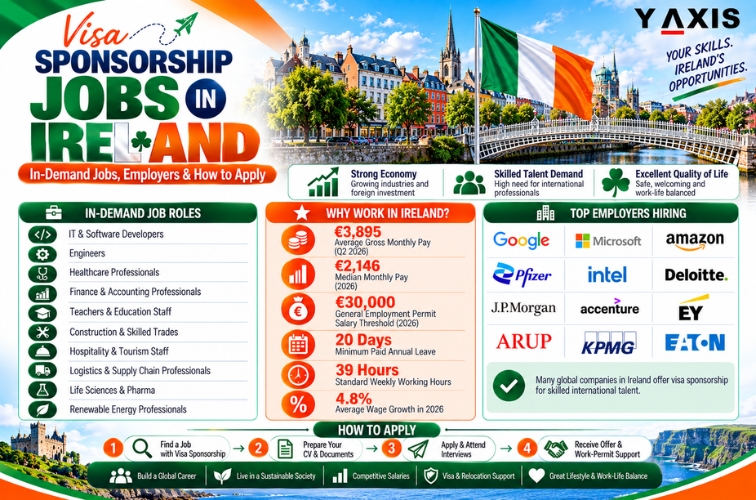
Ireland is one of the top destination for skilled professionals seeking international career opportunities, particularly in sectors such as information technology, healthcare, engineering, construction, pharmaceuticals, science, finance, and business. Qualified professionals with relevant skills and experience may find opportunities with Irish employers that recruit workers from outside the European Union (EU) and European Economic Area (EEA). For Indian nationals and other non-EU/EEA citizens, securing a suitable job offer from an Irish employer is generally an important step before applying for an employment permit. The position must meet the eligibility requirements of the relevant employment permit category, and both the employer and employee must satisfy the applicable conditions.
Ireland offers several types of employment permits for international workers. The Critical Skills Employment Permit and General Employment Permit are two key routes for qualified professionals, depending on the occupation, salary, qualifications, and other eligibility requirements. From 1 March 2026, the minimum annual salary for a standard General Employment Permit is €36,605. For a Critical Skills Employment Permit, the standard minimum salary is €40,909 per year for eligible roles requiring a relevant degree. Different salary thresholds may apply to certain graduates and specific occupations.
It is important to note that working in an occupation experiencing a skills shortage does not automatically guarantee employment sponsorship or an employment permit. Applicants must meet the relevant requirements for their occupation, including qualifications, skills, experience, salary, employment terms, and permit eligibility. Regulated professions, such as nursing and medicine, may also require professional registration in Ireland.
*Want to work in Ireland? Y-Axis is here to help you with the necessary support!
Why Apply for Visa Sponsorship Jobs in Ireland?
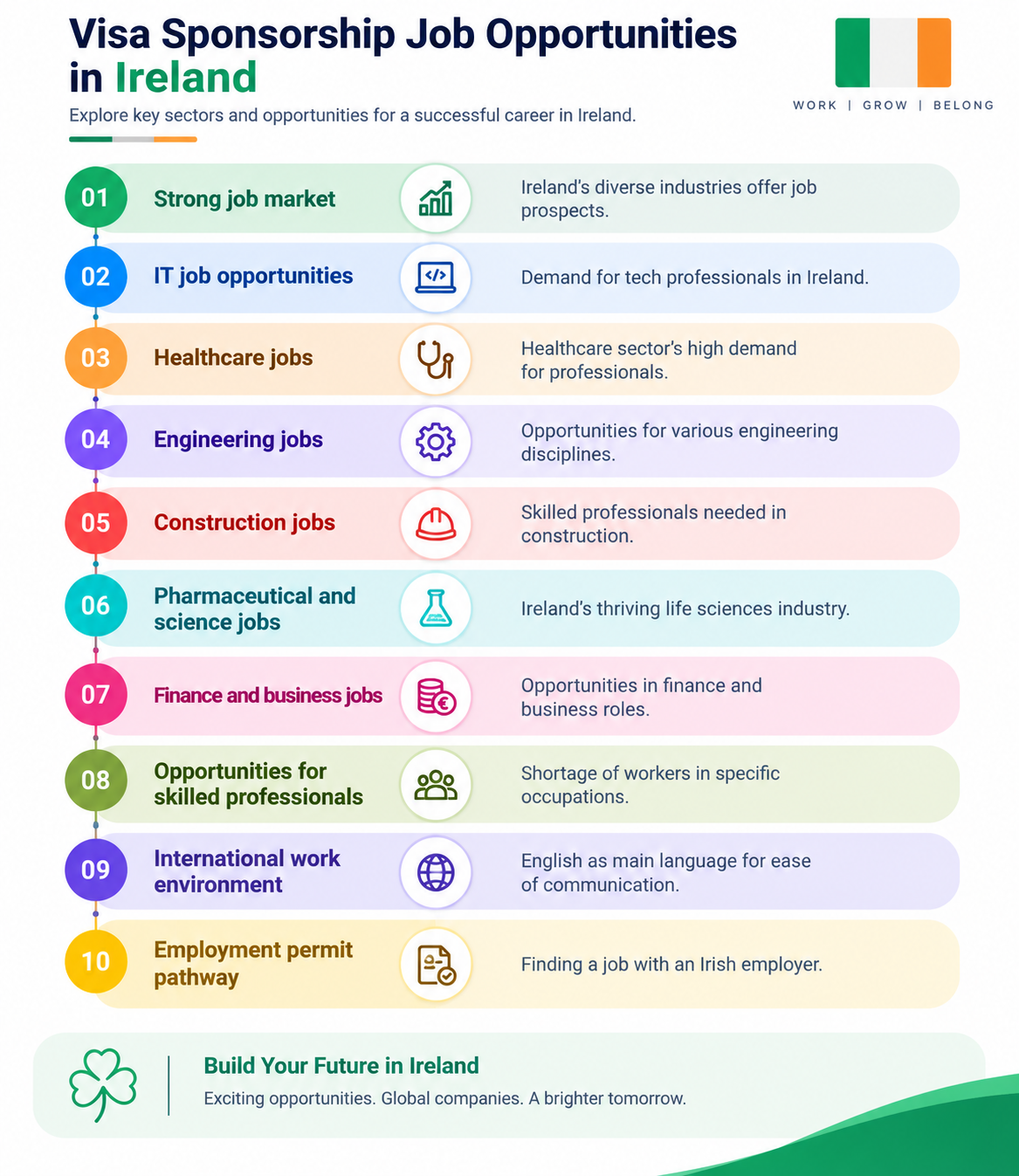
- Strong job market: Ireland has job opportunities in IT, healthcare, engineering, construction, pharmaceuticals, finance, science, and other industries.
- IT job opportunities: Ireland has demand for software developers, system developers, IT specialists, IT project managers, business analysts, and other technology professionals.
- Healthcare jobs: Healthcare is an important area of demand. Jobs can include nurses, doctors, pharmacists, physiotherapists, psychologists, radiographers, healthcare assistants, and other healthcare professionals. Some jobs require professional registration in Ireland.
- Engineering jobs: Ireland has opportunities for civil, mechanical, electrical, chemical, electronics, production, and other engineering professionals.
- Construction jobs: There are opportunities in construction and related areas, especially for skilled professionals such as construction managers, engineers, and other specialist workers.
- Pharmaceutical and science jobs: Ireland has a large pharmaceutical and life sciences industry. Jobs can include scientists, laboratory professionals, biochemists, chemical scientists, and other specialist roles.
- Finance and business jobs: Ireland also has opportunities in accounting, finance, business analysis, taxation, economics, statistics, and other specialist business roles.
- Opportunities for skilled professionals: People with the right qualifications, skills, and work experience may find opportunities in occupations where Ireland has a shortage of workers.
- International work environment: Ireland is home to many international companies, especially in technology, pharmaceuticals, finance, engineering, and business. English is the main language used in workplaces, which can make it easier for international professionals to work and communicate.
- Employment permit pathway: People from outside the EU/EEA generally need an employment permit or another type of permission to work legally in Ireland. For many foreign workers, the process starts by finding an eligible job with an Irish employer.
What Are Visa Sponsorship Job Opportunities in Ireland?
Visa sponsorship jobs in Ireland are jobs where an Irish employer hires a worker from outside the EU/EEA and supports the worker through the employment permit process. Indian professionals with suitable qualifications, skills and experience can explore employment opportunities with Irish and international companies. Ireland's employment permit system covers skilled occupations in areas such as IT, healthcare, engineering, construction, pharmaceuticals, science, finance, business, transport and other specialist fields. Some occupations are included on the Critical Skills Occupations List because they are considered important to the Irish economy and have skills shortages. For many non-EU/EEA professionals, securing an eligible job offer from an Irish employer is an important step before applying for an employment permit. The type of permit available depends on the occupation, salary, qualifications, experience and other requirements.
*Read about - Ireland Job Market: Trends & Job Opportunities
In-Demand Jobs in Ireland with Visa Sponsorship
|
In-Demand Job Sector |
Common Job Roles |
Approx. Annual Salary (€) |
|
IT & Technology |
Software Developer, Software Engineer, IT Specialist, Data Analyst, Cloud Engineer, Cybersecurity Specialist |
€45,000–€90,000+ |
|
Engineering |
Civil Engineer, Mechanical Engineer, Electrical Engineer, Electronic Engineer, Production Engineer |
€45,000–€85,000 |
|
Healthcare |
Nurse, Doctor, Pharmacist, Physiotherapist, Medical Specialist, Healthcare Professional |
€40,000–€120,000+ |
|
Construction & Infrastructure |
Civil Engineer, Construction Manager, Quantity Surveyor, Site Manager, Building Services Engineer |
€45,000–€90,000 |
|
Pharmaceuticals & Life Sciences |
Pharmaceutical Scientist, Biochemist, Quality Specialist, Process Engineer, Laboratory Scientist |
€45,000–€90,000 |
|
Finance & Banking |
Financial Analyst, Accountant, Risk Analyst, Financial Controller, Finance Manager |
€45,000–€100,000 |
|
Science & Research |
Research Scientist, Laboratory Scientist, Biochemist, Research Engineer, Data Scientist |
€40,000–€85,000 |
|
Business & Consulting |
Business Analyst, Project Manager, Business Consultant, Management Consultant |
€45,000–€90,000 |
|
Accounting & Taxation |
Accountant, Tax Specialist, Audit Specialist, Financial Accountant |
€45,000–€85,000 |
|
Transport & Logistics |
Transport Manager, Supply Chain Specialist, Logistics Manager, Operations Manager |
€40,000–€75,000 |
|
Energy & Sustainability |
Energy Engineer, Environmental Specialist, Sustainability Consultant, Renewable Energy Engineer |
€45,000–€85,000 |
|
Construction Trades |
Electrician, Plumber, Welder, Construction Technician, Skilled Tradesperson |
€35,000–€60,000 |
*Read more...
What are the most in-demand jobs in Ireland for the next 10 years?
Highest Paying Careers in Ireland
Ireland offers strong earning potential for experienced professionals in technology, healthcare, engineering, finance, pharmaceuticals and management. Senior and specialist professionals generally earn more than entry-level workers.
|
Job Title |
Approx. Annual Salary (€) |
|
IT Director / Technology Director |
€100,000–€160,000+ |
|
Medical Specialist / Senior Doctor |
€100,000–€200,000+ |
|
Finance Director |
€100,000–€160,000+ |
|
Senior Software Engineer |
€70,000–€110,000 |
|
Cloud Solutions Architect |
€75,000–€120,000 |
|
Cybersecurity Specialist |
€65,000–€105,000 |
|
Data Scientist / AI Specialist |
€65,000–€110,000 |
|
Engineering Manager |
€75,000–€110,000 |
|
Senior Project Manager |
€65,000–€100,000 |
|
Senior Financial Analyst |
€60,000–€90,000 |
|
Risk Manager |
€65,000–€100,000 |
|
Senior Industrial Engineer |
€60,000–€90,000 |
|
Senior Civil Engineer |
€60,000–€90,000 |
|
Supply Chain Manager |
€60,000–€95,000 |
*Read more...
Highest paying Jobs in Ireland for Indians
Top Companies Offering Jobs in Ireland with Visa Sponsorship
Ireland is home to many international companies in technology, pharmaceuticals, financial services, healthcare, engineering, consulting and manufacturing. However, not every vacancy provides employment-permit sponsorship. Sponsorship depends on the employer, position, permit eligibility and candidate's qualifications.
|
Sector |
Company Names |
Common Roles |
|
Technology & IT |
Google, Microsoft, Meta, Apple, Amazon, IBM, Salesforce |
Software Engineers, Data Specialists, Cloud Engineers, IT Specialists |
|
Technology & Software |
HubSpot, Workday, LinkedIn, Oracle, SAP |
Software Developers, Product Managers, Data Analysts, IT Professionals |
|
Pharmaceuticals & Healthcare |
Pfizer, Johnson & Johnson, MSD, AbbVie, Eli Lilly |
Scientists, Pharmacists, Engineers, Laboratory Specialists |
|
Medical Devices |
Medtronic, Boston Scientific, Stryker, Abbott |
Engineers, Quality Specialists, Research Professionals |
|
Financial Services |
Bank of Ireland, AIB, Citi, JPMorgan, Bank of America |
Financial Analysts, Risk Specialists, Accountants, IT Professionals |
|
Consulting & Professional Services |
Accenture, Deloitte, PwC, EY, KPMG |
Business Consultants, Technology Consultants, Financial Consultants |
|
Engineering & Construction |
Jacobs, Arup, PM Group, AtkinsRéalis |
Civil Engineers, Project Managers, Construction Professionals |
|
Manufacturing & Industry |
Intel, Siemens, Dell Technologies, GE HealthCare |
Engineers, Production Specialists, Quality Specialists |
|
Food & Consumer Products |
Kerry Group, Glanbia, PepsiCo |
Food Scientists, Engineers, Supply Chain Specialists |
|
Energy & Utilities |
ESB, EirGrid, Siemens Energy |
Energy Engineers, Electrical Engineers, Project Managers |
|
Transport & Logistics |
DHL, UPS, FedEx, Kuehne+Nagel |
Logistics Specialists, Supply Chain Managers, Operations Specialists |
Where Can Indians Find Sponsored Jobs in Ireland?
Indian professionals looking for jobs in Ireland can search through:
- Irish company career pages
- Irish job portals
- Recruitment websites
- Professional networking platforms
- Specialist recruitment agencies
- Government and employment services
Candidates should focus on vacancies that are open to non-EU/EEA applicants and meet the requirements of an Irish employment permit.
Before applying, check whether the job:
- Accepts applications from non-EU candidates
- Provides a valid employment contract or job offer
- Meets the required salary conditions
- Matches your education and work experience
- Is eligible for an employment permit
- Requires a Labour Market Needs Test
- Requires professional registration
- Requires specific qualifications or certifications
- Requires English-language skills
- Is offered by a genuine Irish employer
- Meets the current employment permit rules
For many General Employment Permit applications, the employer must complete a Labour Market Needs Test. This requirement does not generally apply to occupations on the Critical Skills Occupations List.
Eligibility Requirements for Visa Sponsorship Jobs in Ireland
Indian professionals generally need to meet the requirements of the relevant Irish employment permit.Requirements can vary depending on the occupation and permit type, but applicants may need:
- A valid passport
- A suitable job offer from an Irish employer
- A signed employment contract
- Relevant educational qualifications
- Relevant work experience
- Skills required for the position
- The required minimum salary
- A job that is eligible for an employment permit
- Professional registration, where required
- Qualification recognition, where required
- The required employment conditions
- The correct immigration permission to work in Ireland
For a Critical Skills Employment Permit, the applicant must have the relevant qualifications, skills and experience and generally needs a job offer lasting at least two years. The employer must also meet the relevant requirements. For example, the employer generally needs to be a genuine business operating in Ireland and meet the applicable employment-permit conditions.
Documents Required for Ireland Employment Permits
The documents required can vary depending on the job and employment permit. Indian professionals may need:
- Valid passport
- Signed employment contract or job offer
- Updated CV
- Educational certificates
- Academic transcripts
- Professional certificates, where required
- Work experience letters
- Proof of professional qualifications
- Employer and job-related documents
- Professional registration documents, where required
- Qualification recognition documents, where required
- Salary and employment information
- Any documents requested by the Irish authorities
Applicants should make sure that their documents are accurate, complete and consistent with the information provided in the employment permit application.
Types of Work Permits and Employment Routes in Ireland
|
Work Permit / Route |
Who It Is For |
Key Points |
|
Critical Skills Employment Permit |
Highly skilled non-EEA professionals in eligible occupations |
Designed for occupations with critical skills shortages; generally requires an eligible job offer and minimum salary |
|
General Employment Permit |
Non-EEA workers in eligible occupations |
Covers a wider range of occupations; a Labour Market Needs Test is required in many cases |
|
Intra-Company Transfer Employment Permit |
Employees transferred to an Irish branch of their existing company |
For eligible senior managers, key employees and trainees transferred within the same company |
|
Contract for Services Employment Permit |
Certain workers providing services in Ireland through an overseas employer |
Applies to specific contract-for-services situations |
|
Researcher Hosting Agreement |
Eligible researchers |
For researchers working with approved research organisations under a hosting agreement |
|
Internship Employment Permit |
Certain students or recent graduates |
Available for eligible internships that meet the relevant conditions |
|
Sport and Cultural Employment Permit |
Eligible sports and cultural professionals |
For qualifying roles in sports and cultural activities |
|
Dependant Employment Permit |
Eligible dependants of certain employment-permit holders |
Available subject to the relevant conditions |
The Critical Skills Employment Permit is designed for highly skilled occupations where Ireland has identified significant skills shortages. It does not require a Labour Market Needs Test. The General Employment Permit covers a broader range of jobs, provided the occupation is not on the Ineligible List and the other requirements are met. A Labour Market Needs Test is required in most cases.
*Read more...
How to apply for an Ireland work visa?
How to Find Visa Sponsorship Jobs in Ireland?
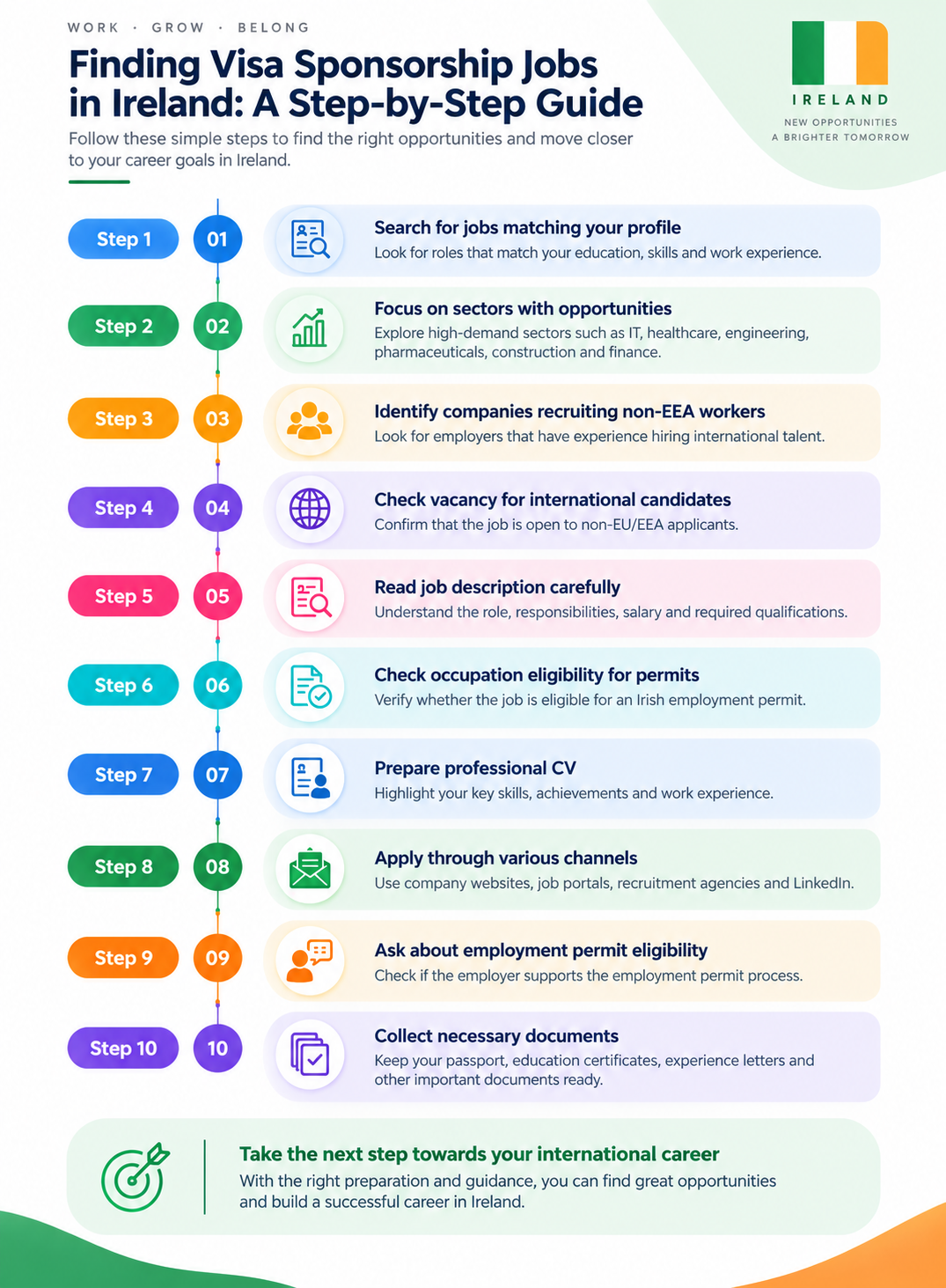
Follow these steps to improve your chances of finding a suitable job in Ireland:
Step 1: Search for jobs that match your education, skills and work experience.
Step 2: Focus on sectors with employment opportunities for international professionals, such as IT, healthcare, engineering, pharmaceuticals, construction and finance.
Step 3: Search for Irish and international companies that recruit non-EEA workers.
Step 4: Check whether the vacancy accepts applications from international candidates.
Step 5: Read the job description carefully and check the salary, qualifications and experience requirements.
Step 6: Check whether the occupation is eligible for a Critical Skills Employment Permit or General Employment Permit.
Step 7: Prepare a professional CV highlighting your education, experience, skills and certifications.
Step 8: Apply through company career pages, Irish job portals, LinkedIn and recruitment websites.
Step 9: If you receive a job offer, ask the employer whether the position is eligible for an employment permit and which permit route applies.
Step 10: Collect your documents, including your passport, employment contract, education certificates and experience letters.
Step 11: Submit the employment permit application through the required process.
Step 12: An employment permit application must generally be received at least 12 weeks before the proposed employment start date.
Step 13: Once the required employment permit and immigration permission are approved, complete any required visa and immigration procedures before travelling.
Step 14: Travel to Ireland after receiving the required permission and complete the necessary immigration formalities.
Step 15: Start working according to the conditions of your employment permit and employment contract.
*Want to find jobs in Ireland? Avail Y-Axis Resume Marketing Services to find the right job that matches your profile.
Tips to Get a Sponsored Job in Ireland
- Apply for jobs that match your education, skills and work experience.
- Focus on sectors with opportunities for skilled professionals, such as IT, healthcare, engineering, pharmaceuticals, construction, finance and science.
- Look for employers that have experience hiring foreign and non-EU/EEA workers.
- Check the salary and employment permit requirements before applying.
- Keep your CV short, clear and professional.
- Highlight your most important technical skills, qualifications and work experience.
- Apply through company websites, trusted Irish job portals and recruitment websites.
- Check whether you need professional registration or specific qualifications for the job.
- Keep your passport, education certificates, experience letters and other important documents ready.
- Ask the employer whether they support or participate in the employment permit process.
- Check whether you qualify for the Critical Skills Employment Permit or another suitable employment permit route.
- Check whether the job is eligible for an employment permit before accepting an offer.
- Avoid employers or agents who ask for large payments in exchange for a job or a guaranteed visa.
- Verify the employer and check the latest Irish employment permit and immigration rules before accepting a job offer.
Conclusion
Ireland offers opportunities for foreign workers in IT, healthcare, engineering, construction, pharmaceuticals, science, finance, business and other skilled fields. The Irish employment permit system provides important routes for non-EU/EEA workers who have a suitable job offer from an eligible Irish employer. Skilled professionals may qualify for routes such as the Critical Skills Employment Permit, depending on their occupation, salary, qualifications and experience.
Job opportunities and employment requirements can vary by occupation and employer. If you are an Indian professional planning to work in Ireland, first check your occupation, qualifications, experience, salary and other eligibility requirements. Search for employers that hire international workers and carefully check the job and employment permit conditions before accepting an offer.
*Are you looking for step-by-step assistance with overseas immigration? Contact Y-Axis, the world's No. 1 overseas immigration consultancy, for end-to-end assistance!
FAQs
What are visa sponsorship jobs in Ireland?
Visa sponsorship jobs in Ireland are jobs offered by employers to workers from outside the EU/EEA who need permission to work in Ireland. The employer provides a suitable job offer and may support the employment permit process. The job must meet the conditions of the relevant employment permit. Applicants also need to meet requirements related to salary, qualifications, skills, experience and other employment conditions.
Can Indians get sponsored jobs in Ireland?
Yes, Indian professionals can apply for jobs in Ireland that are eligible for employment permits. Applicants should have the required qualifications, skills and experience for the position. They generally need a job offer from an eligible Irish employer before applying for an employment permit. The occupation, salary and employment conditions must meet the requirements of the relevant permit category.
Which jobs are in demand in Ireland?
Some areas with opportunities for skilled professionals include information technology, healthcare, engineering, pharmaceuticals, construction, science, finance and business. Common roles include software developers, engineers, nurses, doctors, scientists, financial professionals and IT specialists. Job availability can change based on employer needs and labour-market conditions. Applicants should check whether their specific occupation is eligible for an Irish employment permit.
What is the Critical Skills Employment Permit in Ireland?
The Critical Skills Employment Permit is designed for highly skilled professionals whose occupations are considered important to Ireland's economy. It covers certain jobs in areas such as IT, engineering, healthcare, science, finance and other specialist fields. Applicants must meet the required salary, qualification, experience and job-offer conditions. The position must also be eligible under the current Critical Skills Occupations List.
What is the General Employment Permit in Ireland?
The General Employment Permit allows eligible non-EEA workers to take up certain jobs in Ireland. It covers a wider range of occupations than the Critical Skills Employment Permit. The job must not normally be on the list of occupations that are ineligible for an employment permit. Applicants must also meet the required salary, employment, qualification and other conditions. A Labour Market Needs Test is required in many cases.
What is the minimum salary for an Ireland employment permit?
The minimum salary depends on the type of employment permit and the occupation. From 1 March 2026, the standard minimum annual salary for a General Employment Permit is €36,605. The standard salary requirement for eligible Critical Skills Employment Permit jobs requiring a relevant degree is €40,904. Different salary thresholds can apply to certain graduates and specific occupations, so applicants should check the latest requirements.
Do I need a job offer to work in Ireland?
For most employment permit routes, you need a suitable job offer from an Irish employer before applying for the permit. The job must meet the requirements of the relevant permit category, including salary and occupation conditions. A written employment contract or suitable job offer is generally required. Applicants should check the permit requirements carefully before accepting a job or making travel arrangements.
Can I get an Ireland work permit without a job offer?
Generally, employment permits are linked to a specific employment opportunity, so applicants usually need an eligible job offer before applying. There are different immigration routes for different situations, but a person cannot normally obtain a standard employment permit simply to travel to Ireland and search for any job. It is important to identify the correct immigration route based on your qualifications, occupation and circumstances.
Which companies in Ireland hire foreign workers?
Ireland has many international and local companies in technology, pharmaceuticals, finance, healthcare, engineering, consulting and manufacturing. Companies such as Google, Microsoft, Apple, Amazon, Pfizer, Johnson & Johnson, Intel, Accenture and major financial institutions operate in Ireland. However, not every vacancy offers employment permit support. Candidates should check individual job advertisements and confirm whether the position is suitable for non-EU/EEA applicants.
How can Indians find visa sponsorship jobs in Ireland?
Indian professionals can search for suitable jobs through Irish company career pages, trusted job portals, recruitment websites and professional networking platforms such as LinkedIn. Search for positions that match your qualifications and experience and check whether the employer accepts non-EU/EEA applicants. Before applying, review the salary, occupation and employment permit requirements. Avoid job offers that promise guaranteed visas in exchange for large payments.
What qualifications are needed for sponsored jobs in Ireland?
The qualifications depend on the job and employment permit. Applicants should have the education, professional skills and work experience required for the position. Some specialist jobs may require a degree or specific technical qualification. Regulated professions, such as healthcare, may also require professional registration in Ireland. Candidates should compare their qualifications with the employer's job requirements and the conditions of the relevant employment permit.
Is English required for jobs in Ireland?
English is widely used in Irish workplaces, so good English communication can be important for many jobs. Employers may expect candidates to communicate clearly with colleagues, customers or clients. The exact language requirements depend on the position and employer. Some professional or regulated roles may have additional requirements. Applicants should carefully read the job description and check whether any specific language or communication standards apply.
Do healthcare workers need registration to work in Ireland?
Some healthcare professionals need professional registration before they can practise in Ireland. This can apply to occupations such as nursing, medicine, pharmacy and other regulated healthcare professions. The registration process depends on the profession and the relevant Irish regulatory body. Having a job offer does not automatically give permission to practise. Healthcare workers should check registration, qualification recognition and employment permit requirements before accepting a position.
What documents are needed for an Ireland employment permit?
The documents depend on the type of permit and the job. Applicants may need a valid passport, employment contract or job offer, updated CV, educational certificates, academic records, work experience letters and professional certificates. Additional documents may be required for regulated professions or specific occupations. Applicants should provide accurate information and ensure that their documents match the details provided in the employment permit application.
What is a Labour Market Needs Test in Ireland?
A Labour Market Needs Test is a requirement for many General Employment Permit applications. It is intended to show that an employer has tried to find a suitable worker from Ireland or the EEA before hiring a non-EEA worker. The employer generally needs to advertise the vacancy for the required period. The test is not normally required for eligible occupations covered by the Critical Skills Employment Permit.
Can fresh graduates from India get jobs in Ireland?
Yes, graduates from India can apply for suitable jobs in Ireland, but they must meet the requirements of the job and relevant immigration route. Some employment permit categories have different salary thresholds for qualifying graduates. Employers may also ask for specific qualifications, technical skills or experience. Fresh graduates should focus on entry-level roles that match their education and carefully check whether the position is eligible for an employment permit.
Can I bring my family to Ireland on a work permit?
Family immigration rights depend on the type of employment permit and the applicant's circumstances. Certain employment permit holders may have routes for family reunification, while the rules and waiting periods can differ. The Critical Skills Employment Permit can provide a pathway for eligible workers to seek family reunification under the applicable immigration rules. Applicants should check the current family immigration requirements before making travel or relocation plans.
How long does it take to get an Ireland employment permit?
Processing times can vary depending on the permit type, application volume and whether additional information is required. Applicants should plan ahead and submit their application within the required timeframe. Employment permit applications generally need to be submitted at least 12 weeks before the proposed employment start date. Processing an employment permit is separate from any visa or immigration process that may also be required.
Can I change jobs after getting an Ireland employment permit?
An employment permit is generally connected to the employer and job for which it was issued. Therefore, you may not be able to change employers immediately without meeting specific conditions and obtaining the required permission. Rules can differ depending on the permit type and how long you have held the permit. Before changing jobs, check the applicable employment permit rules and make sure you have the required approval.
How can I avoid fake visa sponsorship job offers in Ireland?
Be careful with employers or agents who promise a guaranteed job, work permit or visa in exchange for a large payment. Verify the company, job advertisement and employment contract before sharing sensitive documents or making payments. Check whether the occupation and salary meet employment permit requirements. A genuine job offer should clearly identify the employer, position, salary and employment conditions. Always check the latest Irish immigration and employment permit rules.
Tags:
Visa Sponsorship Jobs in Ireland 2026Ireland Work Visa Sponsorship for IndiansIreland Employment Permit JobsIreland Work Visa for Foreign WorkersIn-Demand Jobs in Ireland with Visa SponsorshipIreland Employer-Sponsored JobsIreland Jobs for Foreign Workers
Share
Options for you by Y-Axis

Get it on your mobile

Get News alerts

Contact Y-Axis
Latest Article
Popular Post
Trending Article
Posted On September 17 2026
Visa Sponsorship Jobs in Ireland: In-Demand Jobs, Employers & How to Apply