

Posted on October 29 2026
US Expands Social-Media Screening to TN, TD and I Visa Applicants: What Changes in 2026?

By , Editor & Director
Updated October 31 2026
~ Dr. Serah Vinodini Vilvaraj
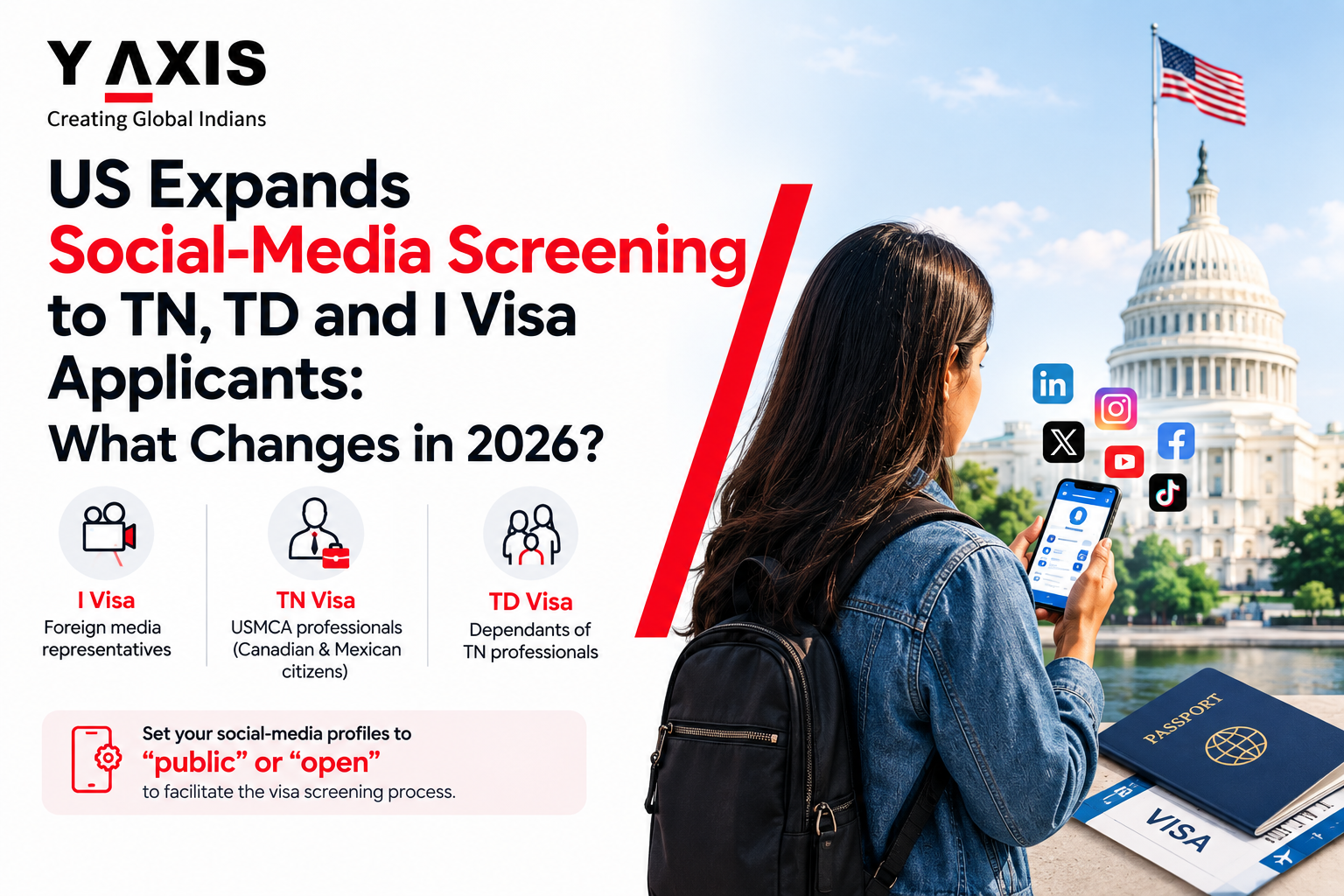
International professionals travelling to the United States under the USMCA, foreign media representatives and their family members now face an expanded online-presence review as part of the US visa application process. The US Department of State announced on 18 September 2026 that it would extend social-media screening to three additional nonimmigrant visa classifications: I visa for foreign media representatives, TN visas for eligible USMCA professionals, and TD visas for their dependants. The expanded requirements took effect on 1 October 2026.
Applicants in these categories are instructed to set the privacy settings on all their social-media profiles to “public” or “open” to facilitate the review. The announcement expands a screening process that already applies to several other visa categories, including H-1B and H-4 applicants, international students and exchange visitors. For professionals planning to work in the United States, the change adds another step to visa preparation. Applicants must still meet the eligibility requirements for their visa category, but they should also be prepared for their online presence to be reviewed as part of the screening process.
What changed from 1 October 2026?
The latest announcement extends online-presence review to three additional nonimmigrant visa classifications.
|
Visa category |
Who it covers |
What applicants need to know |
|
I visa |
Foreign media representatives, including eligible journalists and other media professionals |
Applicants are instructed to make their social-media profiles public or open for screening. |
|
TN visa |
Eligible Canadian and Mexican citizens entering the US for qualifying professional work under the USMCA |
Visa applicants in this category are subject to the expanded online-presence review. |
|
TD visa |
Eligible spouses and children accompanying or joining a TN professional |
Dependants applying for TD visas must also prepare for online-presence screening. |
The requirement concerns applicants for these nonimmigrant visa classifications. It does not mean that every person working in media or every professional employed by a North American company automatically needs a new visa. The distinction between visa issuance and immigration status is especially important for Canadian professionals. Canadian citizens generally do not need a TN visa stamp to seek admission in TN status, although specific circumstances may require a visa application. Mexican citizens generally need TN visas. Dependants' requirements can also differ according to their nationality and circumstances. Applicants should consult the relevant official guidance rather than assume that the same procedure applies to every TN or TD case.
1. TN professionals: What should Canadian and Mexican applicants check?
The TN category allows eligible Canadian and Mexican citizens to undertake qualifying professional employment in the United States under the United States–Mexico–Canada Agreement (USMCA). Applicants must meet the applicable requirements, including citizenship, an eligible profession, a qualifying job arrangement and the relevant educational or professional qualifications. The new screening requirement adds an online-presence consideration to the visa application process for TN applicants who need a visa.
What Canadian professionals need to know
Canadian citizens generally do not need a TN visa to seek admission in TN status at a US port of entry. They must still meet the relevant eligibility and admission requirements. Consequently, the Department of State's announcement about TN visa applicants should not be interpreted as saying that every Canadian professional must submit a visa application or attend a consular interview. Canadians who do apply for a TN visa should follow the State Department's instructions on social-media privacy settings. Those who do not require a visa should verify any applicable requirements with US Customs and Border Protection.
What Mexican professionals need to know
Mexican citizens generally require a TN visa to enter the United States as USMCA professionals. For these applicants, the expanded online-presence review is directly relevant to consular visa processing. They should check their application instructions, prepare the required documentation and ensure their social-media privacy settings comply with the State Department's direction.
Official guidance: US Department of State — Visas for Canadian and Mexican USMCA Professional Workers
2. TD dependants: Screening also applies to family visa applicants
The expanded review also covers TD visa applicants, the dependants of TN professionals. Eligible spouses and children may accompany or join a TN professional in the United States, subject to the applicable immigration requirements. Their visa requirements can depend on nationality and individual circumstances.
The State Department's 18 September announcement specifically includes TD applicants in the expanded online-presence review. Family members applying for TD visas should therefore prepare for screening rather than assume that being a dependant exempts them from it. This does not change the basic purpose of TD status. It does mean that eligible family members who need TD visas should review the relevant application instructions and privacy settings before applying. Families should also distinguish between a dependant who needs a visa and one who may qualify for admission without a visa. Canadian citizens, for example, generally do not need a TD visa, while non-Canadian dependants of Canadian TN professionals may need one depending on their circumstances.
3. I visas: What foreign media professionals should know
The I visa is intended for eligible foreign media representatives travelling to the United States to engage in qualifying media activities. From 1 October 2026, I visa applicants were added to the categories covered by the State Department's expanded online-presence review.
Journalists and other eligible media professionals should therefore check their social-media privacy settings as part of their application preparation. They should also ensure that their visa application accurately describes their intended media activities and that their supporting documents meet the relevant requirements. The announcement does not establish a new visa category or change the basic purpose of the I visa. It expands the screening applied during the visa process. Applicants should consult the State Department's official media visa guidance to confirm whether their work qualifies for I classification.
4. Does social-media screening mean a visa will be refused?
No. Being subject to online-presence review does not, by itself, mean an applicant will be refused a visa.
The Department of State says it uses available information during screening and vetting to identify applicants who may be inadmissible, including people who pose a national-security or public-safety threat. Applicants must also demonstrate that they meet the requirements of the visa category they are seeking. The review forms part of the wider visa adjudication process. The announcement does not establish an automatic refusal rule for applicants simply because they use social media or have a public profile. Applicants should not assume that making a profile public guarantees approval, either. The final decision remains with the relevant US authorities and depends on the applicant's eligibility and individual circumstances.
5. What should applicants do before submitting a US visa application?
Applicants in the I, TN and TD categories can take several practical steps to prepare.
1. Check the visa category. Confirm whether the intended activity falls under I, TN or TD classification and whether a visa application is required in the applicant's circumstances.
2. Review social-media privacy settings. The State Department instructs applicants in these categories to set all social-media profiles to “public” or “open” to facilitate screening.
3. Keep application information accurate. Ensure that the information supplied in the visa application is complete and consistent with supporting documentation.
4. Check the official visa requirements. Confirm the eligibility, documentation and application procedure for the relevant category.
5. Plan for processing time. Complete the application carefully and follow instructions from the relevant US embassy or consulate. Do not assume that screening will lead to a specific processing time or outcome.
6. Check the requirements for dependants. A spouse or child applying for TD status should confirm their own visa requirements rather than relying only on the principal applicant's arrangements.
Applicants should not delete or alter information simply to try to influence a screening outcome. The appropriate approach is to provide accurate information and follow the official application instructions.
6. Which other US visa categories already have online-presence review?
The September 2026 announcement extends a process that was already in place for several other nonimmigrant visa categories. According to the Department of State, online-presence review already applied to categories including:
- Students: F-1 and M-1, and their F-2 and M-2 dependants.
- Exchange visitors: J-1 and J-2.
- Temporary workers: H-1B and H-3, including H-4 dependants of H-1B and H-3 applicants.
- Other categories: Certain diplomatic and official visa classifications, fiancé(e) and dependant visas, cultural-exchange visas, religious-worker visas, and S, T and U classifications.
The latest announcement adds I, TN and TD applicants to that list. It should not be presented as the first time the United States has required social-media information or screening from visa applicants.
Official sources
- US Department of State — Announcement of Expanded Screening and Vetting for Visa Applicants
- US Department of State — Visas for Canadian and Mexican USMCA Professional Workers
- US Department of State — Visas for Members of the Foreign Media
- US Department of State — Expanded screening for H-1B and H-4 applicants
FAQs
1. When did the US expand social-media screening to TN, TD and I visa applicants?
The Department of State announced the expansion on 18 September 2026, and the new requirements took effect on 1 October 2026.
2. Which US visa categories are newly affected?
The expansion covers I visas for foreign media representatives, TN visas for eligible USMCA professionals and TD visas for their dependants.
3. Must TN and TD applicants make their social-media profiles public?
The Department of State instructs applicants for I, TN and TD nonimmigrant visas to set the privacy settings on all their social-media profiles to “public” or “open” to facilitate online-presence review.
4. Does the new rule mean every Canadian TN professional must apply for a visa?
No. Canadian citizens generally do not need a TN visa to seek admission in TN status. Mexican citizens generally require TN visas. Applicants should verify the procedure that applies to their nationality and circumstances.
5. Are TD dependants exempt from social-media screening?
No general exemption for TD visa applicants is stated in the announcement. Applicants for TD visas are included in the expanded online-presence review and should follow the official instructions.
6. Will an applicant automatically be refused a visa because of social-media screening?
No. Screening is part of the visa assessment process, not an automatic refusal. Applicants must meet the requirements of their visa category, and the final decision rests with the US authorities.
7. Does the expansion apply to H-1B applicants for the first time?
No. H-1B applicants and H-4 dependants were already covered by online-presence review before the October 2026 expansion. The latest announcement adds I, TN and TD categories.
8. Where can applicants find official guidance?
Applicants should consult the US Department of State's announcement, the relevant visa-category guidance and the US embassy or consulate handling their application.
Tags:
US Visa Rules 2026
US Social Media Screening
TN Visa
TD Visa
I Visa
USMCA Professionals
US Work Visa
US Immigration News
US Visa Application
Global Mobility
Share
Options for you by Y-Axis

Get it on your mobile

Get News alerts

Contact Y-Axis
Latest Article
Popular Post
Trending Article

Posted On November 02 2026
France Reduces Work Permit Restriction to 6 Months and Residence Decisions to 90 Days