


Posted on April 27 2026
How Indian Students Are Getting UK University Offers Within 2 Weeks 2026 – Fast Admissions, Requirements & Tips

By , Editor & Director
Updated May 02 2026
How Indian Students Are Getting UK University Offers Within 2 Weeks?
Not long ago, students had to wait 3–6 months to get an offer from a UK university. Now, things have changed a lot. Many Indian students are getting conditional or unconditional offers in just 7–14 days. In 2023–24, more than 1,26,000 Indian students studied in the UK, making India the top country sending students there. Around 150 UK universities now offer direct admissions and faster processing for international students for the 2026–27 intake. This change started when India became the largest source of international students in 2022–23, overtaking China, and it still holds that position. To handle this growing number of students, UK universities have made their admission process faster and simpler for Indian applicants. This doesn’t mean standards are lower, it just means the system is more efficient and quicker than before.
*Want to study in UK? Contact Y-Axis for complete guidance
Why UK Universities Are Giving Quicker Decisions to Indian Students?
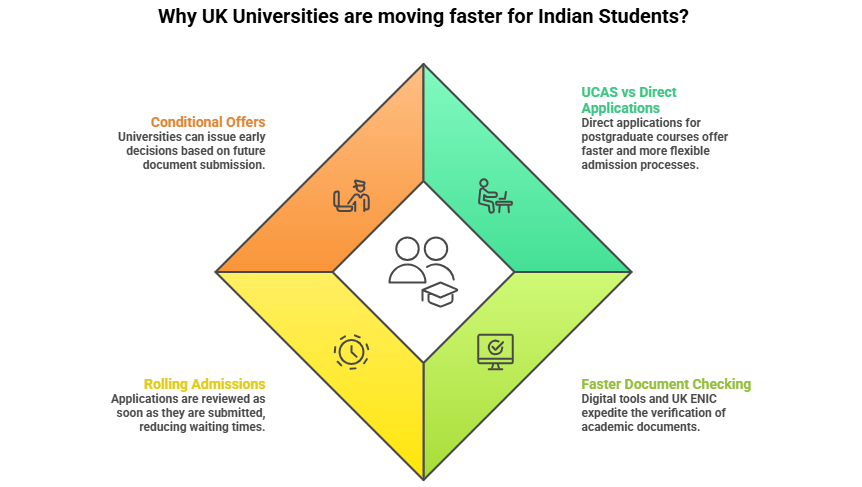
The UK government wants to attract 600,000 international students every year. Because of this goal, universities are competing to admit students faster. For Indian students, several changes have made the admission process quicker and smoother.
UCAS vs Direct Applications
Many people think all UK applications go through UCAS, but that’s not true. UCAS is mainly used for undergraduate courses. For postgraduate courses like Master’s, MBA, and PhD, students usually apply directly to universities. Since most Indian students apply for postgraduate courses, they use direct applications. These are faster and more flexible. Many universities also have special teams just for international students, which helps speed up the process from months to just days.
Faster document checking
UK universities now use digital tools to check documents quickly. They can verify academic marks, IELTS/PTE scores, and degrees almost instantly. Systems like UK ENIC help universities confirm if your degree is valid, especially from recognised Indian institutions like UGC-approved colleges, IITs, and NITs. If your documents are correct and complete, your application can be reviewed very quickly.
Rolling admissions:
Earlier, universities reviewed applications in batches, which caused delays. Now, most UK universities follow rolling admissions, where applications are checked as soon as they are submitted. This means you don’t have to wait in a long queue, and your application is processed faster. You can apply in October, January, or even May and still receive a quick response.
Conditional offers:
Many Indian students receive conditional offers from UK universities. This means the university accepts your application but asks you to submit final documents later, such as your degree certificate or English test scores. A conditional offer is still a valid and confirmed offer. Because of this system, universities can give decisions quickly, even before you complete your degree.
UK Universities with the Fastest Application Processing
Not all UK universities process applications at the same speed. Some universities are known to give faster responses than others. Many Indian students and education consultants have noticed that certain universities provide quick decisions, especially for postgraduate courses. These universities usually have faster systems and dedicated teams to review applications, which helps them give offer letters in a shorter time.
| University | Known for | Typical Offer Timeline |
|---|---|---|
| University of Hertfordshire | Business, Computing, Engineering | 7–10 days |
| Coventry University | MBA, Data Science, Nursing | 7–14 days |
| University of Northampton | Business, Social Sciences | 7–14 days |
| University of Sunderland | Health, Computing, Business | 7–14 days |
| Birmingham City University | Business, Architecture, Media | 10–21 days |
| University of Salford | Media, Engineering, Business | 14–21 days |
| UWE Bristol | Engineering, Business, Law | 14–21 days |
| Robert Gordon University | Oil & Gas, Nursing, Business | 7–14 days |
UK University Application Requirements
Getting a fast offer mainly depends on how complete your application is. If any important document is missing, your application may get delayed. To get a quicker response, make sure you submit all the required documents properly.
Here’s what a complete application usually includes:
- Online application form: Fill in all the details correctly. If anything is missing, your application may be delayed.
- Academic transcripts: Submit all your mark sheets from your Bachelor’s degree (and Master’s if you have one). If they are not in English, they should be translated.
- English test scores: Provide proof of your English skills through tests like IELTS, PTE, TOEFL, or Duolingo, depending on what the university accepts.
- Personal Statement (SOP): A short essay (usually 500–1,000 words) explaining your education, experience, why you chose the course, and your career goals.
- Reference letters: Usually 1–2 letters from your teachers or employers, submitted through the university system.
- CV / Resume: A simple 1–2 page resume, especially needed for courses like MBA or professional programs.
- Degree certificate: If you have already graduated, submit your certificate. If you are still studying, you can provide a letter from your college with your expected graduation date.
- Passport copy: A clear copy of your passport’s main page.
UK Student Visa Process After Getting Your Offer
Getting an offer from a UK university is just the first step. After that, you need to apply for a UK Student Visa, which requires some extra time and preparation. Once the university gives you a CAS (Confirmation of Acceptance for Studies), usually 3–6 months before your course starts, you can begin your visa application.
Most UK Student Visa applications from India are processed within about 3 weeks, and sometimes even faster. If you choose the Priority Visa service (for an extra fee), you can get a decision in around 5 working days. In some cases, the Super Priority service can give you a decision by the next working day.
For the 2026–27 academic year, the UK government is still offering the Graduate Route visa. This allows international students to stay in the UK for 2 years after graduation (or 3 years for PhD students) to work or look for jobs. This is one of the main reasons why many Indian students choose to study in the UK.
*Want to apply for UK Student Visa? Contact Y-Axis for step-by-step application process
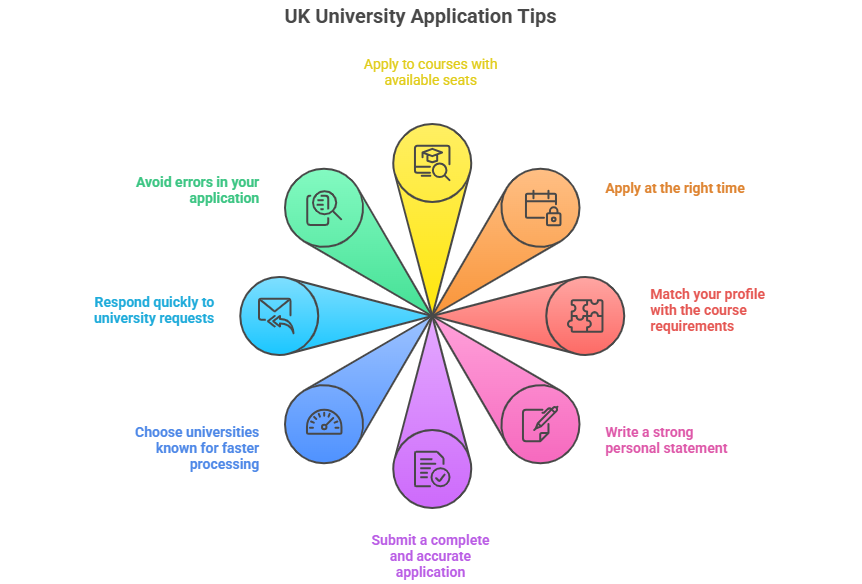
Tips to Get Faster UK University Application Decisions
- Apply to courses with available seats
Choose programes that still have open seats. Universities process applications faster when they are actively looking to fill spots. - Apply at the right time
The best time to apply is between November and January for a September intake. Applying late (June–July) may slow down your application as seats get filled. - Match your profile with the course requirements
Apply to courses where your academic background fits well. If your profile matches common admission criteria, universities can make quicker decisions. - Write a strong personal statement
A clear and well-structured SOP helps your application stand out. Explain your goals, experience, and why you chose the course. Weak or generic SOPs can delay your application. - Submit a complete and accurate application
Make sure all documents are correct and uploaded properly. Missing or incorrect details can slow down the process. - Choose universities known for faster processing
Some universities are known to give quicker responses, especially for postgraduate courses. Research before applying. - Respond quickly to university requests
If the university asks for additional documents or information, reply as soon as possible to avoid delays. - Avoid errors in your application
Double-check all details before submitting. Mistakes can lead to delays or even rejection.
Final Thoughts
Getting an offer in 2 weeks is real. UK universities have improved their systems to process applications faster, especially for Indian students, who are one of their main student groups. Students who understand how the process works and prepare their applications properly can benefit the most. Complete all your documents before applying. Write a clear and strong personal statement. Choose courses that match your profile. Apply early in the admission cycle. If you use a consultant, make sure they are genuine. If you follow these steps, getting an offer within two weeks is not just possible, it is very likely.
*Looking for assistance with UK Immigration? Talk to Y-Axis, the world’s No. 1 overseas immigration consultancy for end-to-end support.
FAQs
Can I get a UK university offer in 2 weeks?
Yes, it is possible to get a UK university offer within 7–14 days. Many universities have improved their systems to process applications faster, especially for international students. If your application is complete and all documents are submitted correctly, the university can review it quickly. Courses with available seats are also processed faster. However, timelines may vary depending on the university, course demand, and time of application. So, while not guaranteed, getting an offer in 2 weeks is very common today.
Why are UK universities giving faster offers now?
UK universities are giving faster offers because they want to attract more international students. The UK government has set a target to increase international student numbers, so universities are improving their admission systems. They now use digital tools to verify documents quickly and have dedicated teams for international applications. Also, many universities follow rolling admissions, which means they review applications as soon as they are received. All these changes have made the process faster, especially for Indian students.
Do all UK universities give fast offers?
No, not all UK universities give fast offers. Some universities are known for quick processing, while others may take more time depending on their internal process. Popular universities with high demand may take longer because they receive many applications. Also, the course you apply for can affect the timeline. However, many universities now try to respond faster than before. It is always a good idea to check the average processing time of a university before applying.
Who can get faster offers, undergraduate or postgraduate students?
Postgraduate students usually get faster offers compared to undergraduate students. This is because most postgraduate applications are submitted directly to universities, which makes the process quicker. Undergraduate applications often go through UCAS, which can take more time. Also, universities have clear criteria for postgraduate admissions, making it easier to review applications quickly. Since many Indian students apply for Master’s courses, they benefit more from these faster processing systems and often receive quicker decisions.
What is a conditional offer?
A conditional offer means the university has accepted your application, but you need to meet some requirements before final admission. These conditions may include submitting your final degree certificate, achieving a required score in an English test, or providing additional documents. It is still a valid offer and shows that the university is ready to admit you. Once you meet all the conditions, your offer becomes unconditional. Conditional offers help universities give quicker decisions even if some documents are pending.
Is a conditional offer valid?
Yes, a conditional offer is a proper and official offer from the university. It means the university has accepted your application, but you still need to complete some requirements. These conditions may include submitting your final degree certificate, achieving the required English test score, or providing any missing documents. Once you meet all these conditions, your offer becomes unconditional. Many students first receive conditional offers, and it is a normal part of the UK admission process.
What is a CAS in UK admissions?
CAS stands for Confirmation of Acceptance for Studies. It is an important document given by the university after you accept their offer. You need this document to apply for your UK student visa. The CAS contains details about your course, tuition fees, and university. Without this document, you cannot move forward with your visa application. Universities usually issue the CAS a few months before your course starts after verifying your documents.
How long does it take to get a UK student visa?
A UK student visa usually takes about 3 weeks to process after you submit your application. In some cases, it may be faster if your documents are correct and complete. There are also faster options like Priority service, which gives a decision in about 5 working days, and Super Priority service, which can give a decision the next day. However, these faster services cost extra money, so you can choose based on your needs.
What documents are required for a UK application?
To apply to a UK university, you need several important documents. These include your academic transcripts or mark sheets, English test scores like IELTS or PTE, a personal statement explaining your goals, and reference letters from teachers or employers. You also need a CV or resume and a copy of your passport. If you have completed your degree, you must submit your certificate. If not, a letter from your college can be used.
Does a complete application help in getting faster offers?
Yes, a complete application helps you get faster offers from UK universities. When all your documents are submitted correctly, the admissions team can review your application immediately. If any document is missing, they may ask you to submit it later, which delays the process. A complete application also shows that you are serious and well-prepared. This increases your chances of getting a quick response and receiving your offer sooner.
When is the best time to apply for UK universities?
The best time to apply for UK universities is between November and January for a September intake. During this period, universities have more seats available and are actively reviewing applications. Applying early also gives you better chances of getting scholarships and your preferred course. If you apply later, like in June or July, there may be fewer seats left, and the process may take longer. So, applying early is always a better option.
What is rolling admission in the UK?
Rolling admission means that universities review applications as soon as they receive them, instead of waiting for a deadline. This helps students get faster decisions. You do not have to wait for a specific date, and your application is processed quickly if it is complete. This system is commonly used for postgraduate courses in the UK. Because of rolling admissions, students can apply at different times of the year and still receive quick responses from universities.
Can I apply without finishing my degree?
Yes, you can apply to UK universities even if you have not finished your degree. In this case, universities may give you a conditional offer. This means you are accepted, but you must complete your degree and submit your final results later. You can also provide a letter from your college confirming your expected graduation date. This system helps students apply early and secure admission before their final results are released.
Do better marks help in faster decisions?
Yes, having good marks can help you get faster decisions from UK universities. If your academic profile matches the course requirements, the admissions team can quickly review your application and make a decision. Universities often have clear criteria for certain courses, so strong and relevant marks make the process easier. However, marks are not the only factor. Other things like your SOP, experience, and documents also play an important role.
Does the personal statement affect application speed?
Yes, your personal statement plays an important role in how quickly your application is reviewed. A clear and well-written SOP helps the admissions team understand your goals, background, and interest in the course. If your SOP is strong and relevant, it can speed up the decision-making process. However, if your SOP is weak or too general, it may slow things down because the university may need more time to review your application.
What is the Graduate Route visa in the UK?
The Graduate Route visa allows international students to stay in the UK after completing their studies. Students can stay for 2 years after finishing a bachelor’s or master’s degree, and 3 years after a PhD. During this time, they can work or look for jobs in the UK. This visa does not require a job offer at the time of application. It is one of the main reasons many students choose to study in the UK.
How can I improve my chances of getting a fast offer?
To get a faster offer, make sure your application is complete and all documents are submitted correctly. Apply early in the admission cycle when more seats are available. Choose courses that match your academic background. Write a strong and clear SOP that explains your goals. Also, respond quickly if the university asks for any additional information. Following these steps can increase your chances of getting a quick decision from UK universities.
Does the course I choose affect how fast I get an offer?
Yes, the course you choose can affect how quickly you get an offer. Courses with more available seats are usually processed faster because universities want to fill them quickly. On the other hand, popular or high-demand courses may take longer as they receive many applications. Choosing a course that matches your profile and has good availability can increase your chances of getting a faster decision.
Does applying early help in getting faster offers?
Yes, applying early can help you get faster offers. When you apply early in the admission cycle, universities have more seats available and fewer applications to review. This allows them to process your application more quickly. Early applicants also have better chances of getting scholarships and preferred courses. Applying late in the cycle may slow down your application as universities become busier and seats start filling up.
Do universities delay applications with missing documents?
Yes, if your application is missing documents, it can cause delays. Universities usually do not process incomplete applications until all required documents are submitted. They may ask you to provide missing details, which increases the processing time. To avoid this, it is important to submit a complete and accurate application. This helps the admissions team review your application quickly and give a faster decision.
Looking for fast UK university admissions in 2026? Apply with Y-Axis and speed up your offer process.
Tags:
UK university offers for Indian students
UK fast admission process
UK student application timeline
UK postgraduate admissions
UK direct university applications
UK study visa process
UK university admission tips
Fast UK offer letter
Study in UK
Share
Options for you by Y-Axis

Get it on your mobile

Get News alerts

Contact Y-Axis
Latest Article
Popular Post
Trending Article

Posted On September 10 2026
How to Apply for a Greece Work Visa From India