

Posted on November 03 2026
Sweden Hires 1,030 International Researchers, but Only 31% of the 2012 Cohort Remained in Higher Education After Seven Years

By , Editor & Director
Updated November 03 2026
~Dr. Serah Vinodini Vilvaraj
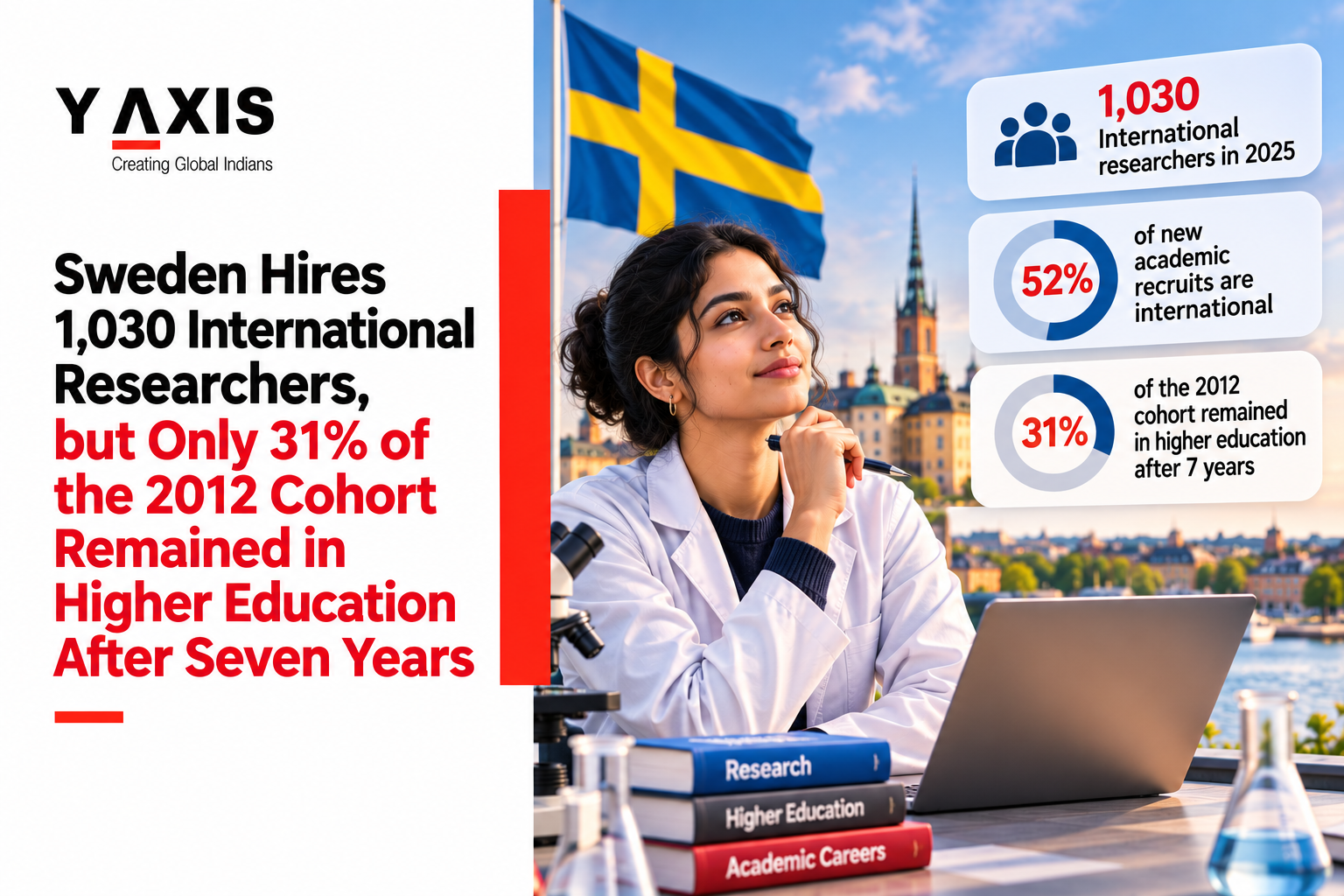
International researchers accounted for 52% of new academic recruits in Sweden in 2025, but new data highlights the challenge universities face in retaining global research talent beyond temporary postdoctoral appointments.
Sweden is recruiting more international researchers than ever, but attracting academic talent is only part of the challenge. New figures show that international researchers accounted for more than half of all newly recruited researchers at Swedish universities and higher education institutions in 2025. Yet a separate analysis of an earlier recruitment cohort reveals that only 31% of international researchers hired in 2012 were still employed within Swedish higher education seven years later.
The findings, published by Statistics Sweden on 13 October 2026, highlight a significant question for universities and research institutions competing for global talent: how can they attract experienced researchers from abroad and provide opportunities that encourage them to build longer-term academic careers?
International researchers account for 52% of new academic recruitment
Swedish higher education institutions recruited 1,030 international researchers in 2025, almost twice the 540 recorded in 2012. Their share of all newly recruited researchers also increased considerably, from 33% in 2012 to 52% in 2025. Recruitment has remained above 1,000 annually in recent years. Sweden recorded 1,010 new international researchers in 2023 and 1,040 in 2024, followed by 1,030 in 2025.
The figures indicate that international recruitment has become an important part of Sweden's university research workforce. The country is drawing researchers with doctoral qualifications from overseas to contribute to academic research, scientific development and specialist knowledge. Natural sciences accounted for the largest share of international researcher recruitment in 2025. Of the 1,030 new recruits:
- 460 worked in Natural Sciences.
- 240 were recruited in Medical and Health Sciences.
- 200 joined Engineering and Technology.
- 80 worked in Social Sciences.
- 40 were recruited in Agricultural and Veterinary Sciences.
- 30 joined Humanities and the Arts.
Together, Natural Sciences, Medical and Health Sciences, and Engineering and Technology accounted for 900 of the 1,030 international researchers recruited during the year. This concentration highlights the importance of international talent to Sweden's scientific, medical and engineering research environment.
Why do so many international researchers leave university employment?
The most striking finding concerns how long international researchers remain employed within Swedish higher education. Statistics Sweden followed researchers recruited in 2012 and compared their continued employment in the higher education sector over the following decade. The results show that 84% of international researchers remained in the sector after one year. The proportion fell to 59% after two years and 49% after three years.
By the seventh year, only 31% of the international researchers recruited in 2012 were still employed within Swedish higher education. The figure declined further to 27% after ten years.
The comparison with Swedish researchers reveals a difference in long-term retention. Among Swedish researchers recruited in 2012, 51% remained employed in higher education after seven years, compared with 31% of international researchers. Statistics Sweden identifies the prevalence of temporary postdoctoral appointments as an important factor behind the pattern. Most international researchers are employed as postdoctoral researchers, positions that typically last two to three years and are primarily intended for research and career development.
The figures therefore suggest that many international researchers leave university employment after completing their postdoctoral appointments. However, leaving higher education does not necessarily mean leaving Sweden. The study measures continued employment within the country's higher education sector, not whether individuals remain in Sweden, move into private-sector research, join businesses or take up academic positions elsewhere.
Sweden's wider challenge: retaining international graduates
The recruitment findings form part of a broader discussion about Sweden's ability to retain highly qualified international talent. In a separate analysis published in March 2026, Statistics Sweden found that just under six out of ten foreign doctoral graduates from the 2017–2020 cohort remained in Sweden three years after completing their studies. The same analysis found that 77% of foreign doctoral graduates who remained in Sweden had an established position in the labour market, compared with 89% of Swedish-born doctoral graduates.
Retention also differed by research field. Three years after graduation, 64% of foreign doctoral graduates in Engineering and Technology remained in Sweden, followed by 58% in Natural Sciences and 54% in Medical and Health Sciences. These findings concern doctoral graduates rather than researchers already employed by universities, so they should not be directly compared with the 31% higher-education retention figure. However, together they highlight the importance of career opportunities after research training and academic appointments.
What makes Sweden attractive to international researchers?
Sweden's appeal extends beyond research opportunities. Statistics Sweden's April 2026 survey of highly qualified labour immigrants who moved to the country between 2021 and 2024 found that work-life balance and family-friendly conditions were important reasons for choosing Sweden. Among respondents from outside the EU/EEA, 70% cited the opportunity to secure a specific job and develop their careers, while 67% highlighted work-life balance and family-friendly conditions.
However, settling into the country can present challenges. Around half of the highly qualified labour immigrants surveyed said establishing social contacts and finding friends was difficult. Housing and the cost of living were also identified as concerns. The findings suggest that attracting international professionals requires more than offering an employment opportunity. Career progression, family circumstances, social integration and long-term employment prospects can all influence whether highly qualified workers choose to remain.
What the findings mean for researchers considering Sweden
For international academics, PhD holders and STEM professionals, Sweden continues to offer opportunities in research-intensive fields, particularly natural sciences, medicine and engineering.
However, prospective researchers should examine the duration and structure of an appointment, the possibility of progression into permanent academic roles, funding arrangements and opportunities beyond a postdoctoral position. Universities and research institutions also face a wider challenge: converting international recruitment into sustained research careers. Temporary appointments can bring specialist expertise into Sweden, but longer-term retention depends on the availability of suitable positions and opportunities for professional development. The latest figures do not suggest that Sweden is losing all the researchers who leave university employment. They do, however, reveal a gap between attracting international academic talent and retaining it within higher education.
For countries competing to recruit global researchers, Sweden's experience offers an important lesson: international talent strategies need to focus not only on who arrives, but also on what happens after the first research appointment ends.
FAQs
1. How many international researchers did Sweden recruit in 2025?
Swedish higher education institutions recruited 1,030 international researchers in 2025, compared with 540 in 2012. International researchers accounted for 52% of all newly recruited researchers in 2025.
2. What percentage of international researchers remained in Swedish higher education after seven years?
Statistics Sweden found that 31% of the international researchers recruited in 2012 were still employed within Swedish higher education seven years later. This does not mean that the remaining researchers had all left Sweden.
3. Which research fields recruited the most international researchers in Sweden?
Natural Sciences recorded the highest number, with 460 international researchers recruited in 2025. Medical and Health Sciences followed with 240, while Engineering and Technology accounted for 200.
4. Why do international researchers leave Swedish universities?
Statistics Sweden notes that most international researchers are employed in temporary postdoctoral positions, which typically last two to three years. Many appear to leave higher education after completing these appointments. The data does not establish that all such researchers leave Sweden.
5. Can international PhD holders find research opportunities in Sweden?
Swedish universities recruit international researchers in areas including natural sciences, medical and health sciences, and engineering and technology. Opportunities depend on research specialisation, qualifications, institutional vacancies, funding and employment requirements.
Tags:
Sweden Jobs
International Researchers
Research Careers
Global Talent
Postdoctoral Researchers
STEM Jobs
Higher Education
Academic Recruitment
Sweden Universities
International Employment
Share
Options for you by Y-Axis

Get it on your mobile

Get News alerts

Contact Y-Axis
Latest Article
Popular Post
Trending Article

Posted On November 03 2026
How to Apply for a Qatar Work Visa From India