

Posted on October 29 2026
New Zealand Opens 5,000 India-Specific Work-Visa Places: Which Skilled Jobs Qualify in 2026?

By , Editor & Director
Updated October 31 2026
~ Dr. Serah Vinodini Vilvaraj
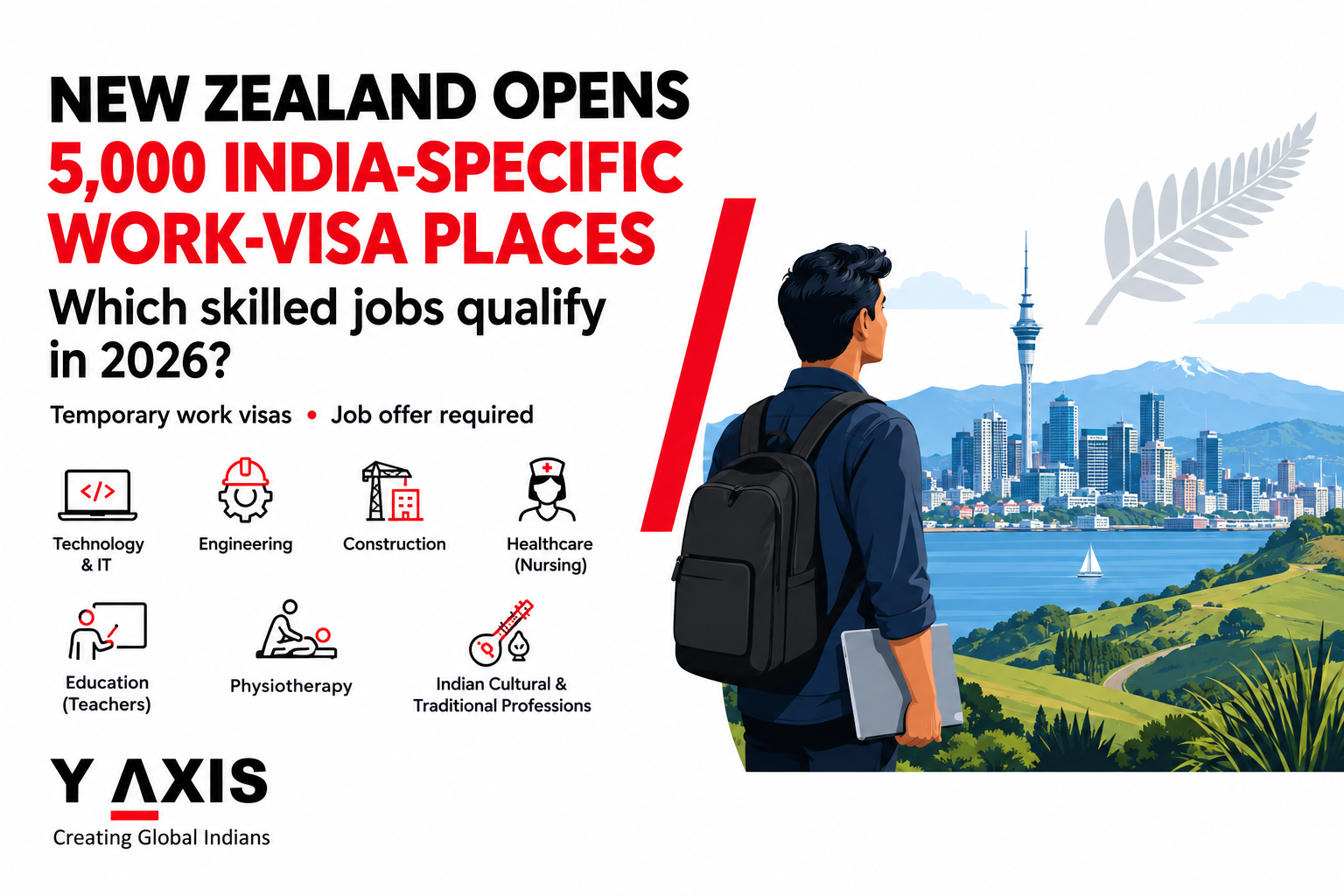
New Zealand’s new India-specific work visas are now available, covering selected technology, engineering, construction, healthcare, education and traditional-profession roles. But applicants need a qualifying job offer, and the routes do not provide a direct path to permanent residence.
New Zealand has opened two new India-specific temporary work-visa pathways following the entry into force of the India–New Zealand Free Trade Agreement (FTA) on 20 October 2026. Together, the two categories can accommodate up to 5,000 visa holders in New Zealand at any one time, creating a new option for eligible Indian professionals seeking employment in the country.
The announcement is particularly relevant to experienced technology professionals, engineers, construction project managers, registered nurses, teachers and physiotherapists. A separate category covers selected occupations associated with Indian cultural and traditional expertise.
However, the new arrangements are not open work permits. Applicants must be Indian citizens, meet occupation-specific qualification and experience requirements, and secure a qualifying full-time job offer from an accredited New Zealand employer. The visas are temporary and do not themselves provide a pathway to residence.
Source: Immigration New Zealand
What is New Zealand’s new India-specific work visas?
Immigration New Zealand has introduced two categories under the bilateral trade agreement:
- India Skilled Work Visa: Up to 4,400 visa holders at any one time across specified skilled occupations.
- India Iconic Work Visa: Up to 600 visa holders at any one time across selected occupations, including yoga instructors, Indian chefs, music teachers and AYUSH practitioners.
Both visas can allow eligible applicants to work in New Zealand for up to three years, depending on the job offer and visa conditions. The visa holder is restricted to the approved occupation, employer and location specified in their visa. The distinction matters because the advertised capacity is not an annual recruitment target. It represents the number of people who may hold visas under the relevant category at one time. It should not be interpreted as a promise that 5,000 jobs will be available or that every applicant who meets the basic criteria will receive a visa.
Which jobs qualify under the India Skilled Work Visa?
The skilled category covers six occupational groups, with places allocated by sector rather than separately to every job title within a group.
|
Eligible occupational group |
Maximum places |
|
Software engineers, software and applications programmers, and ICT project managers |
1,000 |
|
Civil, mechanical, structural and environmental engineers |
1,000 |
|
Construction project managers and building project managers |
700 |
|
Primary and secondary school teachers |
500 |
|
Registered nurses |
900 |
|
Physiotherapists |
300 |
|
Total |
4,400 |
Immigration New Zealand listed all places under this visa as available on 20 October 2026. Applicants should check the official page again before applying because availability can change. If the places for a sector are filled, applications for that sector will not be accepted under this category. Source: India Skilled Work Visa
What qualifications and experience are required?
Meeting the job title requirement alone is not enough. Applicants must satisfy the requirements for their specific occupation before submitting a visa application.
For example:
- Software and ICT roles: Applicants must have a bachelor’s degree in software engineering, engineering or an equivalent field, as well as at least five years of relevant work experience.
- Engineering roles: Applicants must meet the specified engineering qualification or professional-registration criteria. Depending on the role, this may include an appropriately accredited degree or recognition through Engineering New Zealand.
- Construction project management: Applicants must hold one of the qualifications or meet an equivalent pathway specified for the relevant role.
- Healthcare and teaching: Applicants must meet the applicable professional qualification, registration and other occupation-specific requirements.
These are not interchangeable criteria. A qualification accepted for one occupation may not meet the requirements for another. Candidates should use Immigration New Zealand’s official occupation requirements guide to establish whether their education, experience and professional standing are suitable.
What about the India Iconic Work Visa?
The second category covers selected professions associated with Indian cultural or traditional expertise. It includes:
- Yoga instructors
- Indian chefs
- Music teachers
- AYUSH practitioners
The category has a maximum capacity of 600 visa holders at any one time. Applicants must meet the specific qualification and experience requirements for their occupation and obtain a qualifying full-time job offer from an accredited employer.
For instance, the requirements for an Indian chef include a recognised tertiary qualification in Indian cuisine following at least two years of study and at least two years of relevant post-qualification work experience. Other occupations have their own criteria.
This is a specialist employment route, not a general visa for anyone working in hospitality, wellness or the arts. Applicants should check the India Iconic Work Visa requirements before making employment or relocation plans.
How can Indian professionals qualify?
Candidates should work through the following steps before spending money on an application.
1. Confirm citizenship eligibility. These two visa categories are specifically for citizens of India. Holding an Indian qualification or having Indian work experience does not, by itself, satisfy the citizenship requirement.
2. Identify an eligible occupation. The proposed job must fall within the relevant visa’s approved occupational list. A similar-sounding title is not necessarily sufficient.
3. Secure a qualifying job offer. Applicants need an offer of full-time work from an employer accredited for the relevant New Zealand employment pathway. A job advertisement, recruiter conversation or expression of interest is not a substitute for an eligible offer.
4. Check qualifications and experience. The candidate must satisfy the occupation-specific requirements before applying. Some roles require particular degrees, a defined level of experience or professional recognition.
5. Meet English-language requirements. Applicants must provide acceptable evidence of English proficiency. Approved tests include IELTS, TOEFL iBT, PTE Academic and specified Cambridge English tests, with requirements depending on the occupation. The relevant test results must meet Immigration New Zealand’s conditions, including validity requirements.
6. Meet health, character and identity requirements. Applicants must provide the evidence required for their individual circumstances.
7. Check places and the latest instructions. The visa category and relevant sector must have available places when applying. Candidates should rely on the official Immigration New Zealand pages for current availability, documentation, fees and processing instructions.
How long can visa holders stay in New Zealand?
The two India-specific work visas can allow a stay of up to three years, depending on the employment offer and the visa granted. A visa issued for a shorter period may be followed by another visa for the remaining eligible period, provided the applicant continues to meet the requirements. The combined maximum period across the India Skilled Work Visa and India Iconic Work Visa is three years. After reaching that limit, a holder must spend at least three years outside New Zealand before becoming eligible for another visa under these instructions.
Most importantly, neither visa creates an automatic pathway to permanent residence. Anyone whose long-term goal is to settle in New Zealand should assess residence options separately and should not assume that time spent on one of these visas will guarantee eligibility for another immigration category.
Can applicants bring their spouse or children?
No. Under both the India Skilled Work Visa and the India Iconic Work Visa, applicants cannot include a partner or dependent children in the application, and family members are not eligible for visas based on their relationship to the holder under these categories. This restriction is an important consideration for professionals planning a family relocation. Candidates should assess the separate immigration options available to their family members, if any, before accepting a job or committing to relocation costs.
How much does the India Skilled Work Visa cost?
Immigration New Zealand lists the application cost for the India Skilled Work Visa as starting from NZD 1,355. The India Iconic Work Visa also lists a starting cost of NZD 1,355.
Applicants should verify the applicable fee at the time of application. Additional expenses may include English-language testing, qualification assessment, professional registration, document preparation, medical examinations and travel. Candidates should also be cautious of recruitment scams. A genuine job offer should be verified independently, and applicants should not pay an employer or its agent in exchange for a job offer.
What else changes under the India–New Zealand trade agreement?
The new temporary work visas are only part of the agreement’s mobility commitments.
Immigration New Zealand has also announced that, from 16 November 2026, eligible Indian graduates with New Zealand PhDs will be able to qualify for post-study work visas of up to four years, compared with the previous maximum of three years.
The agreement also includes commitments concerning in-study work rights for Indian students and a future working holiday scheme for Indian nationals aged 18 to 30. The working holiday scheme is to be introduced within two years of the agreement entering into force, with up to 1,000 places annually and stays of up to 12 months.
These changes have different eligibility rules and implementation timelines. They should not be treated as benefits that are all available under the two new work visas today.
Source: Immigration New Zealand
Official sources
- Immigration New Zealand — India–New Zealand FTA visa announcement
- Immigration New Zealand — India Skilled Work Visa
- Immigration New Zealand — India Iconic Work Visa
- Immigration New Zealand — Requirements for India Skilled Work Visa jobs
- Immigration New Zealand — English-language requirements
- New Zealand Ministry of Foreign Affairs and Trade — FTA timeline
FAQs
1. Are New Zealand’s new India-specific work visas open now?
Yes. The India Skilled Work Visa and India Iconic Work Visa became available on 20 October 2026, when the India–New Zealand Free Trade Agreement entered into force. Applicants must meet all relevant visa requirements, and places must be available in the applicable category.
2. How many places are available under the new work-visa categories?
The India Skilled Work Visa allows up to 4,400 holders at any one time, while the India Iconic Work Visa allows up to 600. The combined capacity is 5,000 holders at any one time, not 5,000 new visas every year.
3. Can Indian software engineers apply without a job offer?
No. Applicants must have a qualifying full-time job offer from an accredited New Zealand employer and meet the requirements for their occupation. Software and ICT applicants must also satisfy the specified degree and relevant work-experience criteria.
4. Can a visa holder bring a spouse or children?
The two India-specific work visas do not allow partners or dependent children to be included in the application or to qualify for visas based on their relationship to the holder under these categories.
5. Do these visas lead to permanent residence?
No. The India Skilled Work Visa and India Iconic Work Visa are temporary employment categories and do not themselves provide a pathway to residence. Applicants seeking long-term settlement must assess the requirements of any separate residence pathway for which they may qualify.
6. Are the visa places guaranteed to remain available?
No. Places are capped, and availability can change. Immigration New Zealand listed all India Skilled Work Visa places as available on 20 October 2026, but applicants should check the official page before applying.
7. Can citizens of other countries apply for these visas?
No. These specific categories are for citizens of India. Professionals of other nationalities should investigate New Zealand’s other work-visa pathways, including the Accredited Employer Work Visa, where eligible.
8. What should prospective applicants do next?
For Indian professionals, the new pathways offer a defined route to temporary employment in selected occupations—but the key decision is whether the applicant’s qualifications, experience and job offer meet the exact requirements.
Candidates should first check the occupation list, approach legitimate employers, confirm professional recognition where needed and review the latest visa conditions. Those planning to relocate with family or seeking permanent residence should assess those issues before accepting an offer. The agreement creates new mobility options, but it does not remove the need for a genuine job offer, occupational eligibility or careful immigration planning.
Tags:
New Zealand Work Visa
India New Zealand FTA
India Skilled Work Visa
India Iconic Work Visa
New Zealand Immigration 2026
Skilled Worker Visa
New Zealand Jobs
Indian Professionals Abroad
Work Visa Eligibility
Global Mobility
Share
Options for you by Y-Axis

Get it on your mobile

Get News alerts

Contact Y-Axis
Latest Article
Popular Post
Trending Article

Posted On November 02 2026
France Reduces Work Permit Restriction to 6 Months and Residence Decisions to 90 Days