

Posted on September 17 2026
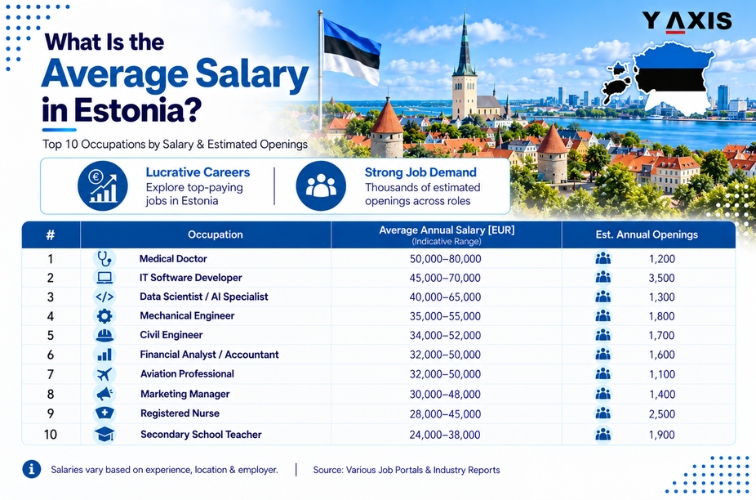
What Is the Average Salary in Estonia?

By , Editor & Director
Updated September 17 2026
The average salary in Estonia is approximately €2,243 (₹2.31 lakh) per month for full-time employees. This is approximately around €26,900 per year across 12 standard monthly salaries. Skilled professionals in technology, finance, and cybersecurity earn considerably more, around €3,500 to €5,500 per month. Hence the median salary is estimated at €1,840 per month as per the occupation and Estonia job market standards. Your salary in Estonia will vary widely based on city and sector. Tallinn and Harju County pay more than smaller regions, and information technology, financial services, and energy roles command the highest premiums nationwide.
*Want to work in Estonia? Let Y-Axis guide you through the process.
Top 10 Highest-Paying Occupations in Estonia
Estonia's job market spans major sectors like information technology, fintech, engineering, healthcare, and logistics. Salaries of foreign workers in Estonia hence vary widely based on the sector. Certain high-demand roles in Estonia create more job opportunities and greater compensation due to significant skill shortages.
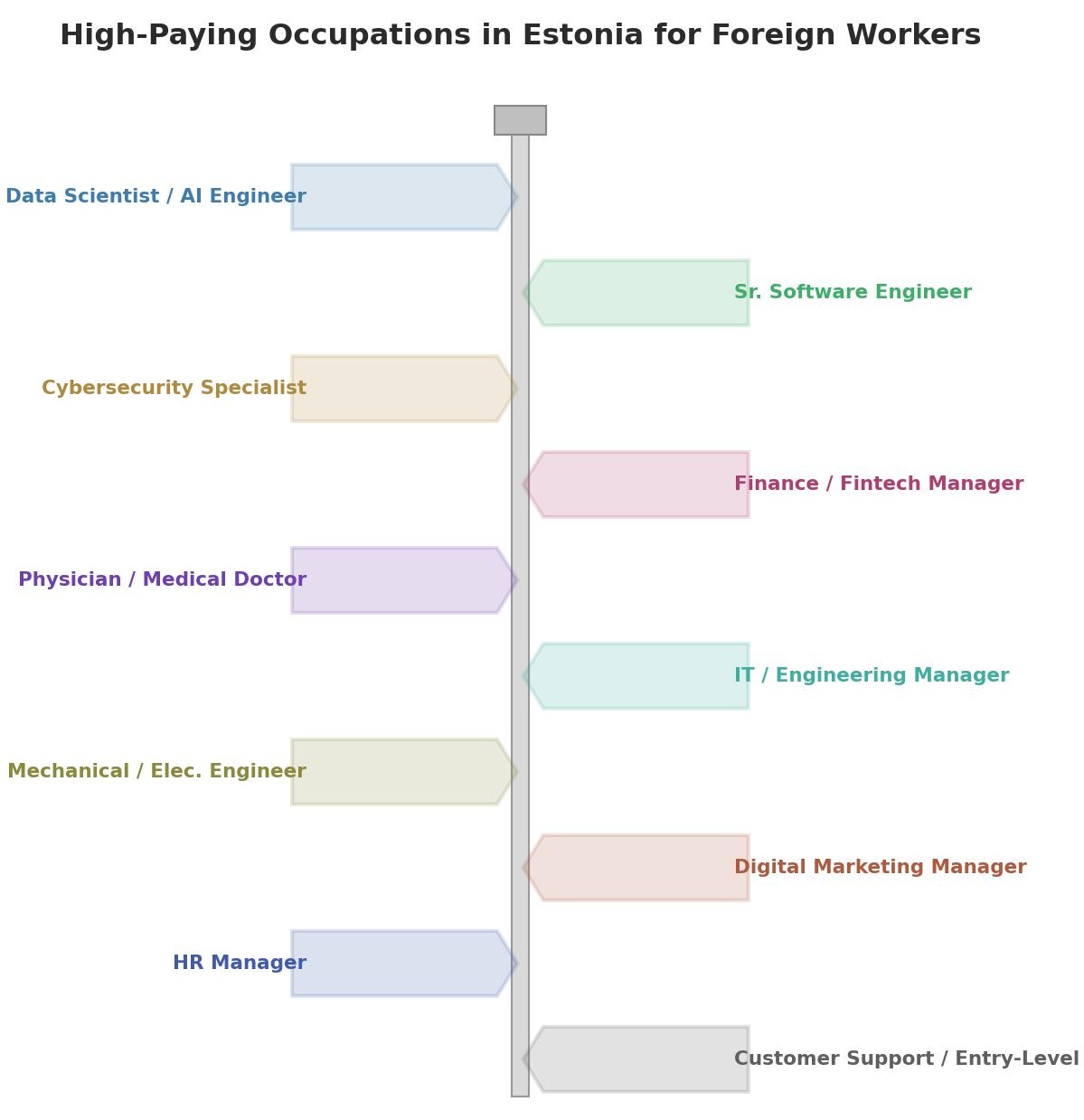
The table below shows ten occupations with strong salaries and steady hiring demand in Estonia.
|
Occupation |
Average Annual Salary (EUR) |
Est. Annual Salary (INR) |
Demand Outlook |
|
Data Scientist / AI Engineer |
€45,000–€75,000 |
₹46.3–77.2 lakh+ |
High demand; Tallinn's growing AI, data and machine-learning ecosystem |
|
Senior Software Engineer / IT Specialist |
€35,000–€60,000 |
₹36–61.8 lakh+ |
Strong demand in Tallinn's tech and fintech scene; EU-wide remote hiring |
|
Cybersecurity Specialist |
€36,000–€50,000 |
₹37–51.5 lakh+ |
Rising demand as digital identity, e-governance and defence-tech expand |
|
Finance / Fintech Manager |
€40,000–€65,000 |
₹41.2–67 lakh+ |
Banking, fintech & multinational finance; senior roles pay more |
|
Physician / Medical Doctor |
€40,000–€60,000 |
₹41.2–61.8 lakh+ |
Growing need amid an ageing population and rural healthcare shortages |
|
IT Manager / Engineering Director |
€38,000–€58,000 |
₹39.1–59.7 lakh+ |
Digital transformation projects and EU-backed reforms driving hiring |
|
Mechanical / Electrical Engineer |
€28,000–€42,000 |
₹28.8–43.3 lakh+ |
Manufacturing, renewable energy and green-tech projects nationwide |
|
Digital Marketing / E-commerce Manager |
€26,000–€38,000 |
₹26.8–39.1 lakh+ |
Growing e-commerce, SaaS and gaming sector demand |
|
HR Manager / People Operations |
€26,000–€36,000 |
₹26.8–37.1 lakh+ |
Growing multinational and shared-services hiring in Tallinn |
|
Customer Support / Entry-Level Roles |
€14,000–€18,000 |
₹14.4–18.5 lakh+ |
Common entry point in tech support, BPO and customer success roles |
Also, read...
Highest paying Job Opportunities in Estonia
Average Lifestyle Expenses in Estonia
Estonia offers strong salaries in Tallinn and key tech hubs, but the cost of living varies significantly between the capital and other regions. Housing expenses are followed by utilities, groceries, and transport. Knowing these costs in advance helps you assess whether a salary offer in Estonia is genuinely competitive.
- Rent (1-bed apartment, city centre, Tallinn): €700–€1,000 per month
- Rent (1-bed apartment, outside city centre / other cities, e.g. Tartu): €500–€700 per month
- Groceries (single person): €200–€300 per month
- Utilities (electricity, water, and heating, ~85 m² apartment): €100–€200 per month
- Public transport (monthly pass): Free for registered Tallinn residents; €40–€50 per month elsewhere
- Mobile and internet plan: €25–€40 per month combined
- Public health insurance: Included automatically via the Estonian Health Insurance Fund (EHIF) once employed
- Dining out (casual meal for two): €30–€45
- Overall monthly budget, single person, excluding rent: €500–€750
- Overall monthly budget, single person, including rent (comfortable baseline, Tallinn): €1,200–€1,800
Note: Many professionals manage Tallinn's rent by choosing a neighbourhood such as Mustamäe or Õismae over the city centre, using Tallinn's free public transport network, and sharing accommodation during their first year.
Also, read...
What are the most in-demand jobs in Estonia for the next 10 years?
Salary Structure and Take-Home Pay in Estonia
Estonia applies a flat personal income tax of 22% on all income, with a universal tax-free allowance of €700 per month (€8,400 per year) that applies equally regardless of income, effective from 1 January 2026. On top of this, employees contribute 1.6% of gross salary toward unemployment insurance, and may opt into a funded pension contribution of 2% to 6%. Employers separately pay 33% social tax and 0.8% unemployment insurance on top of gross salary.
The table below highlights gross monthly salary and approximate take-home pay for an employee in Estonia:
|
Gross Monthly Salary |
Mandatory Deductions (Income Tax + Unemployment Insurance) |
Approx. Take-Home Pay |
|
€1,000 |
~€82 (~8%) |
~€918 (~92%) |
|
€2,000 |
~€318 (~16%) |
~€1,682 (~84%) |
|
€4,000 |
~€790 (~20%) |
~€3,210 (~80%) |
|
€8,000 |
~€1,734 (~22%) |
~€6,266 (~78%) |
Also, read...
What are the eligibility requirements for an Estonia work visa?
How Estonia's Average Salary Compares to Other Countries
Estonia offers attractive earning opportunities alongside a relatively affordable cost of living, making it an appealing destination for international professionals. When evaluating job opportunities in Estonia compared with other countries, looking at net income after rent can provide a more realistic view of your potential financial benefits. This approach helps professionals better understand the overall value of working in Estonia and how far their income can go compared with opportunities in other parts of the world.
The country is particularly appealing for professionals in sectors such as IT, cybersecurity, fintech, engineering, and healthcare, where demand for skilled workers continues to create opportunities. Salaries can also vary significantly depending on location, experience, qualifications, and industry.
|
Factor |
Estonia |
What It Means for Professionals |
|
Average salary |
Highest among the Baltic states, rising steadily |
Stronger earning potential, especially in tech and finance |
|
Cost of living |
Relatively affordable compared with Nordic and Western Europe |
Lower everyday expenses can improve purchasing power |
|
Major employment hub |
Tallinn and Tartu |
More opportunities in IT, fintech & logistics |
|
High-paying sectors |
IT, cybersecurity, fintech, engineering & healthcare |
Experienced professionals can command higher salaries |
|
Career growth |
Expanding digital, AI, and green-energy sectors |
Growing opportunities for skilled international workers |
*Are you looking for step-by-step assistance with overseas immigration? Contact Y-Axis, the world's No. 1 overseas immigration consultancy, for end-to-end assistance!
FAQs
What is the average salary in Estonia?
The average gross salary in Estonia is approximately €2,243 per month, or around €26,900 per year, based on Statistics Estonia's Q2 2026 wage data. Skilled professionals in technology, finance, and cybersecurity earn considerably more, typically €3,500 to €5,500 per month. The median salary is estimated at €1,840 per month, since a smaller number of high earners in tech and finance pull the average upward.
What is the difference between average and median salary in Estonia?
The average (mean) salary adds up all earnings and divides by the number of workers, so a small number of very high earners pull the figure upward. Estonia's average is about €2,243 per month gross. The median is the middle value, meaning half of workers earn more and half earn less. Estonia's median is €1,840 per month, making it a more realistic picture of typical pay across the country.
Which jobs pay the highest salaries in Estonia?
The highest-paying roles in Estonia include data scientists, AI engineers, senior software developers, and finance and fintech managers, often earning €45,000 to €75,000 per year or more. Cybersecurity specialists, physicians, and IT managers also earn well above the national average. These roles cluster around Tallinn's technology, fintech, and e-governance sectors, where skilled professionals remain in short supply nationwide.
Is there a minimum wage in Estonia?
Yes. Estonia has a single national minimum wage agreed between employer and employee representative organisations. As of 1 April 2026, the statutory minimum wage is €946 gross per month, or €5.67 gross per hour, up from €886 in 2025. This rate applies across all sectors and is the lowest amount an employer may legally pay a full-time worker.
How much tax do I pay on my salary in Estonia?
Estonia applies a flat personal income tax of 22% on all income, with a universal tax-free allowance of €700 per month, effective from 1 January 2026. On top of this, employees contribute 1.6% of gross salary toward unemployment insurance. Combined, take-home pay is typically 78% to 92% of gross salary, depending on income level.
Is the average salary in Estonia enough to live comfortably?
It depends on the city and lifestyle. Outside Tallinn, €1,000 to €1,400 per month comfortably covers rent, groceries, transport, and some savings for a single person. In central Tallinn, €1,500 or more is a more realistic baseline due to higher rent. Choosing a neighbourhood outside the city centre, sharing accommodation, and using Tallinn's public transport network instead of a car can help an average salary stretch considerably further.
Do foreign workers earn more than local workers in Estonia?
Foreign professionals in Estonia often earn salaries comparable to or higher than local employees in similar roles, particularly in technology, fintech, and multinational companies. Employers typically need to register the employment or secure an approved work permit before hiring a non-EU national. Highly skilled workers may also qualify for the EU Blue Card, which requires a minimum salary. Pay ultimately depends on the sector, qualifications, and employer type.
What is a good salary in Estonia for a single person?
A good salary for a single person in Tallinn is generally €1,800 or more per month, comfortably covering rent, groceries, transport, and savings. In cities such as Tartu or Pärnu, €1,400 or more is a realistic threshold, since rent and daily costs are considerably lower. Salaries above €3,000 per month place you well above the national average in most industries and sectors.
How does Estonia's average salary compare to other countries?
Estonia's average salary is the highest among the three Baltic states, though it still trails Nordic neighbours such as Finland and Sweden. Estonian professionals typically earn less than counterparts in Germany or the Netherlands. However, the country's relatively low cost of living and flat 22% income tax help offset this gap, so take-home pay as a share of gross salary compares reasonably well within the EU.
What salary do I need to qualify for a work visa in Estonia?
Most Estonia work visas require a valid job offer and employer registration, with the salary threshold depending on the permit type. A standard Temporary Residence Permit typically requires a salary meeting the national average wage, while the EU Blue Card, aimed at highly skilled professionals, requires a higher minimum salary. Shortage occupations, including IT and healthcare roles, may qualify under more flexible criteria.
Tags:
Average salary in Estonia
Estonia salary guide
cost of living in Estonia
Estonia income tax
highest paying jobs in Estonia
work in Estonia
Estonia job market
take-home pay Estonia
Share
Options for you by Y-Axis

Get it on your mobile

Get News alerts

Contact Y-Axis
Latest Article
Popular Post
Trending Article
Posted On September 17 2026
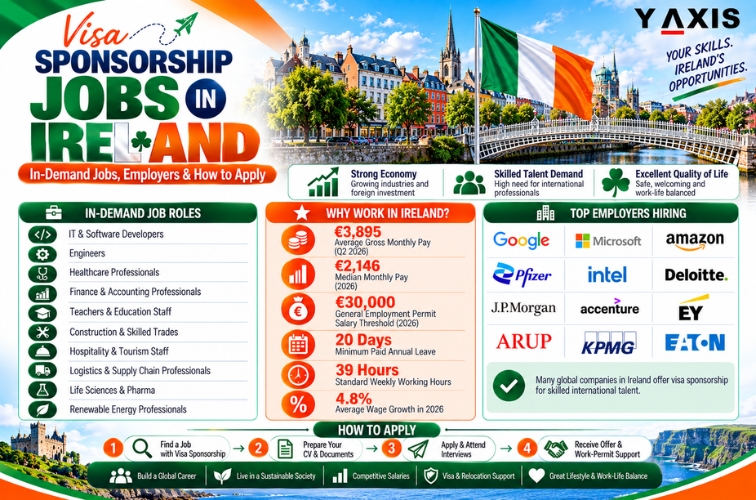
Visa Sponsorship Jobs in Ireland: In-Demand Jobs, Employers & How to Apply