


Posted on October 26 2026
New Zealand Opens 5,000 Temporary Work Visa Slots for Indian Professionals. Check your eligibility!

By , Editor & Director
Updated October 26 2026
Highlights: New Zealand Expands Work Opportunities for 5,000 Indians With New Visa Places
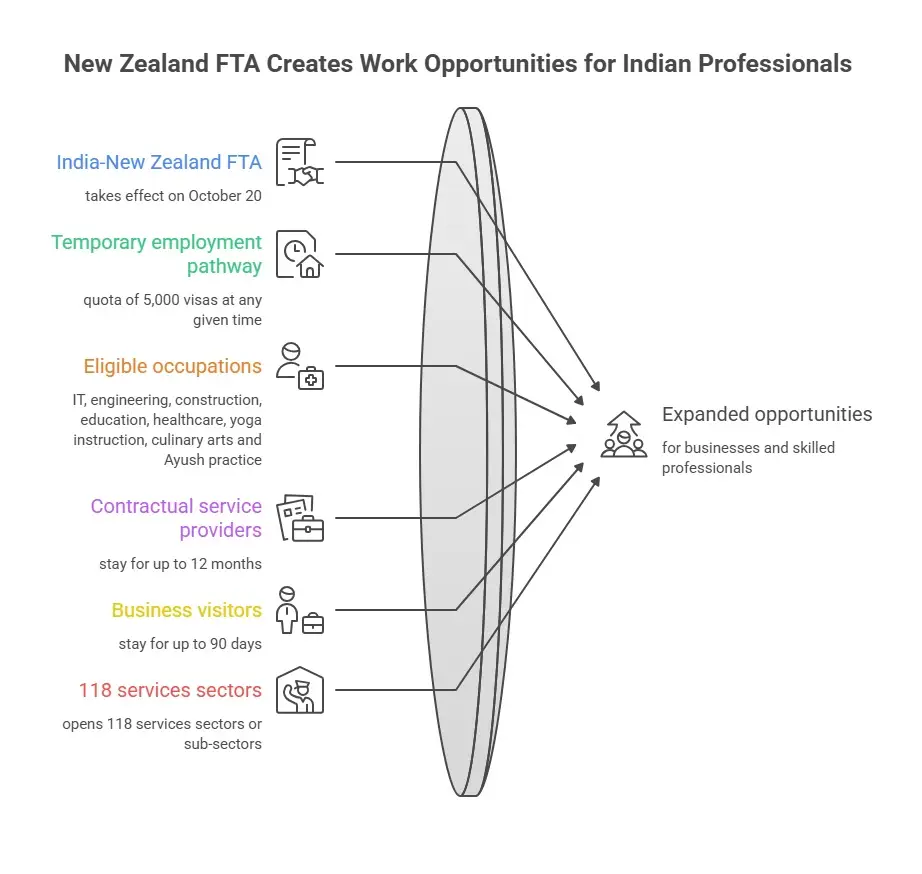
- India-New Zealand FTA takes effect on October 20, introducing new temporary work opportunities for eligible Indian professionals.
- New Zealand introduces a temporary employment pathway with a quota of 5,000 visas at any given time and stays of up to three years.
- Eligible occupations include IT, engineering, construction, education, healthcare, yoga instruction, culinary arts and Ayush practice.
- The agreement allows eligible contractual service providers and independent professionals to stay for up to 12 months, while business visitors can stay for up to 90 days.
- New Zealand opens 118 services sectors or sub-sectors to Indian service providers, expanding opportunities for businesses and skilled professionals.
*Want to work in New Zealand? Let Y-Axis guide you with the process.
India-New Zealand FTA Introduces Temporary Work Visa Pathway for Indian Professionals
India’s free trade agreement (FTA) with New Zealand came into effect on October 20, 2026, introducing a structured temporary entry pathway for eligible Indian professionals. The agreement provides a quota of 5,000 visas under the new temporary employment route. This will allow successful applicants to stay in New Zealand for up to three years meeting other eligibility criteria.
The pathway covers several sectors, including information technology, engineering, construction, education and healthcare. It also includes certain occupations such as yoga instructors, chefs, music teachers and Ayush practitioners. The agreement aims to improve access to New Zealand’s market for Indian service providers while strengthening trade and professional cooperation between the two countries.
The table below highlights the professional categories and permitted stay period under India-New Zealand FTA:
| Professional category | Permitted stay under the agreement |
|---|---|
| Eligible skilled professionals | Up to three years, under a pathway with a 5,000-visa quota at any given time |
| Intra-company transferees | Up to three years |
| Contractual service providers | Up to 12 months |
| Independent professionals | Up to 12 months |
| Business visitors | Up to 90 days in a 12-month period |
| Equipment installation and servicing specialists | Up to 90 days in a 12-month period |
Also, read...
New Zealand Opens 118 Services Sectors to Indian Businesses and Professionals
The FTA also expands market access for Indian service providers, with New Zealand opening 118 services sectors or sub-sectors to India. These include IT, professional services, telecommunications, construction, education, financial services and tourism.
The broader agreement aims to increase bilateral trade in goods and services from approximately $2.4 billion to around NZ$7 billion by 2030, according to Commerce and Industry Minister Piyush Goyal, as reported by PTI. New Zealand has also offered zero-duty access across all tariff lines for India’s current exports and envisaged NZ$20 billion in foreign direct investment into India over 15 years.
Also, read...
How New Zealand FTA Benefits Skilled Professionals from India?
The India-New Zealand FTA could create new opportunities for eligible Indian professionals seeking temporary overseas employment, international assignments and access to New Zealand’s services market. The major benefits will depend on occupational eligibility, visa conditions and the implementation of the agreement’s provisions which are as follows:
- More temporary work opportunities: Eligible Indian professionals can explore the new employment pathway, subject to its requirements and the 5,000-visa quota.
- Longer overseas assignments: Qualifying professionals may be permitted to stay in New Zealand for up to three years under the relevant pathway.
- Opportunities across multiple sectors: IT, engineering, construction, education and healthcare professionals may benefit from expanded access.
- Opportunities for specialised occupations: Certain yoga instructors, chefs, music teachers and Ayush practitioners are also covered by the agreement’s provisions.
- Temporary entry for independent professionals: Eligible contractual service providers and independent professionals may undertake assignments lasting up to 12 months.
- Greater corporate mobility: Employees transferred within the same company may be eligible for stays of up to three years.
- Short-term business travel: Eligible business visitors and equipment specialists may enter for permitted activities for up to 90 days in a 12-month period.
- Expanded services market access: The opening of 118 services sectors or sub-sectors could create opportunities for Indian service providers and businesses.
- Stronger trade and investment links: The agreement aims to deepen economic cooperation between India and New Zealand, potentially supporting future business activity.
*Are you looking for step-by-step assistance with overseas immigration? Contact Y-Axis, the world’s No. 1 overseas immigration consultancy!
For recent immigration updates, check out the Y-Axis News Page!
FAQs
What does the India-New Zealand free trade agreement offer Indian professionals?
The India-New Zealand FTA, effective October 20, 2026, introduces a temporary employment pathway for eligible Indian professionals. It provides a quota of 5,000 visas at any given time, with stays of up to three years under the relevant category. The agreement also covers contractual service providers, independent professionals, intra-company transferees and business visitors, creating structured opportunities for eligible Indians to undertake temporary work or business activities in New Zealand.
How many Indian professionals can benefit from New Zealand’s temporary work pathway?
The new temporary employment pathway has a quota of 5,000 visas at any given time. Eligible Indian professionals may be able to stay in New Zealand for up to three years, subject to the relevant visa conditions. This is a quota rather than a guarantee that every applicant will receive approval. Applicants must meet the eligibility criteria, satisfy documentation requirements and follow the application procedures applicable to their professional category.
Which occupations are covered under the India-New Zealand FTA?
The agreement covers eligible professionals in sectors such as information technology, engineering, construction, education and healthcare. Certain specialised occupations, including yoga instructors, chefs, music teachers and Ayush practitioners, are also included. However, applicants should not assume that every job title within these sectors qualifies automatically. Eligibility depends on the applicable occupation requirements and the entry category under which the individual applies. Official guidance should be checked before making employment plans.
How long can Indian professionals stay in New Zealand under the FTA?
The permitted stay depends on the type of professional activity. Eligible skilled professionals and intra-company transferees may stay for up to three years. Contractual service providers and independent professionals may qualify for stays of up to 12 months. Business visitors and eligible equipment installation or servicing specialists may stay for up to 90 days in a 12-month period. Applicants must confirm the conditions applicable to their category before travelling.
Can Indian contractual service providers work in New Zealand under the agreement?
Yes, eligible Indian contractual service providers may qualify for temporary entry to New Zealand for up to 12 months under the agreement. This provision is intended to support the delivery of services across borders. However, applicants must meet the requirements applicable to their professional category, service contract and intended activities. The permitted stay does not automatically grant eligibility for every contract or occupation, so the relevant implementation rules should be checked before applying.
What are the provisions for intra-company transfers under the India-New Zealand FTA?
The agreement provides for eligible employees to be transferred within the same company to New Zealand for temporary assignments. Qualifying intra-company transferees may be permitted to stay for up to three years, subject to the relevant conditions. This arrangement could help businesses deploy employees with specialised knowledge or experience across their operations. Workers and employers should verify the applicable eligibility, documentation and work authorisation requirements before arranging an international transfer.
Can Indian business visitors travel to New Zealand under the FTA?
The agreement includes temporary entry arrangements for eligible business visitors. Depending on the applicable category, business visitors may be permitted to stay for up to 90 days within a 12-month period. This can support qualifying business activities and commercial engagement between the two countries. The provision does not automatically authorise ordinary employment, and visitors must comply with the permitted purpose of entry and the conditions attached to their authorisation.
Does the India-New Zealand FTA provide permanent residency to Indian professionals?
No. The temporary employment pathway created under the FTA is not itself a permanent residency programme or an automatic route to citizenship. It facilitates eligible temporary work and business-related activities for specified periods. Indian professionals who wish to settle permanently in New Zealand must assess the separate immigration pathways and meet their individual eligibility criteria. Applicants should distinguish temporary entry permissions from residence rights before making long-term relocation or financial decisions.
How does the FTA benefit Indian service providers and businesses?
New Zealand has agreed to open 118 services sectors or sub-sectors to Indian service providers, including IT, professional services, telecommunications, construction, education, financial services and tourism. This wider access could help eligible Indian businesses explore opportunities in the New Zealand market. The temporary entry provisions may also facilitate professional assignments and intra-company transfers. Actual benefits will depend on market demand, business arrangements and compliance with the relevant entry and sector-specific requirements.
What should Indian professionals check before applying under the new pathway?
Indian professionals should confirm whether their occupation and intended activities qualify under the relevant FTA category. They should review requirements concerning qualifications, employment or service contracts, documentation, permitted duration of stay and work authorisation. Applicants should also verify whether the pathway is operational for their circumstances and consult official guidance before paying recruitment fees or making travel arrangements. The agreement creates opportunities, but visa approval is not automatic and depends on meeting applicable conditions.
Y-Axis snapshot
1M
Successful applicants
1500+
Experienced counselors
25Y+
Expertise
50+
Offices
Tags:
New Zealand work visa
work in New Zealand
migrate to New Zealand
temporary foreign workers in New Zealand
migrate to New Zealand
Indian workers in New Zealand
overseas immigration
New Zealand immigration update
Share
Options for you by Y-Axis

Get it on your mobile

Get News alerts

Contact Y-Axis
Latest Article
Related Post
Trending Article
Posted On October 26 2026
New Zealand Opens 5,000 Temporary Work Visa Slots for Indian Professionals. Check your eligibility!