


Posted on July 20 2026
Visa Sponsorship Jobs in the Philippines – In-Demand Jobs, Top Employers & How to Apply

By , Editor
Updated July 25 2026
The Philippines is one of the fastest-growing economies in Southeast Asia and offers many job opportunities for skilled foreign professionals. There is a high demand for workers in industries such as IT, Business Process Outsourcing (BPO), construction, manufacturing, healthcare, and financial services. Many international companies in Metro Manila, Cebu, and Davao hire foreign professionals for technical, specialist, and management roles when suitable local workers are not available.
If you receive a job offer from a company in the Philippines, your employer can sponsor your work authorization. The employer applies for an Alien Employment Permit (AEP) through the Department of Labor and Employment (DOLE) and a 9(g) Pre-Arranged Employment Visa through the Bureau of Immigration. For Indian professionals, the Philippines offers an English-speaking work environment, affordable living costs, and good career opportunities, making it a popular destination to work abroad.
*Want to apply for a Philippines work visa? Sign up with Y-Axis to help you with the process.
Why Apply for Jobs in the Philippines with Visa Sponsorship?
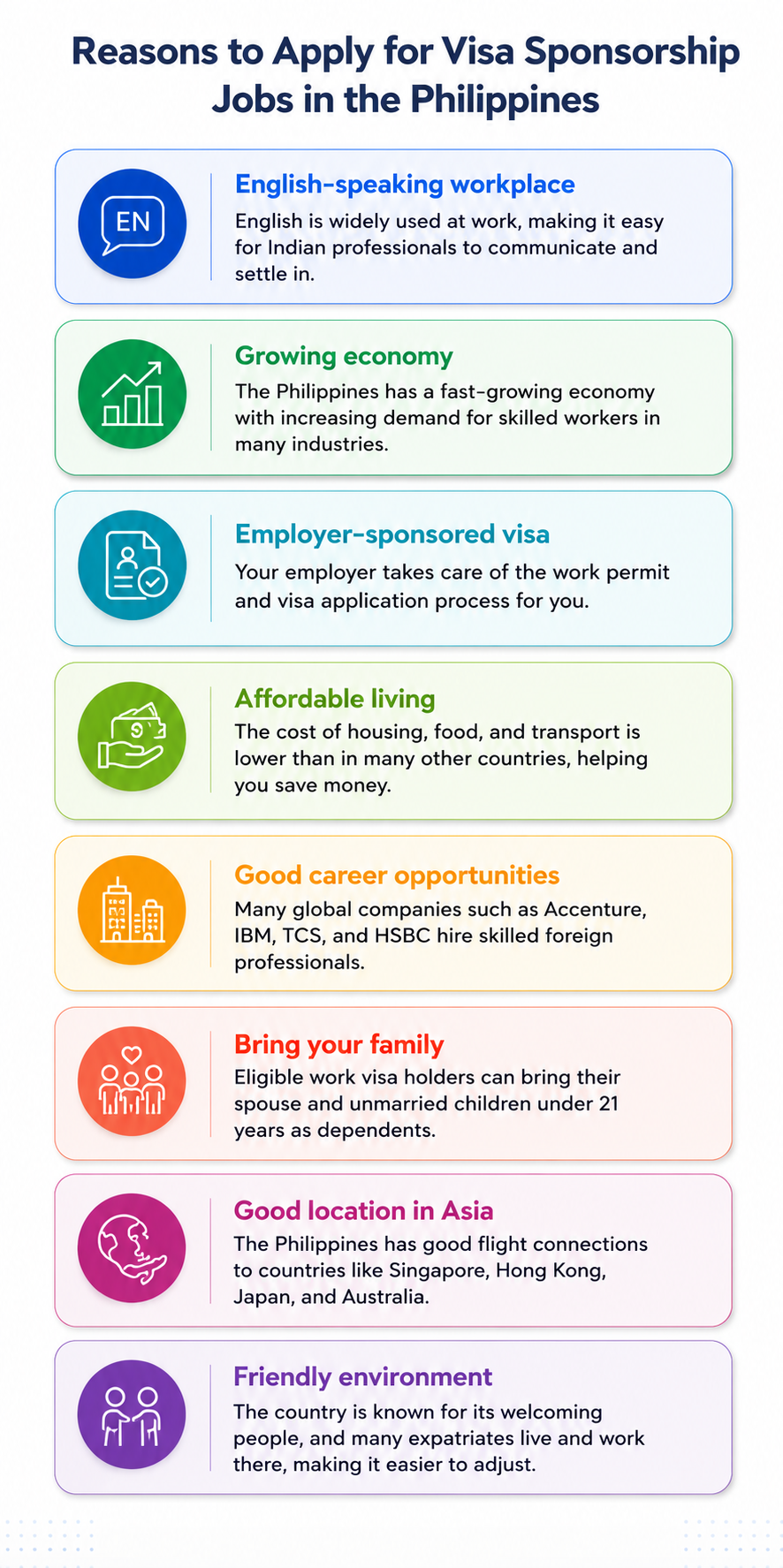
- English-speaking workplace: English is widely used at work, making it easy for Indian professionals to communicate and settle in.
- Growing economy: The Philippines has a fast-growing economy with increasing demand for skilled workers in many industries.
- Employer-sponsored visa: Your employer takes care of the work permit and visa application process for you.
- Affordable living: The cost of housing, food, and transport is lower than in many other countries, helping you save money.
- Good career opportunities: Many global companies such as Accenture, IBM, TCS, and HSBC hire skilled foreign professionals.
- Bring your family: Eligible work visa holders can bring their spouse and unmarried children under 21 years as dependents.
- Good location in Asia: The Philippines has good flight connections to countries like Singapore, Hong Kong, Japan, and Australia.
- Friendly environment: The country is known for its welcoming people, and many expatriates live and work there, making it easier to adjust.
What are Visa Sponsorship Jobs in the Philippines?
Visa sponsorship jobs in the Philippines are jobs where a company in the Philippines hires a foreign worker and helps them get legal permission to work in the country. Foreign nationals cannot work in the Philippines without employer sponsorship.
After offering you a job, the employer must first show the Department of Labor and Employment (DOLE) that no qualified Filipino worker is available for the position. Once approved, the employer applies for your Alien Employment Permit (AEP) and then sponsors your 9(g) Pre-Arranged Employment Visa through the Bureau of Immigration. These jobs are usually offered for specialist, technical, managerial, and executive positions where skilled local workers are not available.
In-Demand Sponsored Jobs in the Philippines
The Philippines has a growing demand for skilled foreign professionals in sectors such as IT, BPO, healthcare, banking, construction, manufacturing, education, hospitality, and retail. Many local and multinational companies sponsor work visas for qualified candidates when suitable local talent is not available. The table below highlights some of the most in-demand sectors, popular job roles, and their average annual salary ranges in the Philippines.
| In-Demand Sector | Job Roles | Average Annual Salary (PHP) |
|---|---|---|
| Information Technology (IT) | Software Engineer, Full Stack Developer, Data Analyst, Data Scientist, Cybersecurity Specialist, Cloud Engineer, DevOps Engineer, IT Support Engineer, Systems Administrator, IT Project Manager | ₱600,000–₱1,200,000 |
| Business Process Outsourcing (BPO) | Customer Service Representative, Technical Support Specialist, Quality Analyst, Team Leader, Operations Manager, Training Manager | ₱300,000–₱900,000 |
| Banking & Finance | Finance Manager, Financial Analyst, Investment Analyst, Risk Analyst, Treasury Officer, Internal Auditor | ₱500,000–₱1,100,000 |
| Accounting | Accountant (CPA), Tax Consultant, Audit Associate, Accounts Payable Specialist, Accounts Receivable Specialist | ₱400,000–₱700,000 |
| Construction | Civil Engineer, Project Engineer, Site Engineer, Quantity Surveyor, Construction Manager | ₱450,000–₱900,000 |
| Manufacturing | Mechanical Engineer, Electrical Engineer, Production Engineer, Quality Control Engineer, Maintenance Engineer, Plant Manager | ₱450,000–₱1,000,000 |
| Healthcare | Registered Nurse, Medical Specialist, General Physician, Medical Technologist, Pharmacist, Physiotherapist | ₱360,000–₱1,500,000 |
| FMCG / Retail | Marketing Manager, Sales Manager, Category Manager, Supply Chain Manager, Retail Operations Manager | ₱500,000–₱900,000 |
| Corporate Services | HR Manager, Recruitment Specialist, HR Business Partner, Payroll Specialist, Administrative Manager | ₱450,000–₱840,000 |
| Hospitality & Tourism | Hotel Manager, Restaurant Manager, Executive Chef, Front Office Manager, Guest Relations Manager | ₱400,000–₱800,000 |
| Education | ESL Teacher, International School Teacher, University Lecturer, Academic Coordinator, School Administrator | ₱420,000–₱800,000 |
*Read more...
What are the most in-demand jobs in the Philippines for the next 10 years?
Highest Paying Job Opportunities in the Philippines
Senior professionals, specialists, and executives earn the highest salaries in the Philippines. Foreign nationals are often hired into exactly these roles, since employer sponsorship is easiest to justify for positions requiring rare skills. Technology, healthcare, aviation, finance, and executive leadership consistently top the salary charts.
|
Job Title |
Average Annual Salary (PHP) |
Average Annual Salary (INR) |
|
Managing Director / CEO |
₱6,000,000+ |
₹93 lakh+ |
|
IT Director |
₱2,400,000 |
₹37.2 lakh |
|
Finance Director |
₱2,500,000 |
₹38.75 lakh |
|
Solutions / Cloud Architect |
₱1,800,000 |
₹27.9 lakh |
|
Surgeon |
₱1,800,000 |
₹27.9 lakh |
|
Airline Pilot |
₱1,600,000 |
₹24.8 lakh |
|
Medical Specialist |
₱1,500,000 |
₹23.25 lakh |
|
Cybersecurity Manager |
₱1,500,000 |
₹23.25 lakh |
|
Bank Manager |
₱1,300,000 |
₹20.15 lakh |
|
Data Scientist |
₱1,200,000 |
₹18.6 lakh |
|
Corporate Lawyer |
₱1,200,000 |
₹18.6 lakh |
|
Construction Project Manager |
₱1,000,000 |
₹15.5 lakh |
*Read more...
Highest Paying Jobs in the Philippines for Indians
Top Companies Offering Visa Sponsorship Jobs in the Philippines
|
Industry / Sector |
Top Companies Offering Visa Sponsorship |
Common Sponsored Roles |
|
Information Technology (IT) & Consulting |
Accenture, IBM Philippines, Tata Consultancy Services (TCS) |
Software Engineers, Cloud Engineers, AI Specialists, Solution Architects, IT Consultants, Project Managers, Technical Leads |
|
Business Process Outsourcing (BPO) & Customer Experience |
Infosys BPM, Concentrix, Teleperformance, TTEC, Genpact |
Operations Managers, Process Specialists, Account Managers, Quality Analysts, Training Managers, Customer Experience (CX) Consultants |
|
Banking & Financial Services |
HSBC (Global Service Centre), JPMorgan Chase, Wells Fargo Philippines |
Finance Managers, Financial Analysts, Risk Specialists, Compliance Officers, Technology Officers, Digital Banking Professionals |
|
Energy & Shared Services |
Shell Business Operations Manila |
Finance Specialists, HR Professionals, Procurement Specialists, Supply Chain Analysts, Technical Support Engineers |
|
FMCG (Fast-Moving Consumer Goods) |
Nestlé Philippines |
Brand Managers, Supply Chain Managers, Marketing Managers, Production Specialists, Quality Assurance Professionals |
|
Manufacturing & Engineering |
Emerson |
Mechanical Engineers, Electrical Engineers, Automation Engineers, Design Engineers, Manufacturing Specialists, Project Engineers |
|
Infrastructure & Conglomerates |
San Miguel Corporation |
Civil Engineers, Construction Managers, Project Managers, Mechanical Engineers, Infrastructure Specialists, Operations Managers |
*Also, read...
Philippines Job Market: Trends & Job Opportunities
Eligibility Requirements for Visa Sponsorship Job Opportunities in the Philippines
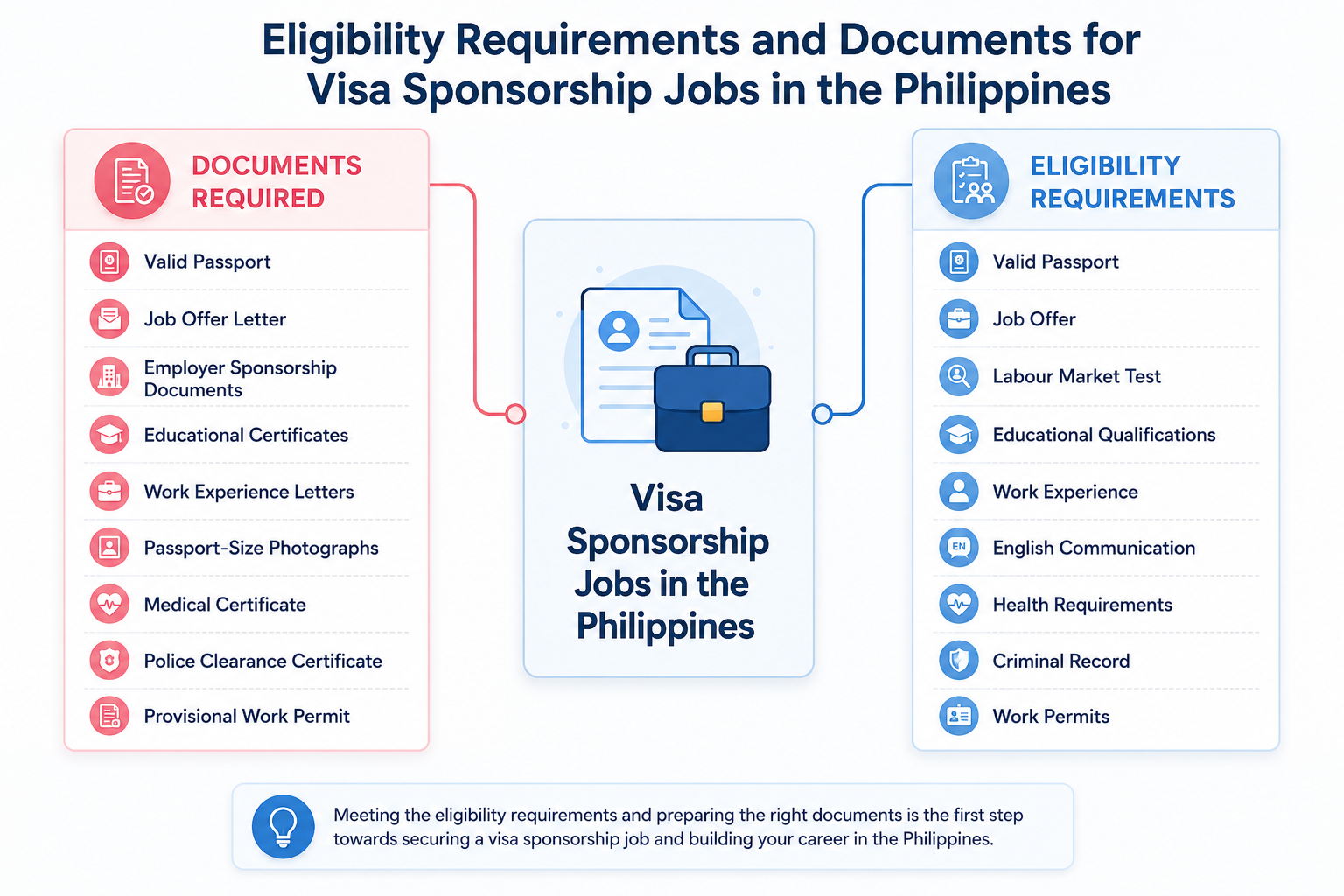
To apply for a visa sponsorship job in the Philippines, you must meet the following requirements:
- Hold a valid passport with at least 6 months' validity beyond your planned stay.
- Have a confirmed job offer or employment contract from a Philippine employer willing to sponsor your work visa.
- Your employer must complete the Labour Market Test by proving to the Department of Labor and Employment (DOLE) that no qualified Filipino worker is available for the position.
- Have the required educational qualifications that match the job. Some professional roles may require your certificates to be verified.
- Have relevant work experience, usually 2 or more years for specialist roles. Senior positions may require more experience.
- Be able to communicate in English. There is no IELTS or other English language test requirement.
- Meet the health requirements by submitting a medical certificate if required.
- Have a clean criminal record and provide a Police Clearance Certificate. Applicants already in the Philippines may also need an NBI Clearance.
- Obtain an Alien Employment Permit (AEP) from DOLE and a 9(g) Pre-Arranged Employment Visa from the Bureau of Immigration through your employer.
*Also, read...
What are the eligibility requirements for a Philippines work visa?
Documents Required for a Sponsored Work Visa in the Philippines
You will generally need the following documents:
- Valid passport with at least 6 months' validity.
- Job offer letter or employment contract showing your job title, salary, duties, and employment period.
- Employer sponsorship documents, such as the company's business registration, tax documents, and AEP application.
- Educational certificates that match the job you are applying for.
- Work experience letters from previous employers, if required.
- Recent passport-size photographs.
- Medical certificate to confirm that you meet the health requirements.
- Police Clearance Certificate from your home country. If you are already in the Philippines, you may also need an NBI Clearance.
- Provisional Work Permit (PWP), if applicable, which allows you to start working while your 9(g) Work Visa is being processed.
How to Get a Visa Sponsorship Job in the Philippines?
Step 1: Find jobs where foreign professionals are needed, such as IT, engineering, healthcare, cybersecurity, and management.
Step 2: Prepare a professional resume that highlights your skills, work experience, qualifications, and achievements.
Step 3: Search for visa sponsorship jobs on websites such as LinkedIn, JobStreet Philippines, Kalibrr, Bossjob, and company career pages.
Step 4: Apply for jobs directly through company websites or job portals. You can also connect with recruiters who hire foreign professionals.
Step 5: Attend online or in-person interviews. Explain your skills, experience, and why you are the right person for the job.
Step 6: If selected, review the job offer carefully. Check the salary, benefits, job role, and confirm that the employer will sponsor your work visa.
Step 7: Your employer will apply for your Alien Employment Permit (AEP) and complete the required approval process with the Department of Labor and Employment (DOLE).
Step 8: After the AEP is approved, your employer will apply for your 9(g) Pre-Arranged Employment Visa through the Bureau of Immigration. If eligible, you may receive a Provisional Work Permit (PWP) to start working while your visa is being processed.
Step 9: Once your work visa is approved, travel to the Philippines, complete the required registration, and begin your new job.
*Want to apply for jobs abroad? Avail the Y-Axis resume marketing services to find the right one.
Work Visa Options for Foreign Workers in the Philippines
|
Visa Type |
Purpose |
Validity |
|
9(g) Pre-Arranged Employment Visa |
Standard work visa for foreigners with a Philippine employer |
1–3 years, renewable (matches employment contract) |
|
Alien Employment Permit (AEP) |
Mandatory DOLE work permit that accompanies the 9(g) visa |
1 year or contract duration, up to 3 years |
|
47(a)(2) Special Non-Immigrant Visa |
For employees of PEZA/BOI-registered companies in economic zones |
1–2 years, renewable |
|
Special Work Permit (SWP) |
Short-term assignments outside a local employment contract |
3 months, extendable once (max 6 months) |
|
Provisional Work Permit (PWP) |
Allows work while the 9(g) visa application is pending |
3 months or until visa approval |
|
Special Visa for Employment Generation (SVEG) |
For foreign investors employing at least 10 Filipino workers |
Valid as long as qualifications are maintained |
|
9(d) Treaty Trader Visa |
For nationals of treaty countries (US, Japan, Germany) engaged in trade |
1–2 years, renewable |
*Are you looking for step-by-step assistance with overseas immigration? Contact Y-Axis, the world’s No. 1 overseas immigration consultancy, for end-to-end assistance!
FAQs
What are visa sponsorship jobs in the Philippines?
Visa sponsorship jobs are positions where a Philippine employer hires a foreign national and supports their legal work authorization. The employer sponsors the Alien Employment Permit (AEP) from DOLE and the 9(g) Pre-Arranged Employment Visa from the Bureau of Immigration. The employer must first prove no qualified Filipino is available for the role. Sponsorship is most common for specialist, technical, and senior management positions.
Can Indians get visa sponsorship jobs in the Philippines?
Yes. Indian professionals can work in the Philippines if a local employer sponsors their AEP and 9(g) work visa. Indians are commonly hired in IT, BPO management, banking, engineering, and teaching roles. Many Indian companies like TCS, Infosys BPM, and Genpact have large Philippine operations, which makes the transition easier for experienced Indian professionals with in-demand skills.
Which companies sponsor foreign workers in the Philippines?
Multinational companies with large Philippine operations are the most common sponsors. These include Accenture, IBM, TCS, Infosys BPM, Concentrix, Teleperformance, Genpact, HSBC, JPMorgan Chase, Wells Fargo, Shell Business Operations, and Nestlé. PEZA-registered companies in economic zones also sponsor foreign specialists. Sponsorship is decided case by case and is usually reserved for skills that are scarce locally.
Which jobs are easiest to get with visa sponsorship in the Philippines?
Roles with clear local skill shortages are easiest. These include cybersecurity specialists, cloud architects, data scientists, senior IT managers, experienced BPO operations leaders, specialist doctors, and foreign language experts. The employer must justify hiring a foreigner through a Labour Market Test, so the more specialized your skills, the easier it is for the employer to sponsor you.
What are the highest-paying sponsorship jobs in the Philippines?
Executive roles pay the most, with Managing Directors and CEOs earning ₱6 million or more per year (around ₹93 lakh+). Other top earners include IT Directors (₱2.4 million), Finance Directors (₱2.5 million), cloud architects, surgeons, airline pilots, and cybersecurity managers, all earning ₱1.5–1.8 million annually. Technology, finance, healthcare, and aviation consistently offer the best salaries.
What qualifications are required for visa sponsorship jobs in the Philippines?
You need a degree or qualification relevant to the sponsored position, plus relevant work experience. Regulated professions like medicine, engineering, and law require additional local recognition or special permits. Since employers must prove no Filipino can fill the role, strong credentials, international certifications, and specialized skills significantly improve your chances of getting sponsored.
Do I need work experience for a sponsored job in the Philippines?
Yes, in most cases. Since sponsorship requires proving no local candidate can do the job, employers typically hire foreigners with at least 2–5 years of specialist experience. Senior and executive roles need more. Fresh graduates are rarely sponsored unless they have rare technical skills or language abilities that are difficult to find in the local workforce.
Is IELTS required for the Philippines work visa?
No. The Philippines does not require IELTS or any formal English test for work visas. English is an official language and the main language of business, so employers simply expect good English communication during interviews. This makes the Philippines one of the easiest destinations for Indian professionals, who generally have strong English skills, to adapt to quickly.
How long does Philippines work visa processing take?
The full process typically takes 3–5 months in 2026. The AEP stage alone can take 8–14 weeks due to the Labour Market Test requirements under DOLE's new rules. The 9(g) visa petition with the Bureau of Immigration adds several more weeks. Many employers arrange a Provisional Work Permit so you can start working while your visa is being processed.
Can family members accompany me to the Philippines?
Yes. Holders of the 9(g) work visa can bring their spouse and unmarried children under 21 as dependents. Dependents receive visas linked to the main visa holder's status and validity. Dependents cannot work unless they obtain their own work permits. Children can study in the Philippines, which has many international schools in Manila and Cebu.
Can visa sponsorship lead to permanent residency in the Philippines?
Not directly. The 9(g) visa is renewable but does not automatically lead to permanent residency. Permanent residency options include the marriage-based 13(a) visa for those married to Filipino citizens, the Special Resident Retiree's Visa (SRRV), and investment-based visas. Long-term workers usually keep renewing their 9(g) visa alongside their employment contract.
What industries hire foreign workers in the Philippines?
IT and software, BPO and shared services, banking and finance, construction, manufacturing, healthcare, education, and hospitality hire the most foreign workers. The IT-BPM industry is the largest employer of foreign specialists and managers. PEZA economic zones host manufacturing and technology firms that sponsor foreign engineers and technical experts under the 47(a)(2) visa.
How can I find visa sponsorship jobs in the Philippines?
Search on LinkedIn, JobStreet Philippines, Kalibrr, and Bossjob, and apply directly through multinational company career portals. Target companies known to hire foreigners, especially MNCs and PEZA-registered firms. Networking matters, as many senior roles are filled through headhunters. Y-Axis job search services can also help you identify and apply for the right sponsored openings.
Are healthcare jobs in demand in the Philippines for foreigners?
Yes, but selectively. The Philippines produces many nurses, so foreign nurses are rarely sponsored. However, specialist doctors, surgeons, and medical experts with advanced international training are in demand in private hospitals. Foreign medical professionals must comply with the Professional Regulation Commission requirements. Healthcare technology and hospital management roles also attract foreign specialists.
Are IT jobs available in the Philippines for foreign workers?
Yes. IT is the top sector for foreign professionals. The Philippine IT-BPM industry employs nearly 2 million people and faces shortages in cloud computing, cybersecurity, AI, data science, and enterprise architecture. Companies like Accenture, IBM, and TCS sponsor foreign IT specialists and managers. Salaries for senior IT roles range from ₱1.2 million to ₱2.4 million annually.
Can fresh graduates apply for visa sponsorship jobs in the Philippines?
It is difficult but not impossible. Employers must prove no Filipino can do the job, which is hard to justify for entry-level roles. Fresh graduates with rare skills, such as niche programming languages, AI expertise, or fluency in languages like Japanese or Korean for multilingual BPO roles, have better chances. Gaining 2–3 years of experience first greatly improves your prospects.
What is the average salary in the Philippines?
The overall average salary is around ₱21,500 per month (about ₹33,000), but sponsored foreign professionals earn far more. Specialist and managerial roles pay ₱70,000–₱200,000 monthly (₹1.1–3.1 lakh), while executives earn ₱500,000+ per month. Metro Manila salaries are 20–50% higher than other regions. The low cost of living helps stretch your salary further.
What documents are required for a Philippines work visa?
You need a valid passport, notarized employment contract, AEP application documents, educational certificates, work experience letters, passport-size photographs, medical certificate, and police clearance. Your employer provides business registration and tax documents for the sponsorship petition. If you start work before visa approval, you also need a Provisional Work Permit from the Bureau of Immigration.
Can I change employers on a Philippines work visa?
Not freely. Your AEP and 9(g) visa are tied to your sponsoring employer and specific position. If you change jobs, your new employer must file a fresh AEP application, pass the Labour Market Test, and sponsor a new 9(g) visa petition. Working for a different employer without new authorization violates immigration rules and can lead to fines or deportation.
How can Y-Axis help me get a job in the Philippines?
Y-Axis provides end-to-end overseas career support, including professional resume writing tailored to international employers, targeted job search assistance, visa application and documentation guidance, and interview preparation coaching. Y-Axis counsellors guide you through every stage, from identifying in-demand roles to landing in the Philippines, making your overseas career journey smoother and better informed.
Tags:
Visa sponsorship jobs in the Philippines 2026
Philippines work visa sponsorship for Indians
Philippines 9(g) Work Visa jobs
Philippines Alien Employment Permit (AEP)
In-demand jobs in the Philippines with visa sponsorship
Philippines employer-sponsor
Share
Options for you by Y-Axis

Get it on your mobile

Get News alerts

Contact Y-Axis
Latest Article
Popular Post
Trending Article
Posted On October 16 2026
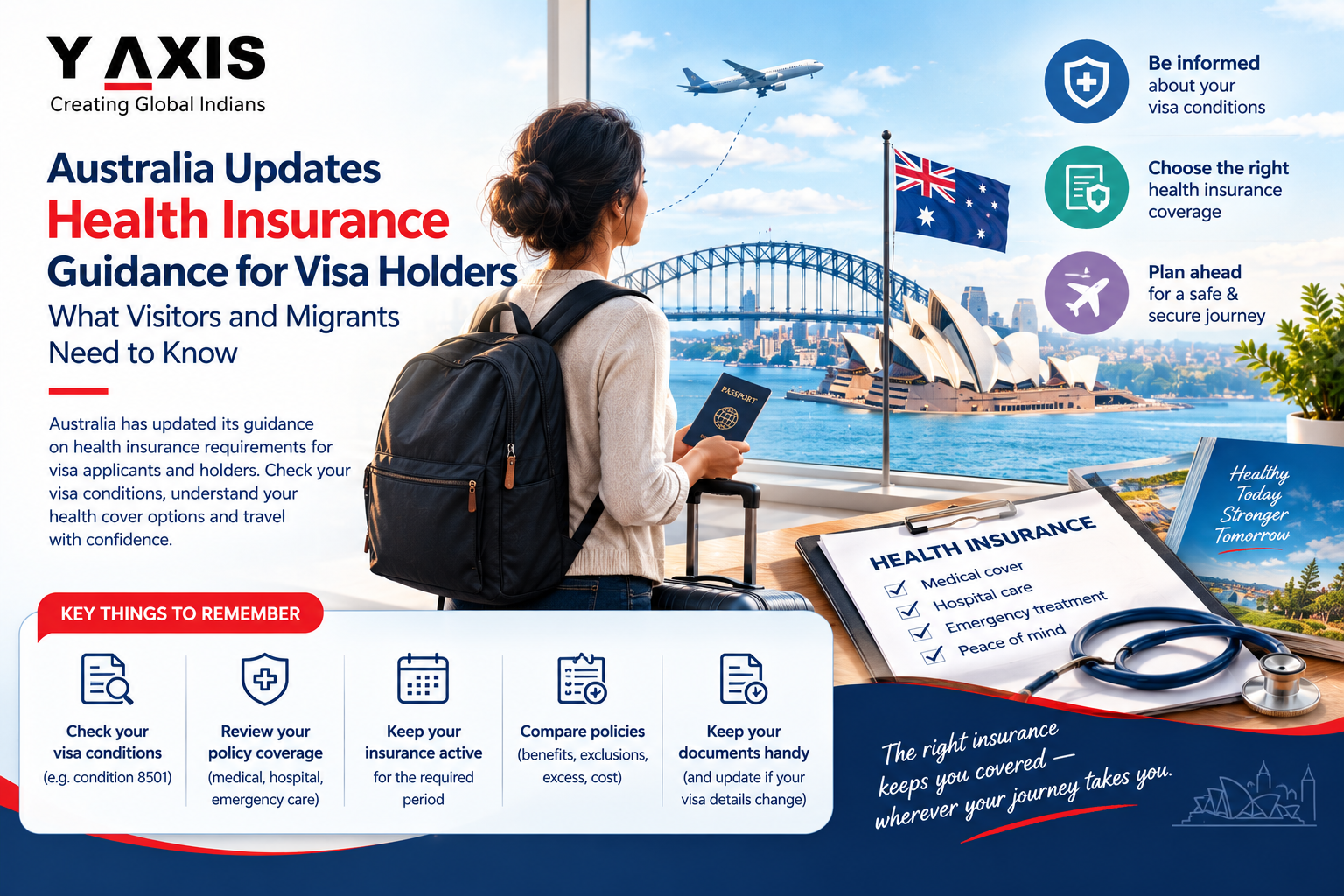
Australia Updates Health Insurance Guidance for Visa Holders: What You Need to Know