

Posted on August 31 2026
Visa Sponsorship Jobs in Italy: In-Demand Jobs, Employers & How to Apply

By , Editor
Updated September 05 2026
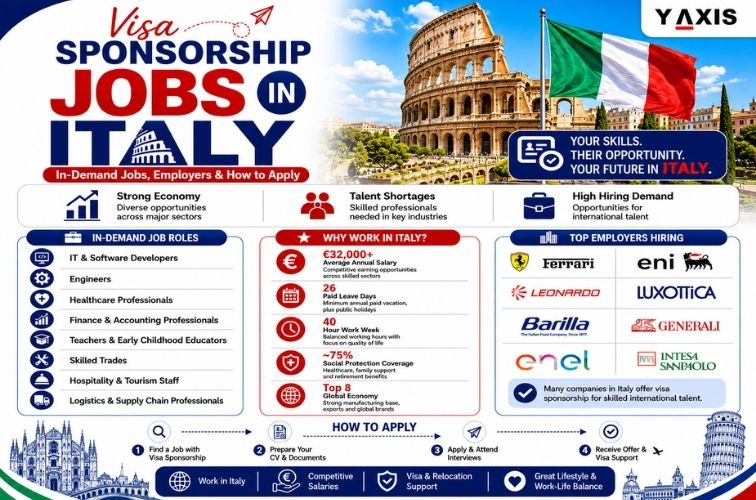
Italy has a good demand for skilled workers in areas such as IT, engineering, healthcare, construction, manufacturing, logistics, tourism, agriculture, hospitality, and technical services. People from outside the EU can work in Italy if they have the right job offer, skills, and work permit. For Indian professionals, one common way to work in Italy is through an employer-sponsored work permit. The Italian employer usually applies for work permission for the foreign worker. After approval, the worker can apply for an Italian work visa through the Italian consulate or visa application centre.
Another option for highly skilled professionals is the EU Blue Card. It is available to some highly qualified workers who meet the required education, salary, and job conditions. Some highly skilled workers may be able to apply through this route without being part of the regular annual work quota. Italy also has the Decreto Flussi, which sets the number of non-EU workers who can enter Italy for work each year. For 2026, Italy has planned 76,200 places for non-seasonal workers, 650 for self-employed workers, and 88,000 for seasonal workers. With the right education, skills, work experience, and job offer, Indian professionals can look for visa sponsorship jobs in Italy and apply for the correct work and residence permit.
*Want to work in Italy? Get expert guidance from Y-Axis.
Why Apply for Visa Sponsorship Jobs in Italy?
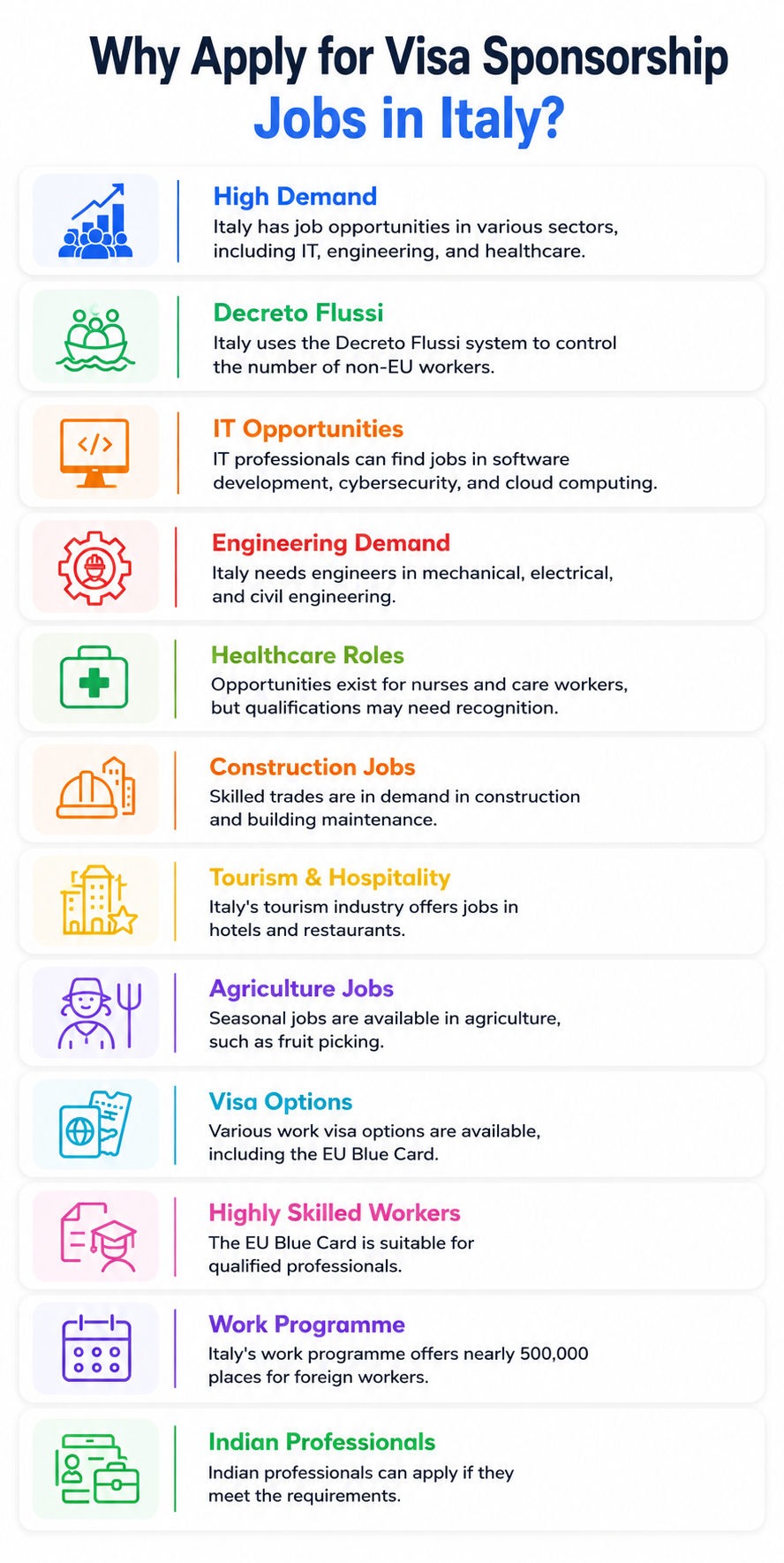
- High demand for skilled workers: Italy has job opportunities in IT, engineering, healthcare, manufacturing, construction, logistics, tourism, hospitality, agriculture, and technical services.
- Decreto Flussi opportunities: Italy uses the Decreto Flussi system to control the number of non-EU workers who can enter the country for work. It includes both seasonal and non-seasonal jobs.
- Good opportunities in IT: IT professionals can find jobs in software development, cybersecurity, cloud computing, data, IT support, and technology services. Highly skilled IT workers may also qualify for the EU Blue Card.
- Demand for engineers: Italy needs engineers and technical workers in areas such as mechanical engineering, electrical engineering, civil engineering, manufacturing, automation, construction, energy, and telecommunications.
- Healthcare opportunities: There are opportunities for nurses, care workers, and other healthcare professionals. However, doctors, nurses, and other regulated professionals may need to get their qualifications recognised before they can work.
- Construction jobs: Workers can find opportunities in construction, civil work, electrical work, building maintenance, and other skilled trades.
- Tourism and hospitality jobs: Italy has a large tourism industry, creating jobs in hotels, restaurants, catering, housekeeping, food services, and other hospitality roles.
- Agriculture jobs: Agriculture is another important sector for foreign workers. Seasonal jobs may include farm workers, fruit pickers, and other agricultural roles.
- Different work visa options: Non-EU workers can explore options such as the Decreto Flussi work permit, EU Blue Card, and other employment-based permits, depending on their job and qualifications.
- Opportunities for highly skilled workers: The EU Blue Card can be a good option for highly qualified professionals who meet the required salary, education, and employment conditions.
- More opportunities for foreign workers: Italy's 2026–2028 work programme provides nearly 500,000 places over three years for foreign workers. These places include seasonal, non-seasonal, and self-employed workers.
- Opportunities for Indian professionals: Indian professionals with the right education, skills, work experience, and job offer can apply for jobs in Italy. Before applying, they should check whether their job and salary meet the requirements for the relevant work permit.
What Are Visa Sponsorship Job Opportunities in Italy?
Visa sponsorship jobs in Italy are jobs where an Italian employer hires a worker from outside the EU and supports the required work permit process. Italy does not have one single visa called a “visa sponsorship visa.” The type of work visa or residence permit you need depends on your job, qualifications, salary, and employment conditions. For many non-EU workers, the main route is through the Decreto Flussi, which sets yearly quotas for foreign workers entering Italy for employment. Other routes are available for certain highly qualified workers, including the EU Blue Card.
For a regular sponsored job, the Italian employer normally needs to apply for a nulla osta al lavoro, or work clearance, from the Italian immigration authorities. After the clearance is approved, the worker can apply for an Italian work visa. Italy's 2026 programme allows 76,200 non-seasonal employed workers, 650 self-employed workers, and 88,000 seasonal workers to enter under the annual quota system. Indian professionals with the right qualifications, skills, work experience, and job offer can look for jobs that match Italy's labour market needs and work permit requirements.
In-Demand Visa Sponsorship Jobs in Italy
Italy has job opportunities in IT, engineering, healthcare, construction, manufacturing, finance, hospitality, tourism, logistics, renewable energy, agriculture, and research. International companies also hire professionals in technology, engineering, pharmaceuticals, consulting, automotive, and other specialised areas.
The table below shows some common in-demand jobs in Italy and their approximate annual salaries:
|
In-Demand Job Sector |
Common Job Roles |
Approx. Annual Salary (€) |
|
IT & Technology |
Software Developer, IT Engineer, Data Analyst, Cloud Engineer, Cybersecurity Specialist |
€35,000–€65,000 |
|
Engineering |
Mechanical Engineer, Electrical Engineer, Civil Engineer, Automation Engineer, Production Engineer |
€35,000–€60,000 |
|
Healthcare |
Doctor, Nurse, Pharmacist, Physiotherapist, Healthcare Specialist |
€30,000–€90,000+ |
|
Life Sciences & Biotechnology |
Biologist, Biochemist, Researcher, Pharmacologist, Biomedical Scientist |
€35,000–€65,000 |
|
Construction & Infrastructure |
Civil Engineer, Construction Manager, Structural Engineer, Site Manager |
€32,000–€60,000 |
|
Finance & Accounting |
Accountant, Financial Analyst, Auditor, Risk Specialist, Finance Manager |
€35,000–€70,000 |
|
Green Energy & Sustainability |
Energy Engineer, Environmental Engineer, Sustainability Specialist, Energy Consultant |
€35,000–€65,000 |
|
Manufacturing & Industry |
Production Engineer, Process Engineer, Quality Engineer, Automation Specialist |
€32,000–€60,000 |
|
Logistics & Supply Chain |
Supply Chain Specialist, Logistics Manager, Operations Planner, Procurement Specialist |
€30,000–€60,000 |
|
Hospitality & Tourism |
Hotel Manager, Chef, Restaurant Manager, Hospitality Specialist |
€25,000–€45,000 |
|
Research & Education |
Researcher, Research Scientist, University Professional, Research Engineer |
€30,000–€55,000 |
|
Telecommunications |
Network Engineer, Telecom Engineer, IT Architect, Software Engineer |
€35,000–€65,000 |
*Also, read...
Top In-Demand Jobs in Italy for the Next 10 Years
Highest Paying Careers in Italy
Italy offers good salary opportunities in healthcare, technology, engineering, finance, management, and specialised professional jobs. Experienced professionals and people in senior positions can earn much more than entry-level workers.
|
Job Title |
Approx. Annual Salary (€) |
|
Medical Specialist / Senior Doctor |
€80,000–€140,000+ |
|
IT Director / Technology Director |
€80,000–€130,000 |
|
Finance Director / CFO |
€80,000–€140,000 |
|
Specialist Doctor |
€70,000–€120,000+ |
|
Senior Technology Manager |
€65,000–€105,000 |
|
Engineering Manager |
€55,000–€90,000 |
|
Senior Software Engineer |
€45,000–€75,000 |
|
Data Science / AI Lead |
€50,000–€85,000 |
|
Cybersecurity Specialist |
€45,000–€75,000 |
|
Cloud Solutions Architect |
€50,000–€80,000 |
|
Senior Project Manager |
€45,000–€75,000 |
|
Finance Manager |
€45,000–€75,000 |
|
Clinical Research Manager |
€45,000–€70,000 |
|
Supply Chain Manager |
€40,000–€70,000 |
|
Senior Process Engineer |
€40,000–€65,000 |
*Read more...
Highest Paying Job Opportunities in Italy
Top Companies Offering Jobs in Italy with Visa Sponsorship
Italy has many large companies that hire skilled professionals from different countries. These companies work in technology, pharmaceuticals, engineering, automotive, renewable energy, banking, manufacturing, consulting, telecommunications, and consumer goods. Visa sponsorship is not available for every job vacancy. It depends on the job, the candidate's qualifications, salary, and whether the employer is willing to support the work permit process.
|
Sector |
Company Names |
Common Roles |
|
Technology & IT |
Accenture, IBM, Reply, Engineering Ingegneria Informatica, Leonardo |
Software Engineers, Data Scientists, Cloud Engineers, IT Consultants |
|
Pharmaceuticals & Healthcare |
Chiesi, Menarini, Recordati, Zambon |
Scientists, Researchers, Pharmacologists, Data Specialists |
|
Engineering & Manufacturing |
Leonardo, Pirelli, Brembo, Marelli |
Mechanical Engineers, Electrical Engineers, Automation Engineers |
|
Renewable Energy |
Enel, Eni, Edison |
Energy Engineers, Project Managers, Sustainability Specialists |
|
Banking & Finance |
UniCredit, Intesa Sanpaolo, Generali |
Financial Analysts, Risk Specialists, Data Analysts, IT Specialists |
|
Luxury & Consumer Goods |
Prada, Armani, Moncler |
Marketing Specialists, Data Analysts, Supply Chain Specialists, Managers |
|
Automotive |
Ferrari, Stellantis, Iveco |
Automotive Engineers, Software Engineers, Production Engineers |
|
Consulting & Professional Services |
Deloitte Italy, PwC Italy, EY Italy, KPMG Italy |
Business Consultants, Technology Consultants, Financial Consultants |
|
Telecommunications |
Telecom Italia (TIM), Vodafone Italy, Fastweb |
Network Engineers, Software Engineers, Cybersecurity Specialists |
|
Construction & Infrastructure |
Webuild, Saipem, Prysmian |
Civil Engineers, Project Managers, Construction Specialists |
|
Aerospace & Defence |
Leonardo, Avio, Thales Alenia Space |
Aerospace Engineers, Software Engineers, R&D Specialists |
|
Food & Consumer Goods |
Barilla, Ferrero, Lavazza |
Supply Chain Specialists, Data Analysts, Marketing Specialists |
*Also, read…
Eligibility Requirements for Visa Sponsorship Jobs in Italy
Indian professionals who want to work in Italy must meet the requirements of the Italian work visa and residence permit they are applying for. The requirements can change depending on the job, salary, qualifications, employment contract, and type of work permit.
- You must have a valid passport.
- You usually need a job offer or employment contract from an Italian employer.
- For jobs covered by the Decreto Flussi, the employer generally needs to obtain a nulla osta al lavoro before you apply for the work visa.
- Your education and professional qualifications should match the requirements of the job.
- The required work experience depends on the job and type of work permit.
- Your salary and working conditions must meet the applicable Italian rules.
- Your employment contract should clearly mention your job, salary, working hours, and other important conditions.
- Some jobs may require professional registration or recognition of qualifications.
- Healthcare professions such as doctors, nurses, and pharmacists may require additional recognition or authorisation before you can work.
- Highly qualified professionals applying for an EU Blue Card must meet the required education or professional experience, salary, and employment conditions.
- The Italian employer may need to provide documents about the company and the job to support the work permit application.
- You may need to provide biometric information, such as fingerprints and a photograph, during the visa process.
- If you are from India or another non-EU country, you normally need the correct Italian work visa and residence permit before starting work.
*Also read…
Documents Required for Visa Sponsorship Jobs in Italy
The documents you need depend on the type of Italian work visa or residence permit you are applying for. Indian professionals may need to prepare the following:
- Valid passport
- Signed employment contract or job offer
- Updated CV
- Educational certificates and transcripts
- Professional qualification certificates, if required
- Work experience certificates
- Proof of salary and employment conditions
- Nulla osta al lavoro obtained by the Italian employer, where required
- Documents related to the employer and job, if required
- Professional registration or authorisation documents, if required
- Qualification recognition documents, if required
- Italian visa application documents
- Residence permit documents, if required
- Passport-size photographs
- Biometric information, where required
- Proof of accommodation, where required
- Proof of financial means, if required
- Any additional documents requested by the Italian authorities based on your job, visa type, and personal situation.
Types of Work Permits and Visas in Italy
|
Permit / Visa |
Who It Is For |
Key Points |
|
Salaried Employee Work Visa |
Foreign workers who have a job offer from an Italian employer |
One of the main routes for foreign employees. The employer usually needs to obtain a nulla osta al lavoro before the worker applies for the visa. |
|
EU Blue Card |
Highly qualified professionals with a job offer in Italy |
For highly skilled workers who meet the required education or professional experience, salary, and employment conditions. |
|
Seasonal Worker Visa |
Foreign workers hired for seasonal jobs |
Mainly used for jobs in sectors such as agriculture and tourism. These workers can enter Italy under the seasonal work quota. |
|
Non-Seasonal Worker Visa |
Foreign workers hired for eligible non-seasonal jobs |
Used for certain jobs included in Italy's annual Decreto Flussi quotas. The employer normally needs to obtain work clearance. |
|
Self-Employed Work Visa |
People who want to work independently or run a business in Italy |
For people planning to carry out self-employed or business activities. They must meet the required professional and financial conditions. |
|
Intra-Company Transfer (ICT) |
Employees transferred from a company outside Italy to an Italian company within the same group |
For employees moving to Italy within the same international company or group. Specific requirements apply to the employee and the transfer. |
|
Researcher Visa / Permit |
Researchers and academic professionals |
For researchers who have an agreement or employment arrangement with an eligible research organisation or university in Italy. |
|
Startup Visa |
Entrepreneurs who want to establish an innovative startup in Italy |
For non-EU entrepreneurs who have an eligible innovative business idea and meet the required conditions. |
|
Investor Visa |
Foreign investors who want to make an approved investment in Italy |
For non-EU citizens who make a qualifying investment or donation that meets Italy's investment requirements. |
|
Family Reunification Permit |
Eligible family members of foreign workers living legally in Italy |
Allows eligible family members to join a foreign worker who has a valid residence permit and meets the required conditions. |
Italy has different work visa routes depending on the type of job, employment contract, qualifications, salary, and purpose of the stay. The Salaried Employee Work Visa is a common route for foreign workers with an Italian job offer, while the EU Blue Card is designed for certain highly qualified professionals. Seasonal and non-seasonal workers can also enter through the Decreto Flussi system, which sets annual quotas for foreign workers.
*Want to apply for Italy work visa? Let Y-Axis guide you with the process.
How to Find Visa Sponsorship Jobs in Italy?
Follow these steps to improve your chances of finding a job with work permit support:
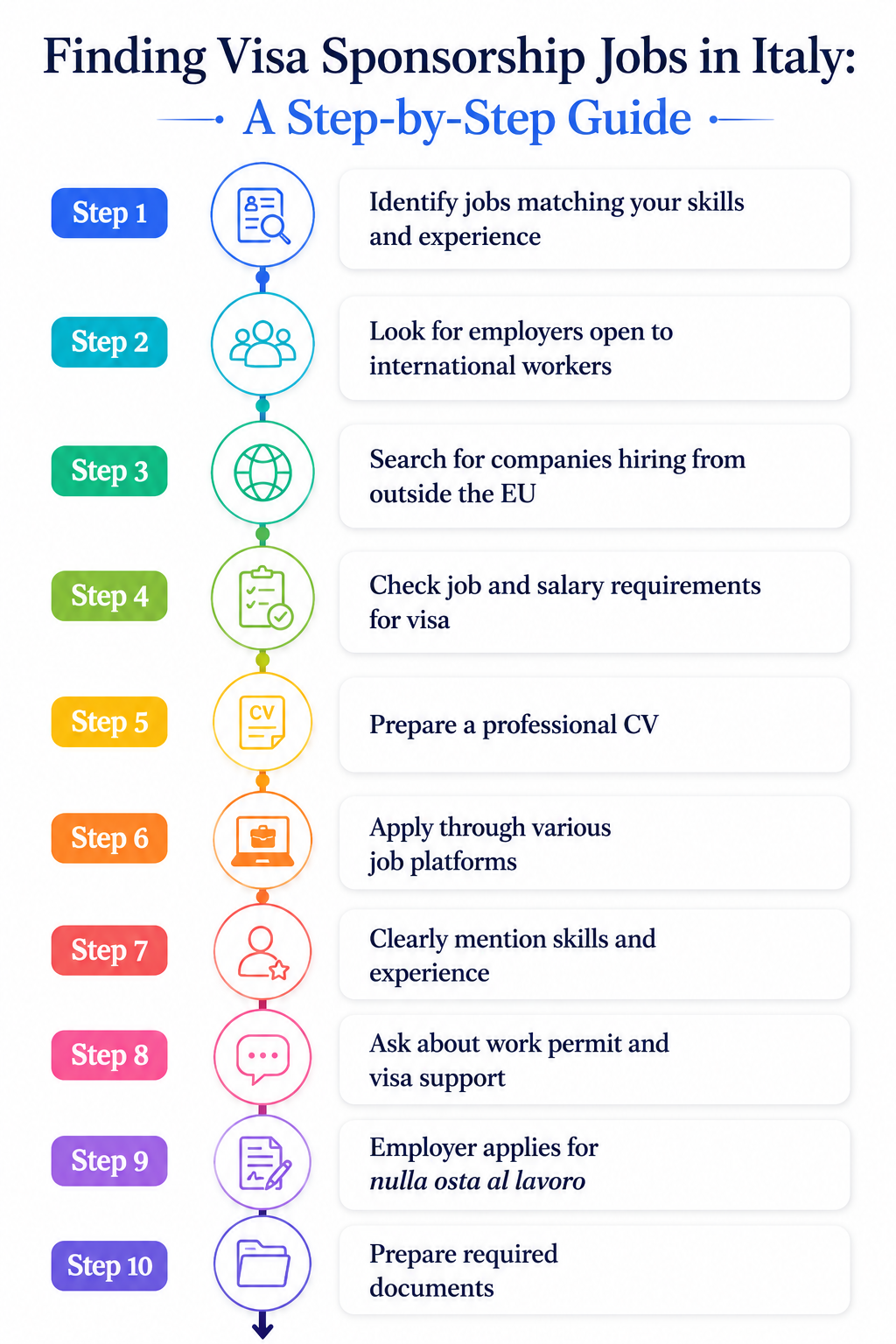
Step 1: Identify jobs that match your education, skills, and work experience.
Step 2: Look for jobs where Italian employers are open to hiring international workers.
Step 3: Search for Italian companies that regularly hire workers from outside the EU.
Step 4: Check whether the job and salary meet the requirements of the relevant Italian work visa or permit.
Step 5: Prepare a simple and professional CV that clearly shows your education, skills, and experience.
Step 6: Apply through company career websites, Italian job portals, LinkedIn, and trusted recruitment websites.
Step 7: Clearly mention your skills, experience, and current location when applying for jobs.
Step 8: If you receive a job offer, ask the employer whether they will support your work permit and visa process.
Step 9: The employer generally needs to apply for the required nulla osta al lavoro where applicable.
Step 10: Prepare the required documents, including your passport, employment contract, education certificates, work experience documents, and work clearance.
Step 11: Submit your Italian work visa application and complete the required biometric and other formalities.
Step 12: After your visa is approved, arrange your travel, accommodation, and other requirements before moving to Italy.
Step 13: After arriving in Italy, complete the required residence permit formalities and follow the conditions of your work permit.
Tips to Get a Sponsored Job in Italy
- Apply for jobs that match your education, skills, and work experience.
- Look for companies that have experience hiring international workers.
- Check the Italian visa and work permit requirements before applying.
- Make sure your salary and job conditions meet the requirements of your visa category.
- Keep your CV simple, clear, and professional.
- Highlight your technical, professional, and specialist skills.
- Clearly mention your relevant work experience and qualifications.
- Apply directly through Italian company career websites.
- Use trusted Italian job portals and recruitment agencies.
- Improve your English and Italian language skills where required.
- Check whether your profession requires professional registration, qualification recognition, or authorisation.
- Keep your education, professional qualification, and work experience documents ready.
- Make sure your employment contract clearly states your salary, job role, working hours, and contract duration.
- Do not pay an employer for a job or visa sponsorship.
- Check the work visa and work permit requirements before accepting a job offer.
- Ask the employer whether they will support the required work permit and visa process.
- If your job is covered by the Decreto Flussi, check whether the employer can apply under the available annual quota.
- If you are a highly qualified professional, check whether you may qualify for the EU Blue Card.
*Also read…
What are the benefits of working in Italy?
Conclusion
Italy offers job opportunities for foreign professionals in areas such as IT, engineering, healthcare, finance, construction, manufacturing, logistics, tourism, hospitality, agriculture, and renewable energy. The Salaried Employee Work Visa is an important route for professionals who receive a job offer from an Italian employer. Many workers can enter through the Decreto Flussi, which sets yearly quotas for eligible foreign workers.
Highly qualified professionals may also be eligible for the EU Blue Card, while researchers, employees transferred within international companies, entrepreneurs, and other professionals may have additional visa options. If you are planning to work in Italy, start by checking your occupation, qualifications, work experience, salary, and job offer. Search for employers that hire international workers and carefully check the work permit requirements before accepting a job offer.
*Looking for assistance with overseas immigration? Contact Y-Axis, a leading immigration consultant, for job search support and visa assistance.
FAQs
What are visa sponsorship jobs in Italy?
Visa sponsorship jobs are jobs where an Italian employer hires a worker from outside the EU and supports the required work permit process. For many jobs, the employer needs to apply for work clearance before the worker applies for a visa. The type of permit depends on the job, qualifications, salary, and employment conditions. Workers should always check the requirements before accepting a job offer.
Can Indians get visa sponsorship jobs in Italy?
Yes, Indian professionals can apply for visa sponsorship jobs in Italy. You normally need the right education, skills, work experience, and a suitable job offer. The Italian employer must follow the required process for hiring a non-EU worker. Depending on the job, you may enter through the Decreto Flussi system or another route, such as the EU Blue Card.
What are the main work visa options in Italy?
Italy offers different work routes for non-EU workers. These include seasonal and non-seasonal work permits under the Decreto Flussi, the EU Blue Card for highly qualified workers, and routes for self-employed people, researchers, and some employees transferred within international companies. The correct option depends on your job, qualifications, employer, salary, and type of employment.
What is the Decreto Flussi in Italy?
The Decreto Flussi is Italy's system for managing the entry of foreign workers from outside the EU. It sets yearly quotas for seasonal, non-seasonal, and self-employed workers. For 2026, Italy has planned 164,850 entries for foreign workers. The available places are divided between different types of jobs and sectors, so applicants need to check whether their job is covered by the current quota.
How many foreign workers can enter Italy for work?
Italy has planned 164,850 entries for foreign workers under its current work-entry programme. This includes seasonal workers, non-seasonal employees, and self-employed workers. The total is part of a three-year programme covering 2026, 2027, and 2028. The number of available places and application dates can vary by job type and sector, so applicants should check the current rules before applying.
Which jobs are in demand in Italy?
Italy has job opportunities in several sectors, including IT, engineering, healthcare, construction, manufacturing, logistics, tourism, hospitality, agriculture, renewable energy, and technical services. The demand can be different across regions and industries. Professionals with specialised skills and relevant experience may have better opportunities. Before applying, candidates should check current job vacancies and make sure their qualifications match the employer's requirements.
Can IT professionals get sponsored jobs in Italy?
Yes, IT professionals can find sponsored job opportunities in Italy, especially when they have strong technical skills and relevant experience. Common roles include software developer, data analyst, cloud engineer, cybersecurity specialist, IT engineer, and systems specialist. International companies may also hire skilled IT professionals. Highly qualified IT workers may consider the EU Blue Card if they meet the required education, salary, and employment conditions.
Can engineers get visa sponsorship in Italy?
Yes, engineers can apply for jobs with Italian employers that are willing to hire non-EU workers. Opportunities may be available in mechanical, electrical, civil, automation, manufacturing, energy, and telecommunications engineering. Your education and work experience should match the position. The employer must also follow the correct work permit process. Highly qualified engineers may be able to explore the EU Blue Card route.
Can healthcare professionals work in Italy?
Yes, healthcare professionals can work in Italy, but many healthcare jobs have additional requirements. Doctors, nurses, pharmacists, and other regulated professionals may need to have their qualifications recognised and obtain professional registration or approval before starting work. Applicants should check the rules for their specific profession. Italian language skills may also be important because healthcare workers need to communicate clearly with patients and colleagues.
Can I get a sponsored job in Italy without knowing Italian?
It is possible for some jobs, but it depends on the employer and position. International companies may offer jobs where English is commonly used, especially in IT, technology, research, finance, and multinational businesses. However, Italian is important for many jobs and can improve your chances of finding employment. Learning Italian can also make daily life and communication at work easier after moving to Italy.
Does an Italian employer have to sponsor my work visa?
For many non-EU workers, the Italian employer plays an important role in the work permit process. The employer normally starts the process for obtaining the required work clearance when the job is covered by the relevant rules. After the required approval, the worker can apply for the appropriate visa. The exact process depends on the type of job, work permit, and immigration route.
What is the nulla osta al lavoro?
The nulla osta al lavoro is work clearance used in the Italian employment immigration process. For many workers coming from outside Italy, the employer applies for this clearance before the worker applies for an entry visa. It confirms that the employment can proceed under the applicable rules. Once the required clearance is available, the worker can continue with the visa application and other required formalities.
Can highly skilled professionals apply for an EU Blue Card in Italy?
Yes, highly qualified non-EU professionals may be able to apply for an EU Blue Card in Italy. This route is designed for workers who meet specific requirements related to their qualifications, employment, and salary. The job must meet the conditions for highly qualified employment. Unlike many jobs under the Decreto Flussi, some highly qualified worker routes can operate outside the normal annual quota system.
What documents are needed for an Italy work visa?
The documents depend on the type of visa and job. Common documents include a valid passport, employment contract or job offer, work clearance where required, educational certificates, work experience documents, visa forms, photographs, and other supporting documents. Some professions may need qualification recognition or professional registration documents. The Italian authorities may also request additional documents during the application process.
How can I find visa sponsorship jobs in Italy?
You can search for jobs through Italian company career websites, job portals, LinkedIn, recruitment agencies, and international job websites. Focus on employers that have experience hiring workers from outside the EU. Read the job description carefully and check whether sponsorship or work permit support is available. You can also contact the employer directly and ask whether they support the required immigration process.
Can I apply for an Italy work visa without a job offer?
For a regular employer-sponsored work route, you generally need an Italian employer willing to hire you. The employer normally starts the required work authorisation process. Therefore, simply travelling to Italy and looking for a sponsored job is not the same as applying for a work visa from abroad. Some other immigration routes have different rules, so the correct option depends on your situation.
Are seasonal jobs available in Italy?
Yes, Italy has seasonal job opportunities, particularly in agriculture and tourism. These can include farm work, fruit picking, hotel work, restaurant jobs, and other seasonal positions. Seasonal workers can enter through the relevant Decreto Flussi quotas when places are available. Seasonal work is usually linked to a specific period or season, so applicants should check the job duration and permit conditions before accepting an offer.
How long does an Italy work visa take?
The processing time can vary depending on the type of job, visa, documents, work clearance, and checks required. The process may involve several stages, including employer approval, visa application, document checks, and other formalities. Missing or incorrect documents can cause delays. Applicants should therefore prepare their documents carefully and apply as early as possible according to the applicable Italian immigration schedule.
Can I start working immediately after arriving in Italy?
You should not assume that you can start working immediately after arriving in Italy. You must follow the conditions of your work permit and complete the required employment and residence formalities. In some cases, Italian rules allow workers to begin employment after certain required notifications are completed. The exact process depends on the type of entry and permit, so follow the instructions given by the employer and authorities.
Is it safe to pay an employer for a visa sponsorship?
You should be very careful if someone asks you to pay money for a guaranteed job or visa sponsorship. A genuine job offer should include clear information about the employer, position, salary, contract, and work permit process. Do not send money to unknown individuals or agencies without checking their credentials. Always verify the company and documents before making payments or sharing your personal information.
Tags:
Visa Sponsorship Jobs in Italy 2026
Italy Work Visa Sponsorship for Indians
Italy Work Visa Jobs
Italy Work Visa for Foreign Workers
In-Demand Jobs in Italy with Visa Sponsorship
Italy Employer-Sponsored Jobs
Italy Jobs for Foreign Workers
Share
Options for you by Y-Axis

Get it on your mobile

Get News alerts

Contact Y-Axis
Latest Article
Popular Post
Trending Article
Posted On October 16 2026
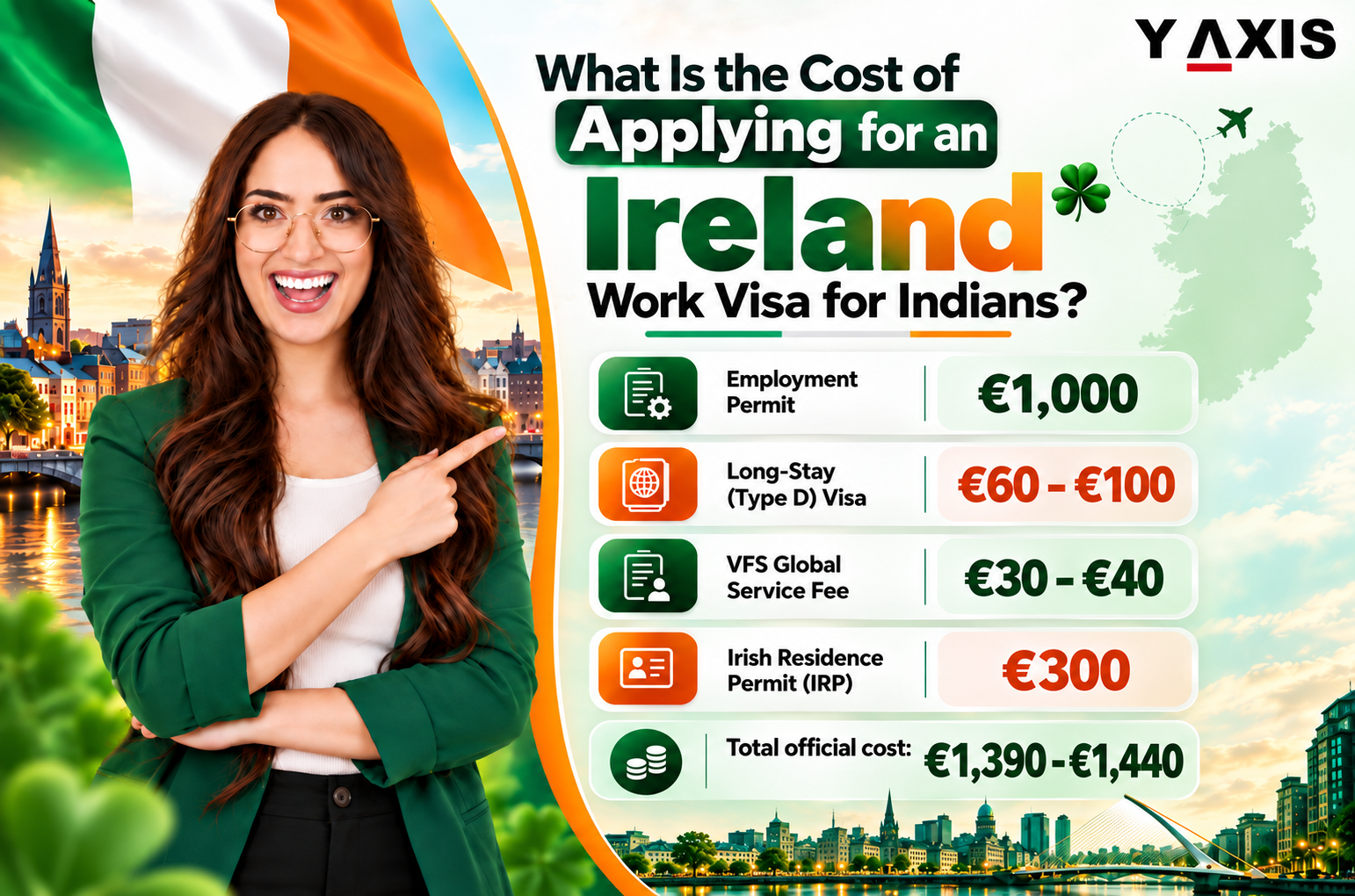
What Is the Cost of Applying for an Ireland Work Visa for Indians?