


Posted on October 14 2026
The Global Indian’s Second Shift: Caring for Family Across Countries, Time Zones and Borders

By , Editor & Director
Updated October 14 2026
For millions of Indians who build lives overseas, migration does not end at the airport. It creates another responsibility: staying present for the people, relationships and obligations they have left behind.
At 7 a.m. in Toronto, an Indian professional may be preparing for a day of meetings. In Hyderabad, a parent may be waiting for a call about a medical appointment. In London, a daughter may be coordinating a relative’s hospital visit in Kerala. Somewhere else, a family group chat may be the place where school fees, property repairs, a festival shopping list and an elderly parent’s medication are discussed before the day begins.
These are ordinary moments in the lives of families separated by international borders. They rarely make headlines. Yet they reveal something important about the Global Indian experience: moving abroad can change where a person lives, works and raises a family without removing the responsibilities that connect them to home. For some, that responsibility is financial. For others, it involves arranging healthcare, managing emergencies, supporting siblings, preserving family traditions or simply being available when a parent feels lonely. Often, it is a combination of all these things.
The result is a second shift - one that begins after the working day, runs across time zones and seldom appears on a professional résumé.
When being successful abroad comes with responsibilities at home
The familiar story of migration follows a clear arc: an Indian student moves overseas, builds a career, buys a home and establishes a life in a new country. Professional success becomes evidence that the move was worthwhile. But families do not always move together. Parents may remain in India because of their health, social networks, property, language or personal preference. Adult children may be unable to relocate because of employment, visa conditions, school schedules or the needs of their own households.
Consequently, success abroad can create a complicated question: how does someone build a future in one country while remaining involved in family life in another?
Research into Indian transnational families has examined how kinship, money and technology shape care across borders. A chapter by Bianca Brijnath, published in Caring for Old Age: Perspectives from South Asia, explores how overseas family members support ageing relatives, including through remittances and healthcare arrangements, while navigating the losses and changes that distance can bring.
The challenge is not necessarily a lack of love or commitment. It is that care becomes harder to deliver when the person who needs help and the person who wants to provide it live thousands of kilometres apart.
The family administrator no one sees
International migration can turn everyday family responsibilities into logistical projects. A hospital appointment may require several calls to understand a diagnosis. A parent’s new medication may need to be checked against an existing prescription. A household repair may depend on finding a reliable local worker. An unexpected emergency may require the migrant to arrange money, contact relatives and decide whether to book the next available flight. Technology helps, but it does not remove every difficulty. A video call can provide reassurance, yet it cannot always replace physical presence. A bank transfer can pay a bill, but it cannot guarantee that an older relative has someone to accompany them to a clinic.
A 2018 study by anthropologist Tanja Ahlin, published in Medical Anthropology Quarterly, examined how Indian families use everyday communication technologies to maintain care between adult children working abroad and elderly parents in Kerala. The research challenged the assumption that migration necessarily means abandoning older family members, showing instead how care can continue through cross-border relationships and digital communication. That distinction matters. Remote care is real care, but it often requires planning, repeated coordination and emotional effort that remains invisible to outsiders.
For the person doing it, the working day may not finish when the laptop closes. It may continue through late-night calls; weekend errands coordinated from afar and the constant mental calculation of who can help if something goes wrong.
The emotional cost of always being available
Distance can create a particular kind of helplessness. A migrant may know that a parent is unwell but be unable to visit immediately. They may have the money to arrange support but still worry about whether it is adequate. They may speak to their family every day and still feel that important moments are happening without them. Research published in the Journal of Intergenerational Relationships examined the experiences of adult children in the United States supporting elderly mothers in India. Participants described worry, sadness, guilt and a sense of helplessness when they could not provide the kind of care they wanted to offer in person.
These feelings do not affect every migrant in the same way. Family relationships, financial resources, access to local support and the needs of the person receiving care all make a difference. But the research highlights an important point: distance can create emotional responsibilities that cannot simply be resolved with money or a more reliable internet connection. There can also be competing expectations. A migrant may be expected to succeed professionally, remain available to relatives in India, raise children overseas and support a partner - all while adapting to a new society. When these expectations collide, the pressure can be difficult to explain to people who see only the achievements.
When the next generation inherits a different idea of home
The question becomes more complicated when migrants raise children abroad.
For first-generation migrants, India may remain the place where family obligations are rooted. For their children, India may be a country of grandparents, school-holiday visits, family celebrations and stories heard at home. The connection can be strong, but it may not carry the same practical meaning. A child growing up in Australia, Canada, the United Kingdom or the United States may understand why their parents regularly call relatives in India without fully understanding the responsibilities behind those conversations. As the family ages, the next generation may eventually face decisions about visits, caregiving, inheritance, language and where to spend significant periods of life.
This is not simply a story of cultural preservation. It is also a story of how family responsibility changes across generations.
Some families may respond by bringing relatives closer, arranging longer visits or creating more formal care plans. Others may distribute responsibilities among siblings and extended family. There is no single model that works for every household. What matters is recognising that a family's migration story continues long after the first person settles abroad.
A new way to think about belonging
For years, discussions of the Indian diaspora have often centred on professional achievement, entrepreneurship, philanthropy and the influence of Indians in global institutions. These are important parts of the story. But the less visible work of maintaining relationships across borders also shapes what it means to be a Global Indian.
Belonging is not always demonstrated through a public award, a business milestone or a return visit to India. Sometimes it appears in the small arrangements that keep a family functioning: the regular call, the emergency fund, the appointment booked from another time zone, the decision to travel home when a relative needs support. These acts can be rewarding, but they should not be romanticised. Long-distance caregiving can create financial strain, emotional fatigue and difficult choices. Access to money, supportive relatives and flexible work can make the experience considerably easier for some families than for others.
Employers, migrant-support organisations and community networks could recognise these realities more openly. Practical support might include flexibility during family emergencies, information about cross-border care planning and stronger community connections for older relatives who remain in India. For migrants themselves, discussing responsibilities early with siblings and other family members can help prevent one person from carrying the entire burden alone.
None of these measures eliminates distance. They can, however, make the responsibilities created by migration more manageable.
The journey does not stop at settlement
A visa may establish the legal right to live in another country. A job may provide financial security. A home may offer stability. Yet none of these milestones automatically settles the question of what a migrant owes, wants or hopes to give to the people who remain elsewhere. The Global Indian story is therefore larger than the journey from one country to another. It includes the relationships that survive the move, the responsibilities that travel with it and the ways families learn to care for one another when they can no longer share the same daily life.
The second shift may never appear on a payslip. It may not be visible on LinkedIn. But for many migrants, it is part of the life they have built abroad - and part of the connection to India they continue to carry with them.
~ Dr. Serah Vinodini Vilvaraj
Tags:
Global Indians
Indian diaspora
Indians abroad
transnational families
ageing parents
caregiving
migration
family ties
NRI life
diaspora identity
Share
Options for you by Y-Axis

Get it on your mobile

Get News alerts

Contact Y-Axis
Latest Article
Popular Post
Trending Article
Posted On October 14 2026
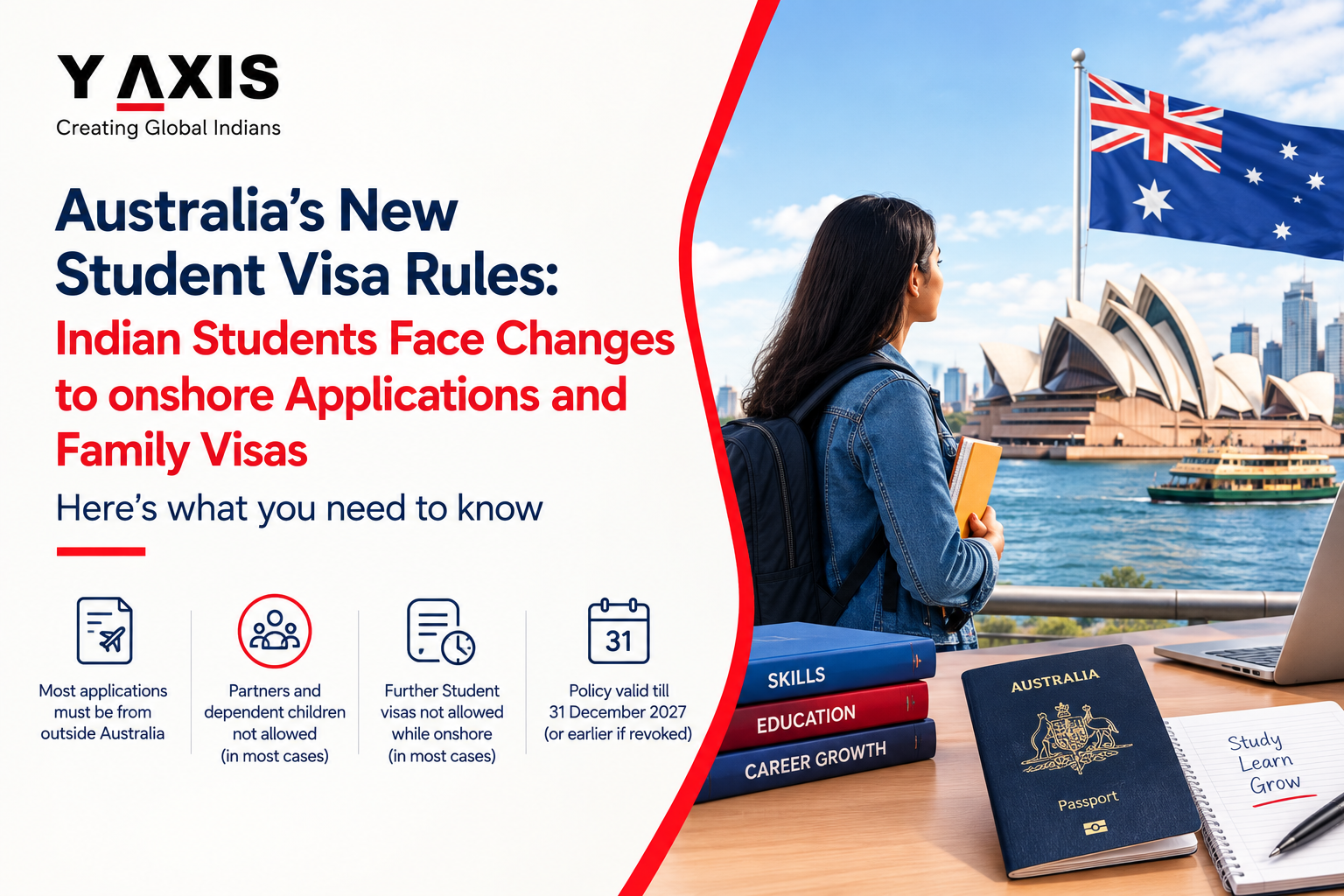
Australia’s New Student Visa Rules: What Indian Students Need to Know in 2026