

Posted on October 14 2026
Canada Allows Eligible Work Permit Holders to Study for Six Months Without a Study Permit

By , Editor & Director
Updated October 14 2026
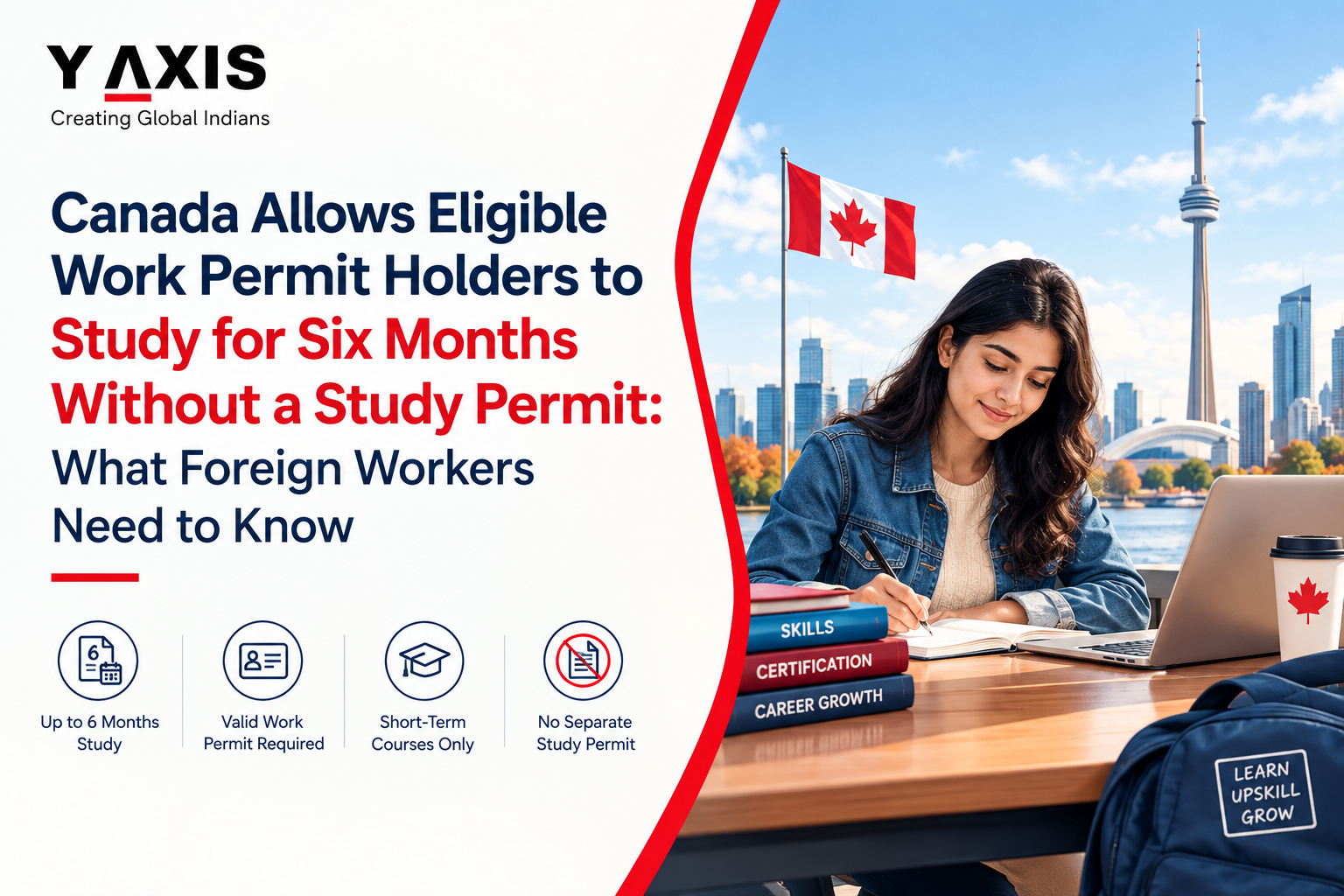
Canada Allows Eligible Work Permit Holders to Study for Six Months Without a Study Permit: What Foreign Workers Need to Know
Canada has introduced a temporary measure allowing eligible foreign workers already in the country to pursue short-term studies without applying for a separate study permit. The policy could help workers gain new skills, obtain professional credentials and improve their career prospects - but it does not create a new route for people overseas to enter Canada.
For foreign workers in Canada, gaining an additional qualification can mean better job opportunities, access to a higher-skilled role or progress towards professional licensing. However, navigating a separate study permit process can add another administrative step. Canada has now introduced a measure intended to make certain short-term training opportunities easier to access.
On 9 September 2026, Immigration, Refugees and Citizenship Canada (IRCC) announced a temporary public policy allowing eligible foreign nationals with valid work permits to study for up to six months without a separate study permit. The policy is scheduled to expire on 31 December 2027, although the government can revoke it earlier. The change is particularly relevant to workers seeking short courses, additional credentials or training that could help them advance in their existing fields. IRCC specifically identified tradespeople, nurses and laboratory technicians among the workers who could benefit.
What has Canada changed?
The policy provides a limited exemption from the usual study-permit requirements for eligible work permit holders undertaking qualifying short-term studies.
Here are the key details:
|
Policy detail |
What workers need to know |
|
Announcement date |
9 September 2026 |
|
Maximum study duration |
Six months or less |
|
Main eligibility condition |
Hold a valid Canadian work permit |
|
How long the exemption lasts |
Until the work permit expires or the policy expires or is revoked, whichever comes first |
|
Scheduled policy expiry |
31 December 2027 |
|
Does it create a new immigration pathway? |
No |
The exemption is intended to reduce administrative barriers for eligible workers who want to develop in-demand skills while continuing their employment. It does not remove other applicable immigration or admissibility requirements.
Which foreign workers could benefit?
IRCC has highlighted workers in occupations such as trades, nursing and laboratory technology. The policy may be relevant to eligible workers who want to undertake short-term professional development or obtain additional credentials.
For example:
- A nurse working in Canada may want to complete a short professional-development course.
- A tradesperson may wish to pursue additional technical training.
- A laboratory technician may want to gain a relevant short-term qualification.
These are illustrative scenarios, not guarantees that every course or professional-licensing programme qualifies. Workers should confirm the programme's duration and requirements with the relevant institution and licensing authority before enrolling. The key eligibility condition is a valid work permit. The measure is not a general exemption for every temporary resident in Canada.
Does the exemption cover full-time studies?
Not automatically. IRCC's announcement explicitly states that full-time studies will still require a study permit. Workers should therefore not interpret the six-month exemption as permission to enrol in any programme lasting six months or less without checking the applicable rules.
Before enrolling, applicants should confirm:
- Whether their work permit remains valid for the intended study period.
- Whether the course meets the six-month duration limit.
- Whether the programme and study arrangements fall within the exemption.
- Whether a study permit is required because of the course's nature or study status.
- Whether additional licensing or professional-registration requirements apply.
A course being short does not, by itself, establish that every requirement has been met.
Is this a new route for Indians who want to move to Canada?
No. This is one of the most important distinctions in the announcement. The measure applies to eligible foreign nationals who are already in Canada and hold valid work permits. It does not allow someone in India or another country to enter Canada simply to work and study under this exemption. People planning to move to Canada must still qualify for the appropriate immigration status and follow the applicable application process. For Indian nationals already working in Canada, the change may provide more flexibility to pursue eligible short-term training without a separate study permit. For prospective migrants in India, it should not be presented as a new visa option or a shortcut to employment in Canada.
Why has Canada introduced the measure?
IRCC says the policy is intended to help temporary foreign workers upgrade their skills, obtain credentials or professional licensing, and progress into higher-skilled occupations. The government also links the measure to labour needs in areas including healthcare and other sectors important to public services and construction. The announcement also sits within Canada's broader effort to manage its temporary-resident population. The government reiterated its objective of reducing that population to less than 5% of Canada's total population by the end of 2027.
This creates an important distinction: Canada is offering targeted flexibility to certain people who are already in the country while continuing to pursue its wider temporary-population objective. The announcement does not establish that overall immigration requirements are being relaxed. IRCC's announcement did not provide a total number of workers expected to qualify under the new measure, so an eligible-worker estimate should not be added without further official data.
What should eligible workers do next?
Workers interested in taking advantage of the policy should check the official guidance before enrolling.
- Verify work-permit validity. The exemption depends on holding a valid work permit.
- Check the course duration. The programme must last six months or less.
- Confirm the study-permit requirement. Full-time studies still require a study permit, according to IRCC's announcement.
- Check professional requirements. A course may not be sufficient for licensing or registration in a regulated occupation.
- Review the expiry date. The exemption cannot continue beyond the relevant work permit's expiry or the end of the temporary policy.
The official policy can be reviewed here: canada.ca
What this means for Indian professionals
For Indian professionals who have already secured employment in Canada, the measure may offer a practical opportunity to build on their existing experience. Short-term study can help workers develop relevant skills or work towards additional credentials without necessarily undertaking a separate study-permit application. However, the exemption should not be confused with permission to change immigration status, undertake unrestricted study or qualify automatically for permanent residence. Each worker's circumstances and the programme's requirements still matter.
For those considering Canada from India, the immediate lesson is to distinguish between policies designed for people already working in Canada and immigration routes intended for new arrivals. Understanding that difference can help applicants avoid making education or migration plans based on an exemption that does not apply to them.
FAQs:
1. Can foreign workers in Canada study without a study permit?
Eligible foreign nationals who hold valid Canadian work permits may study without a separate study permit under the temporary policy, provided the course lasts six months or less and the applicable conditions are met.
2. When does Canada's temporary study exemption expire?
The policy is scheduled to expire on 31 December 2027, but it may be revoked earlier. The exemption also ends when the relevant work permit expires, if that happens first.
3. Can an Indian applicant living in India use this exemption to study in Canada?
No. This measure is intended for eligible foreign nationals who already hold valid work permits in Canada. It is not a new route for people overseas to enter Canada.
4. Can work permit holders enrol in full-time studies without a study permit?
IRCC states that full-time studies will still require a study permit. Workers should verify the requirements before enrolling.
5. Does the policy automatically lead to permanent residence?
No. The policy provides a limited study-permit exemption for eligible work permit holders. It does not grant permanent residence or guarantee eligibility for another immigration programme.
6. Which workers may benefit from the change?
IRCC specifically highlighted tradespeople, nurses and laboratory technicians, among other eligible workers who may use short-term education or training to develop skills. Eligibility depends on the policy's conditions.
~ Dr. Serah Vinodini Vilvaraj
Tags:
Canada Immigration News
Canada Work Permit
Canada Study Permit
Foreign Workers in Canada
Indian Professionals in Canada
Canada Temporary Public Policy
Study Without a Study Permit
Canada Work Permit Holders
Canada Visa Updates 2026
Share
Options for you by Y-Axis

Get it on your mobile

Get News alerts

Contact Y-Axis
Latest Article
Popular Post
Trending Article
Posted On October 14 2026
Australia’s New Student Visa Rules: What Indian Students Need to Know in 2026